

A bore can be one of the most dependable assets on a rural, acreage or regional property, but clear water at the tap is not proof that it is safe to use. To treat bore water properly, start with what is actually in the supply. The right system for iron staining and sulphur odour is very different from the system needed to manage bacteria, salinity or chemical contamination.
For household drinking water, livestock, irrigation or wash-down use, the goal is not simply to fit the biggest filter available. It is to build a treatment system around your bore water quality, daily demand and intended use. That approach protects your pumps, plumbing, appliances and, most importantly, the people and animals relying on the water.
Why bore water needs individual treatment
Bore water quality can vary significantly between neighbouring properties and can also change over time. Groundwater moves through different soil and rock formations, picking up minerals and naturally occurring compounds along the way. Heavy rain, drought, flooding, nearby land use and changes to the bore itself can all affect the result.
Common bore water issues include iron and manganese, hardness minerals, sediment, hydrogen sulphide gas, salinity, low or high pH, bacteria and, in some areas, nitrates or other contaminants. Some are mainly an operational problem. Iron, for example, can leave orange-brown staining in toilets, on laundry and around stock troughs. Others may affect whether water is suitable for drinking, food preparation or particular agricultural uses.
A treatment system should also reflect where the water is going. Water for garden irrigation may only need sediment control and pump protection. Water entering a home needs a more considered treatment train, particularly where it will be consumed. Livestock water has its own quality requirements, with salt levels and specific mineral concentrations potentially affecting animal health and productivity.
Test bore water before choosing equipment
Water testing is the first practical step. Without it, selecting treatment equipment is guesswork and can lead to unnecessary expense or a system that does not solve the problem.
Use a suitably qualified water testing laboratory and request a test panel that matches the intended use. For domestic supply, this commonly includes microbiological testing as well as pH, turbidity, total dissolved solids, hardness, iron, manganese and other relevant chemical indicators. If the bore is in an area with known groundwater concerns or nearby agricultural activity, discuss expanded testing with the laboratory or your local authority.
Take the sample carefully. Use the correct sterile container for microbiological samples, avoid touching the inside of the lid or bottle, and deliver it within the laboratory’s required timeframe. If the bore has not been used for some time, run the water first so the sample represents the supply rather than stagnant water in pipework.
Testing is not a one-off job. Retest after flooding, a change in taste, smell or colour, bore maintenance, a long period of low use, or changes in nearby land use. For drinking water systems, regular microbiological testing provides useful assurance that treatment and storage arrangements remain effective.
Check the bore and plumbing as well
Poor water quality is not always coming from the aquifer. A damaged bore head, poorly sealed casing, cracked pipework, open tank inlet or unprotected storage tank can allow contaminants into an otherwise sound supply. Check that the bore head is sealed and protected from surface runoff, animals and pests. Keep chemical storage, septic systems and livestock activity appropriately separated from the bore where possible.
If water is stored after it leaves the bore, the tank matters too. A clean, enclosed tank with secure access points, insect-proof screens and a sound lid helps prevent recontamination before the water reaches the house or trough.
How to treat bore water with the right treatment train
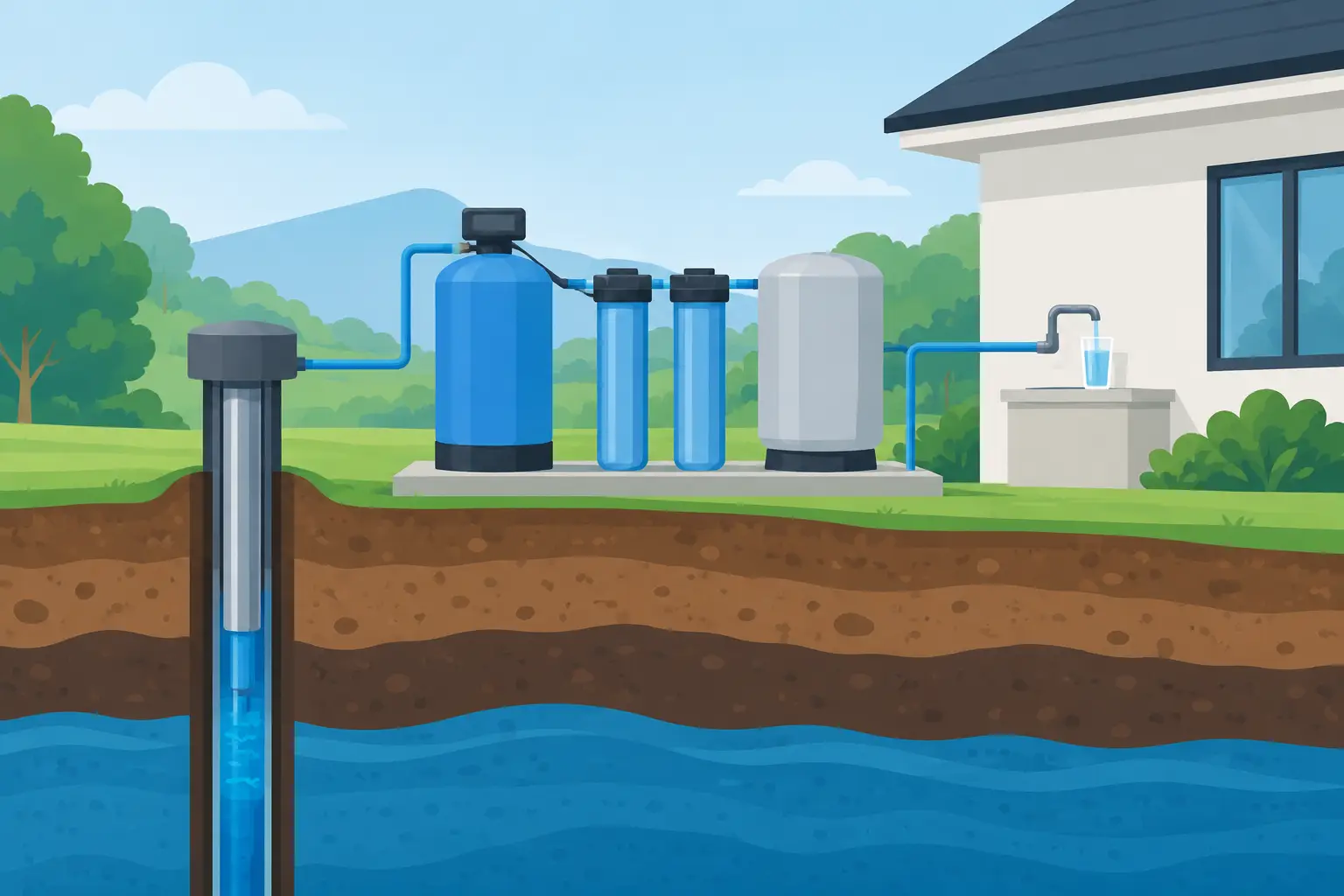
Most effective systems use several stages. Each stage has a defined job, and the order matters. A practical setup may begin at the bore pump, continue through pre-filtration and treatment, then deliver water to a tank or directly to the building depending on the design.
Remove sand, silt and suspended sediment
Sediment filtration is commonly the first line of defence. It protects pumps, valves, pressure switches, ultraviolet units and finer filters from grit and fouling. For water carrying visible sand or sediment, a washable screen, spin-down filter or larger sediment filter may be suitable before finer cartridge filtration.
The micron rating should suit the water quality and flow rate. Very fine cartridges can produce clearer water but may block quickly where sediment loads are high. A staged arrangement often works better: a coarser filter first, followed by a finer filter where required. Pressure gauges before and after filters make it easier to see when servicing is due.
Manage iron, manganese and sulphur odour
Iron and manganese are common groundwater problems. They can cause staining, metallic taste, dark deposits and blocked fixtures. Hydrogen sulphide can create a rotten-egg smell, particularly when water is heated.
The appropriate treatment depends on the test results and the form of the minerals present. Aeration and oxidation can convert dissolved iron or manganese into particles that can then be filtered out. Media filters may also be used, and some systems require chemical dosing or regeneration. These systems need correct sizing and regular backwashing, so they should be selected around actual flow demand, not just the size of the pressure pump.
An activated carbon filter can improve taste and odour in some applications, but it is not a substitute for treatment designed to remove dissolved iron, manganese or high salinity. Carbon media also needs timely replacement and should not be left neglected in a system where microbiological control is required.
Treat hard water and salinity separately
Hard water contains elevated calcium and magnesium. It can create scale on taps, hot-water systems, kettles and irrigation equipment. A water softener can reduce hardness, helping protect appliances and improving soap performance. However, a softener is not designed to make salty water suitable for drinking.
High salinity is measured through total dissolved solids and electrical conductivity. It can affect taste, damage sensitive plants, reduce soil performance and make water unsuitable for some uses. Reverse osmosis may be considered for drinking water where testing confirms it is appropriate. It is generally best applied at a dedicated drinking-water point because it produces a lower flow rate, requires pre-filtration and creates a reject-water stream. Treating every litre used for showers, toilets or irrigation with reverse osmosis is often unnecessary and costly.
Disinfect water for household use
If bore water is used for drinking, cooking or food preparation, disinfection may be required after physical and chemical treatment. UV sterilisation is a common option because it disinfects water without adding a residual taste or odour. For UV to work effectively, the water must be clear enough for the light to penetrate. High turbidity, dirty sleeves and ageing lamps can reduce performance.
UV systems need routine servicing, including lamp replacement at the manufacturer’s recommended interval and cleaning of the quartz sleeve. They disinfect the water passing through the unit but do not provide ongoing residual protection in downstream pipework or storage.
Chlorination can provide a residual disinfectant and may be useful in certain bore and tank systems. It requires careful dosing, adequate contact time and monitoring. It can also interact with organic matter or affect taste, so it should be planned properly rather than added as an afterthought.
Storage, pumps and flow rates affect treatment performance
A filter is only one part of a working water system. Pumps and pressure systems must deliver enough flow for treatment equipment without exceeding its rated capacity. If flow is too high, filtration and UV contact performance can suffer. If flow is too low, household pressure may be disappointing.
Storage can make a bore water system more reliable. A bore can fill a tank at a controlled rate, while a separate pressure pump supplies the house, shed or stock infrastructure when demand peaks. This arrangement reduces pump cycling and gives treatment equipment a steadier operating condition. It can also provide a useful reserve during power interruptions or bore servicing.
For whole-of-property systems, allow for isolation valves, bypass arrangements where appropriate, pressure gauges and accessible filter housings. These simple details make servicing safer and reduce downtime. North Coast Water Tanks can assist property owners with practical advice across tanks, pumps, filtration and supporting accessories, helping ensure the components work as one system.
Keep your bore water treatment system maintained
Treatment only works while it is maintained. Replace cartridges when pressure drops or at the recommended interval, backwash media filters as required, inspect tank screens and lids, and service UV equipment on schedule. Keep a written record of water tests, filter changes, UV lamp changes and any changes in colour, odour or taste.
If the water suddenly changes after rain or flooding, do not assume the existing equipment is coping. Arrange testing and inspect the bore head, tank and treatment system. A quick response can prevent a minor issue becoming a contaminated household supply or a damaged pump and filter system.
The best bore water setup is one you can operate and maintain with confidence. Start with a current test, choose treatment for the uses that matter on your property, and leave room for straightforward servicing as conditions change.