


A full rainwater tank is only useful at the tap if the pump can deliver enough water, at the pressure your household, farm or business actually needs. Water pumps are often chosen by price or horsepower alone, but the right unit depends on the water source, pipework, fixtures, elevation and daily demand. Getting those details right from the start helps avoid weak showers, cycling pumps, unnecessary power use and premature replacement.
What a water pump needs to do
For most tank systems, a pump has two jobs: move water and maintain usable pressure. These are related, but they are not the same thing. Flow rate is the volume of water delivered, commonly measured in litres per minute. Pressure is the force that pushes water through pipes, filters, hoses and fixtures, usually measured in kilopascals or bar.
A pump may provide plenty of pressure for one bathroom and a garden tap, yet struggle when two showers, a washing machine and an irrigation zone run together. Conversely, a high-flow pump may be unnecessary for a small cabin or caravan setup with short pipe runs and modest demand. The best choice is the pump that meets peak demand without being oversized for the system.
Pump performance also changes once it is installed. Every metre of vertical lift, long length of pipe, restrictive filter and undersized fitting reduces the flow available at the outlet. This is why pump selection should be based on the complete water system, not the tank capacity alone.
Choosing water pumps by application
The intended use gives a practical starting point. A household supplied from a rainwater tank usually needs a pressure pump capable of supplying bathrooms, kitchen appliances and outdoor taps. A rural property may need separate pumps for house water, stock troughs, irrigation and transfer duties. Keeping these jobs separate can improve reliability, particularly where irrigation demand would otherwise affect household pressure.
Domestic rainwater supply
For a home, look at how many outlets may run at once. A family home with two bathrooms has a different demand profile from a single-bathroom weekender. Consider showers, toilets, washing machines, dishwashers and garden use, then allow for simultaneous use during busy periods.
Automatic pressure pumps are commonly used for domestic tank supply because they start when a tap opens and stop when demand ends. Many systems include an integrated pressure controller, while others use a separate controller or pressure tank. A quality pressure controller helps protect the pump from excessive cycling and can provide dry-run protection, depending on the model and system configuration.
Farms, acreage and livestock
On acreage, water use can vary sharply across the day and season. A pump that comfortably fills troughs may not provide enough flow for sprinklers, wash-down or a long run to a shed. The vertical rise from tank to outlet and the distance across the property are particularly important.
Where water must travel a considerable distance, larger-diameter poly pipe can be as valuable as a larger pump. Restrictive pipework creates friction loss, so fitting a powerful pump to a narrow line does not always solve poor flow. A properly sized main line, isolation valves and sensible zoning make the system easier to manage and maintain.
Garden and irrigation systems
Irrigation needs both flow and pressure, but the required balance depends on the system. Drippers operate differently from sprinklers, and a large irrigation zone can demand more water than a smaller pressure pump can sustainably supply. Dividing the garden into zones often delivers more even watering while reducing strain on the pump.
For transfer work, such as moving water between tanks or from a dam to storage, the priority may be volume rather than high pressure. A dedicated transfer pump can be more suitable than using the household pressure pump for every job. If drawing from a dam, creek or other untreated source, consider the pump’s ability to handle debris and install appropriate screening or filtration.
The figures that matter before you buy
A pump curve is more useful than a single maximum flow or maximum head figure on a product label. It shows how flow reduces as lift and pressure increase. The ideal operating point sits within the pump’s efficient working range, not at the extreme end of its stated capability.
Before selecting a pump, collect four practical details:
- The highest point the pump must lift water to, including elevated tanks or upper-storey outlets.
- The number and type of fixtures, troughs or irrigation outlets likely to operate at one time.
- The distance from the tank to the furthest outlet, plus the diameter and material of existing pipework.
- Whether the water is clean tank water, bore water, dam water or another source that may require different filtration and pump protection.
Power supply matters as well. Most homes use single-phase power, while larger agricultural or commercial applications may require three-phase equipment. Solar pumping can suit remote stock water and transfer applications, but panel capacity, storage requirements and seasonal sunlight need to be considered as part of the design.
Pump type, location and protection
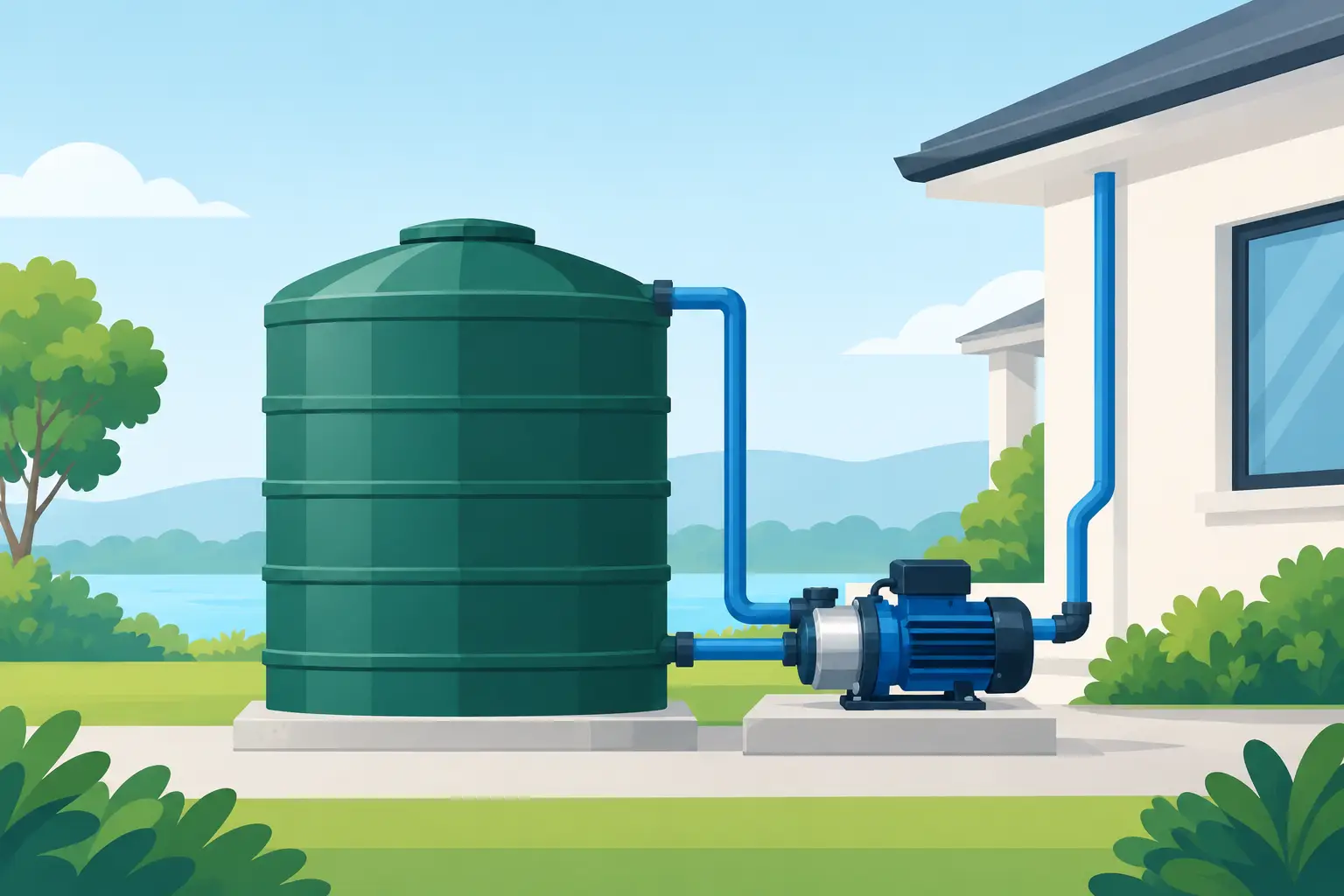
Surface-mounted pressure pumps are accessible and straightforward to service when installed beside a tank or in a protected pump enclosure. They need protection from weather, direct sun and flooding, along with adequate ventilation. They should also sit on a stable base that reduces vibration and keeps electrical connections clear of water.
Submersible pumps operate inside the tank or water source. They can be quieter and are protected from weather, but servicing requires lifting the unit out. They are often useful where space is limited or where a surface pump cannot achieve the required suction conditions.
A surface pump cannot pull water indefinitely uphill or through an excessively long suction line. Keep suction pipe runs short, correctly sized and airtight. Air leaks on the suction side can cause loss of prime, noisy operation and unreliable starting. A foot valve or check valve may be required to keep the line primed, depending on the pump arrangement.
Dry-run protection is worth considering wherever a tank can run low. Pumps are cooled and lubricated by the water they move, and operating without sufficient water can cause damage quickly. A low-level float switch, tank level sensor or controller can stop the pump before that happens. For rainwater systems, it is also wise to plan for what occurs during extended dry periods, including a compliant mains changeover arrangement where applicable.
Filtration affects pump performance
Filters protect plumbing, appliances and water quality, but they also create resistance. A clean, correctly sized filter has a manageable pressure drop. A clogged cartridge can make an otherwise capable pump seem faulty. If your household relies on filtered rainwater, use housings and cartridges sized for the expected flow, and replace them according to water quality and usage rather than waiting for pressure to fall noticeably.
Sediment filtration is commonly installed before UV sterilisation equipment, because cloudy water reduces UV effectiveness. For drinking water systems, the tank, pump, filtration and treatment equipment should be considered together. Food-grade materials, certified components and installation practices that meet relevant Australian requirements are part of a dependable setup.
Installation details that prevent common problems
A well-chosen pump can still underperform if the installation is rushed. Install a tank outlet suitable for the pump’s required flow, use quality fittings, and avoid unnecessary sharp bends. Fit isolation valves so the pump and filters can be serviced without draining the entire tank. A pressure gauge can also make fault-finding easier by showing whether a loss of pressure is caused by a blocked filter, leak or pump issue.
Check valves should be used carefully and in the right location. While they can prevent backflow and help retain prime, poorly placed valves can create pressure problems or restrict the system. Electrical work must be completed by a licensed electrician, especially where a pump is outdoors, near water or connected to automatic controls.
Noise is another practical consideration. Pumps can transmit vibration through timber platforms, metal sheds and pipework. Rubber mounting feet, flexible connectors where appropriate and a solid base can reduce noise significantly. If the pump is close to bedrooms or a neighbour’s boundary, choose the location with care.
Maintenance keeps supply dependable
A pump does not need constant attention, but it should not be ignored until it fails. Check for leaks, unusual noise, frequent starting and declining pressure. Clean strainers and filters, inspect tank screens, and make sure overflow points and mosquito-proofing remain in good order.
If a pump starts and stops repeatedly when no tap is open, investigate promptly. The cause may be a small plumbing leak, faulty check valve, controller issue or pressure loss elsewhere in the system. Repeated cycling increases wear on motors, seals and controllers.
For properties relying on stored water, keeping a basic record of filter changes, pump servicing and tank cleaning is worthwhile. It makes seasonal checks easier and gives you useful information if performance changes over time.
The right pump is not necessarily the largest one on the shelf. It is the one matched to your water source, demand, pipework and maintenance capacity. For a new tank installation or an upgrade to an ageing system, North Coast Water Tanks can help assess the practical details so your water supply is built to work reliably when you need it most.