


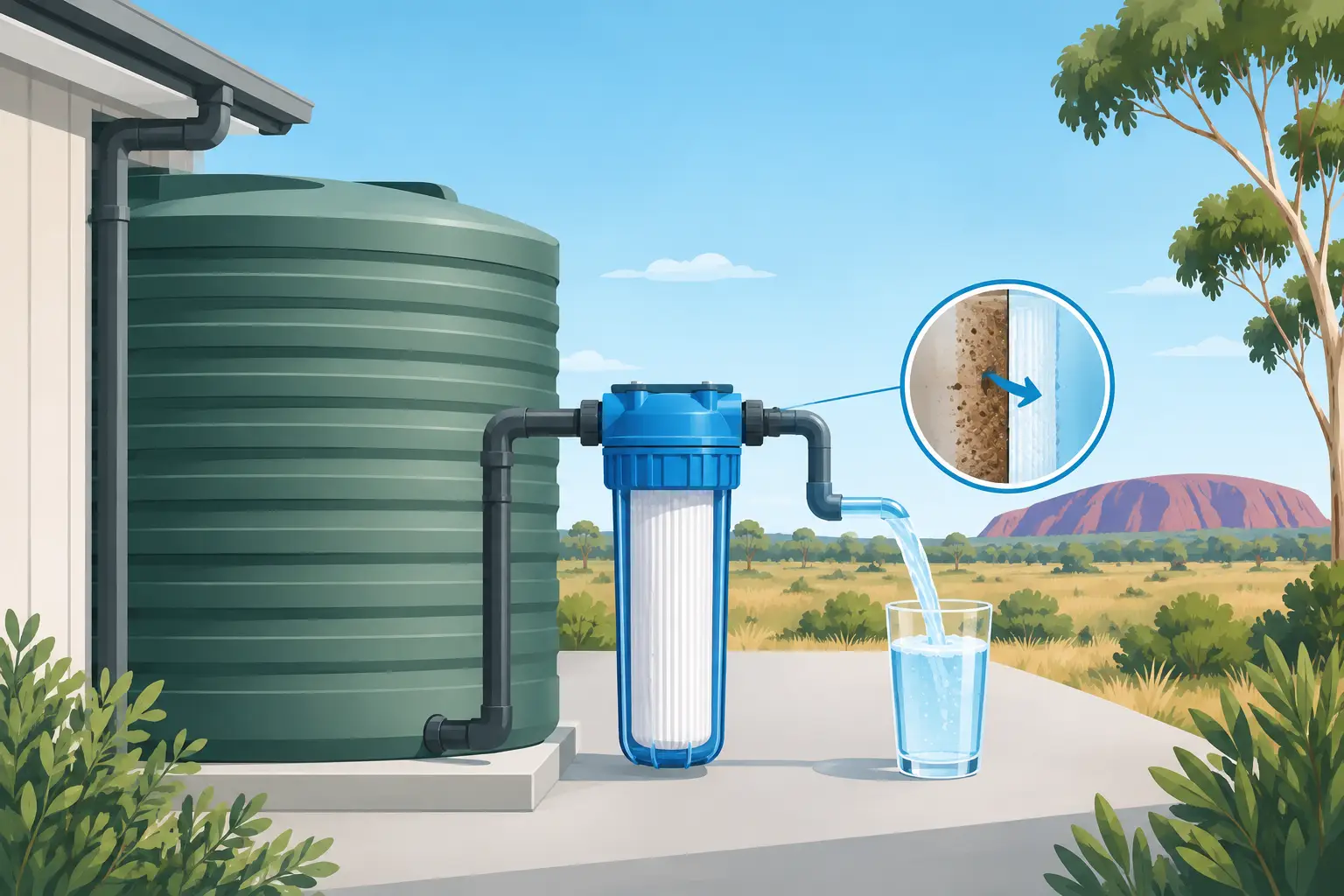
Sediment is more than a cosmetic problem in tank water. Fine sand, roof grit, dust, organic debris and corrosion particles can block tapware, wear out pump seals, reduce hot-water system performance and make water look cloudy. The best tank filters for sediment are the ones matched to your water source, household demand and maintenance capacity – not simply the filter with the smallest micron rating.
For a rainwater tank supplying a home, shed, farm building or small business, sediment control should start before water reaches the pump. A well-planned system uses several stages to remove larger debris first, then captures progressively finer material where it matters. This protects equipment and helps provide cleaner water at the point of use.
What sediment is getting into your tank?
The right filter depends on what is actually in the water. Rainwater collected from a clean metal roof usually carries leaves, insects, pollen, dust and fine roof sediment. Properties near unsealed roads, building works, coastal areas or agricultural land may deal with heavier dust loads. Older galvanised tanks, concrete tanks and pipework can also contribute sediment over time.
If the tank is filled from a bore, creek, dam or trucked supply, the material may be much finer and more abrasive. Sand, silt and clay need a different approach to leaf litter from a roof catchment. Before choosing a filter, inspect the bottom of a clear glass after filling it from a tap. Let it stand for a few minutes. Coarse particles settling quickly point to a pre-filter or washable sediment filter; persistent cloudiness may require finer filtration and further water assessment.
It also matters where you see the problem. Sediment only at one tap can be a local plumbing issue. Sediment throughout the house usually indicates a tank, pump or whole-of-house filtration issue. Reduced pressure, frequent pump cycling or blocked appliance inlet screens are practical signs that filtration needs attention.
Start with protection at the tank inlet
No post-pump filter should be expected to handle a tank full of leaves and roof debris. The most economical filter is the material that never enters the tank in the first place.
A sound rainwater harvesting setup begins with gutter protection where suitable, followed by a leaf diverter or rain head at the downpipe. A first-flush device can divert the initial runoff that carries dust, bird droppings and loose debris from the roof. At the tank inlet, a mosquito-proof screen prevents larger material and insects entering while allowing water to flow freely.
These components are not replacements for a sediment filter, but they reduce the load on every downstream component. They also help limit sludge accumulation at the tank base. If your tank has not been cleaned for many years, fitting a new filter alone may not solve cloudy water. Tank cleaning and inspection may be the more sensible first step.
The best tank filters for sediment by application
There is no single best option for every property. In most cases, the most reliable result comes from choosing a filter type for its job rather than forcing one unit to do everything.
Washable mesh and spin-down filters
Washable mesh filters, including spin-down styles, are a practical first filtration stage after the pump. They are designed to catch visible grit, sand and larger suspended particles before they reach finer cartridges, pumps or pressure-control equipment.
They suit properties with frequent sediment, including rural homes, irrigation systems, stock water lines and tanks collecting water from dusty roofs. The key benefit is reusability: the filter element can generally be flushed or rinsed instead of replaced each time it loads up. Some models allow the bowl to be flushed through a valve, making maintenance quicker.
Mesh filters are best used for coarse filtration. They may not clear very fine particles or improve water clarity to the standard many households expect for drinking water. Their performance also depends on regular cleaning. A neglected screen can restrict flow and place unnecessary strain on a pump.
Pleated sediment cartridge filters
Pleated cartridges are a strong choice for household rainwater systems because they offer finer filtration while often being washable and reusable. Their pleated surface provides more filtering area than a basic smooth cartridge, which can help maintain flow between cleans when water quality is reasonably good.
A 20-micron pleated cartridge is commonly a sensible starting point for general whole-house sediment filtration. It removes visible fine sediment while avoiding some of the rapid clogging associated with very fine cartridges. Where water is already relatively clean and you need additional protection for UV equipment or finer downstream filtration, a 5-micron cartridge may be appropriate.
The trade-off is pressure loss and maintenance. The finer the micron rating, the more readily a cartridge captures small particles – and the sooner it can block where sediment levels are high. Installing a 1-micron filter as the only stage on a dusty rural tank is usually false economy. It may provide very clear water briefly, but it can quickly restrict household flow and need frequent replacement.
String-wound and depth sediment cartridges
String-wound, spun or depth cartridges capture sediment through the body of the filter media rather than mainly on the outer surface. They are useful where fine silt is present and a disposable cartridge is acceptable as part of routine servicing.
These cartridges can be effective for final polishing after a coarse washable pre-filter. They are widely used in standard filter housings and make it straightforward to tailor a system by changing micron ratings. However, they are consumable items, and heavily sedimented water can use cartridges quickly. Keep replacement cartridges on hand, particularly if the tank is your primary household supply.
Disc filters for larger flows
Disc filters use stacked, grooved discs to trap particles and are often well suited to irrigation, agricultural and higher-flow applications. They provide a large filtration surface in a compact unit and can be cleaned for reuse. For properties running irrigation zones, washdown points, stock troughs and a home supply, a disc filter can be a useful first stage before separate finer filtration for drinking water.
Disc filters are not automatically the best choice for every domestic system. Their cleaning process can be more involved than simply rinsing a cartridge, and selection needs to account for flow rate, pressure and the level of sediment present. They work best when installed as part of a properly sized pumping and filtration arrangement.
Backwash media filters
Backwash filters use a media bed to capture larger volumes of suspended sediment, then flush collected material to waste during a cleaning cycle. They are worth considering where water carries persistent fine sediment and cartridge changes have become excessive.
For high-demand homes, farms, commercial sites or non-rainwater sources with regular silt, a backwash system can reduce ongoing consumable costs. It does require suitable drainage for backwash water, enough flow and pressure to clean the media effectively, and periodic checking of the control valve and media condition. It is a more substantial installation, but often a better long-term answer for difficult water.
Choosing the right micron rating
Micron rating describes the size of particles a filter is designed to capture. A lower number means finer filtration. It does not mean a better filter in every position.
For most rainwater tank systems, coarse protection at the inlet and a washable pre-filter around 50 to 100 microns can reduce the heavy load. A 20-micron cartridge downstream is often a practical whole-house choice. A 5-micron final stage may be used where water is intended for drinking, particularly before a UV steriliser, provided the pre-filtration is doing its job.
If you install UV treatment, sediment filtration is essential. UV light must pass through reasonably clear water to disinfect effectively. Fine particles can shield microorganisms and reduce UV performance. Filtration removes physical particles; UV addresses microbiological risk. They perform different jobs and are commonly used together for household rainwater.
Size the filter for your pump and demand
A sediment filter that is too small can become a bottleneck even when its micron rating is correct. Consider the pump flow rate, number of bathrooms, appliances, irrigation demand and whether the filter serves the entire property or only drinking-water taps.
Whole-house installations generally benefit from larger filter housings with greater cartridge surface area. This improves flow and extends service intervals. A compact under-sink filter may be suitable for drinking water at one kitchen tap, but it will not protect a pump, washing machine or hot-water system.
Placement is equally important. A coarse pre-filter is commonly installed on the pump inlet or immediately after the pump, depending on the pump type and manufacturer requirements. Fine cartridge filtration is usually installed after the pump where it can operate under controlled pressure. Include isolation valves and a bypass where appropriate so filters can be serviced without leaving the property without water.
Maintenance keeps the system working
Even quality filtration equipment cannot perform if it is not maintained. Check inlet screens after storms and during heavy leaf fall. Inspect washable filters when pressure drops or water flow changes. Replace or clean cartridges according to their condition rather than relying only on a calendar date.
A pressure gauge before and after a filter makes servicing more predictable. As the difference between the two readings increases, the filter is becoming loaded. This avoids guessing and helps prevent the sudden low-pressure callout that tends to happen on a busy weekend.
Tank hygiene matters too. Keep lids secure, screens intact and overflow points protected from insects and vermin. If sediment has built up in the tank base, arrange cleaning before it is stirred up and repeatedly sent through the filtration system.
North Coast Water Tanks can help match tank filtration, pumps, UV treatment and accessories to the conditions on your property. The most dependable setup is usually a staged one: keep debris out at the roof and inlet, remove coarse sediment before it reaches equipment, then use finer filtration only where the water use requires it. That approach protects your investment while keeping maintenance realistic.