


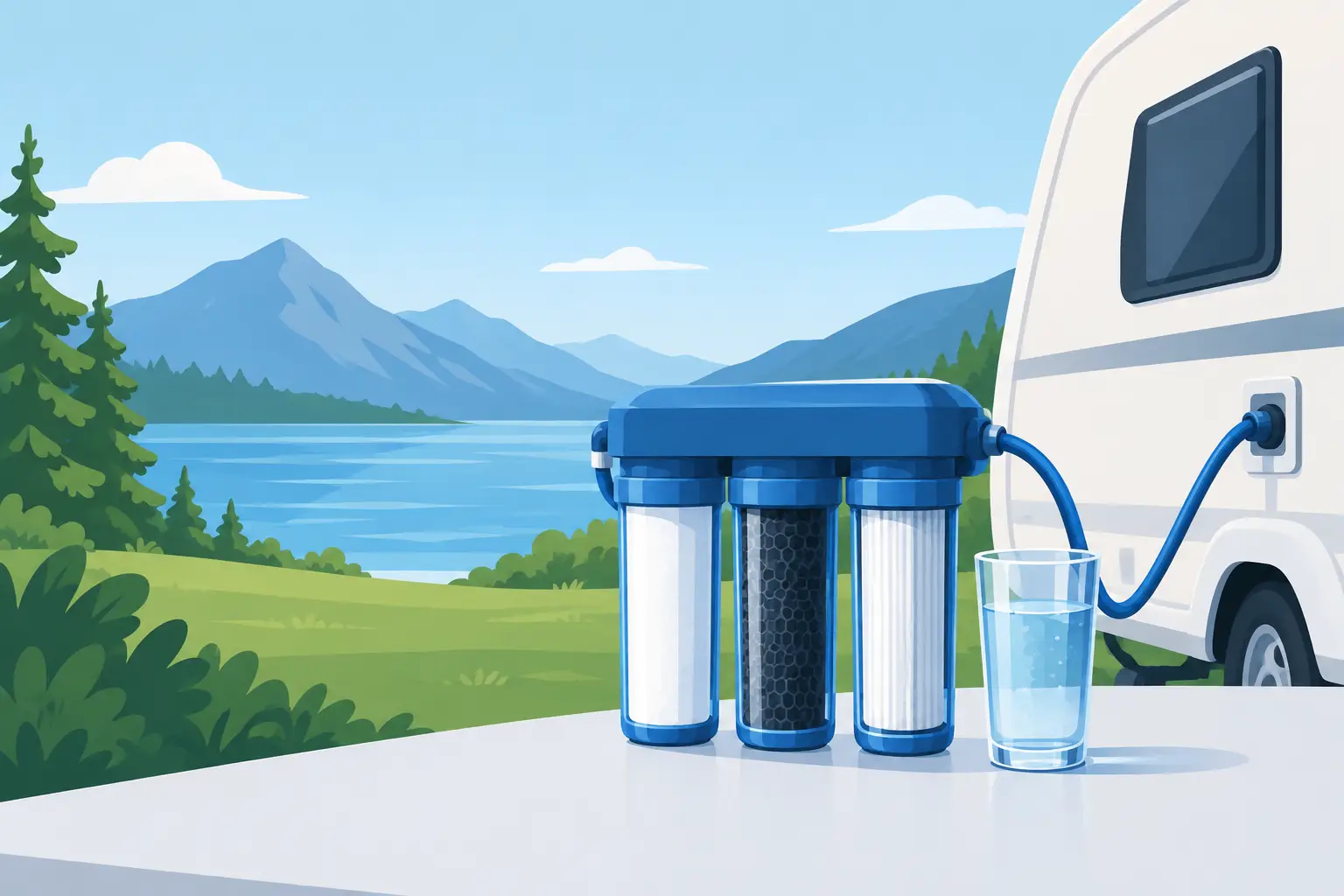
A caravan water tank can look clean and still collect fine sediment, taste from hoses, or bacteria from an unknown fill point. The best caravan filters are not necessarily the largest or most expensive units – they are the filters matched to the water you collect, the places you travel and whether you drink from the caravan tank.
For many Australian travellers, a sensible system starts with sediment filtration and improves from there only where the water source or intended use calls for it. This keeps water flowing properly, protects pumps and appliances, and makes servicing manageable while you are away from home.
What makes a caravan water filter the right choice?
Caravan filtration has to work in tighter spaces and under more variable conditions than a fixed household system. It may be filtering bore water at one stop, treated town water at the next and rainwater collected from the caravan roof between camps. A good setup needs to handle that variation without creating excessive pressure drop or becoming difficult to service.
Start by deciding what the filtered water will be used for. If it is only protecting the pump, hot-water service and taps from grit, a sediment filter may be enough. If you want better-tasting water for cooking and drinking, add carbon filtration. If you regularly fill from untreated sources or store rainwater for extended periods, consider a properly sized UV steriliser after pre-filtration.
The filter should also suit your pump flow rate and plumbing size. An undersized cartridge or housing can restrict flow, cause the pump to cycle more often and make showers frustratingly weak. A compact arrangement is useful, but it should not come at the cost of practical performance.
The best caravan filters by job
Sediment filters for dirt, rust and tank debris
A sediment filter is the workhorse of most caravan systems. It captures particles such as sand, dust, rust flakes and fine debris before they reach the pump, mixer taps, toilet and hot-water system. It is especially worthwhile where water is transferred through hoses or collected from a roof.
Cartridges are rated in microns. Lower numbers capture finer particles, but they can clog sooner. A 5-micron sediment cartridge is a common choice for general caravan water use because it offers useful protection without restricting flow as quickly as a very fine cartridge. Where water is visibly dirty, using a coarser pre-filter first can extend the life of a finer cartridge.
Sediment filtration does not improve taste, remove dissolved chemicals or make microbiologically unsafe water safe to drink. It is protection, not complete treatment. Check the cartridge after dusty roads, heavy rain events or fills from questionable outlets, as those are the times it is likely to load up quickly.
Carbon filters for taste and odour
Carbon filters are often the best next step for travellers who fill from chlorinated town supplies or dislike the taste and smell of water from hoses and tanks. Activated carbon can reduce chlorine, many unpleasant tastes and odours, and some organic compounds.
For drinking water, carbon is generally installed after a sediment filter. This sequence matters: sediment is removed first so the carbon cartridge does not become blocked prematurely. A combined sediment and carbon cartridge can save room, although separate stages are usually easier to tailor to changing water quality and service needs.
Carbon is not a substitute for disinfection. It can improve water quality noticeably, but it does not reliably remove pathogens. In fact, a neglected carbon filter can become a place for microbial growth. Replace cartridges to the manufacturer’s schedule, or earlier when taste returns or flow falls away.
UV systems for untreated or stored water
UV sterilisation can be a strong option where caravan water is collected from rainwater, taken from an untreated supply, or stored for long periods in warm conditions. A UV unit exposes water to ultraviolet light that damages the DNA of microorganisms, reducing their ability to reproduce.
UV only works as intended when the water is clear. Sediment, tannins and cloudy water can shield microorganisms from the light, so a sediment filter is essential ahead of the UV chamber. Carbon filtration may also be included before UV where taste and chlorine reduction are required, provided the overall flow rate remains within the UV unit’s rated capacity.
There are trade-offs. UV systems require power, need adequate installation room and require lamp replacement at the specified interval, even if the lamp still appears to be working. They also provide no residual protection inside a dirty tank or hose. Keep the tank clean and use food-grade hoses and fittings; a UV system is one part of a sound water-management approach.
Inline hose filters for filling the tank
An inline filter fitted to a drinking-water hose is a convenient first line of defence when topping up at caravan parks, showgrounds or public taps. It can reduce sediment entering the tank and, depending on the cartridge media, help with chlorine taste.
These filters are useful for clean treated supplies, but do not assume every portable hose filter makes untreated water potable. Check exactly what it is rated to remove, its flow capacity and replacement interval. If you are unsure of a source, do not rely on a small inline filter alone for drinking water.
Pump strainers for equipment protection
A pump strainer is not a drinking-water filter, but it is worth including in any caravan water setup. Installed on the pump inlet, it catches larger debris that could damage the pump diaphragm or valves. It is a simple, serviceable component that can prevent an avoidable pump failure.
Use it alongside, rather than instead of, a proper sediment filter. The strainer protects the pump from larger material; the sediment cartridge provides finer filtration for the rest of the plumbing system.
Choosing a filter layout for your caravan
For a caravan mainly filled from reliable treated mains water, a pump strainer plus 5-micron sediment filter is a practical base. Adding a carbon cartridge is worthwhile if drinking-water taste is a priority. This arrangement suits many weekend and holiday caravans, and it is straightforward to maintain.
For off-grid travel using rainwater, a staged system is more appropriate. Start with a tank inlet screen or first-flush arrangement where possible, then use a pump strainer, sediment filtration and carbon filtration. Add UV sterilisation if the stored water will be used for drinking and the system can be installed to the manufacturer’s requirements.
For travel through areas where bore water may be used, testing is the smart first step. Bore water can contain fine sediment, minerals, iron, salinity or other dissolved contaminants. Standard caravan cartridges may improve particles and taste but cannot correct every bore-water issue. If water is salty or has high dissolved solids, treatment may require specialised equipment that is not always practical in a caravan.
A separate drinking-water line is another sensible option. The main tank supply can serve showers, washing up and toilet use through sediment filtration, while a dedicated carbon or multi-stage drinking-water filter supplies one tap at the kitchen sink. It limits cartridge use and gives you better treatment where it matters most.
Installation details that affect performance
Mount filter housings where you can inspect and change them without dismantling cupboards or removing equipment. They need protection from road debris, direct weather and freezing conditions, but access remains important. Use fittings rated for potable water and secure plumbing so vibration cannot loosen connections over corrugated roads.
Allow for a bypass or isolation valves if space and budget permit. This makes cartridge changes cleaner and means you can isolate a leaking housing without losing the whole water system. After fitting new cartridges, flush them according to the manufacturer’s directions before using the water for drinking or cooking.
Watch for pressure loss. A sudden reduction in tap flow is often a cartridge reaching the end of its useful life, rather than a failing pump. Carrying a spare sediment cartridge is good practice, particularly for extended trips through rural areas where replacements may not be readily available.
Maintenance is part of filtration
No filter will compensate for a neglected tank. Inspect tank inlets, screens, breathers and seals regularly. Clean the tank when sediment, biofilm or contamination is suspected, and sanitise the system after a long storage period or any known contamination event. Replace old hoses that leave an unpleasant taste or show signs of cracking.
Cartridge life depends on water quality and usage, not just the date on the calendar. Keep a note of installation dates, but respond to real signs as well: reduced flow, unpleasant taste, visible discolouration or a cartridge that appears heavily loaded. For UV systems, clean the quartz sleeve and replace lamps at the recommended interval.
North Coast Water Tanks can help match filtration components, pumps and tank accessories to a caravan or mobile water setup where a standard off-the-shelf kit is not the right fit.
The best approach is to build from the water you actually use: protect the pump first, improve taste where needed, and add disinfection only when the source and drinking-water plan justify it. A well-maintained, correctly sized system gives you more confidence at every fill point, whether you are parked by the coast, on a farm stay or well beyond the next town water supply.