


For many Australian properties, water reuse technology is not a future concept. It is the practical work of collecting water when it is available, storing it properly, treating it for its intended use and reducing reliance on mains supply or bore water. On a rural block, acreage property or commercial site, the difference often comes down to system design rather than tank size alone.
A well-planned reuse system can support garden irrigation, toilet flushing, stock water, wash-down areas and, where correctly treated and approved, household supply. The right outcome depends on the water source, local requirements, demand on the property and the level of treatment required.
What water reuse technology means in practice
Water reuse technology covers the equipment and processes used to capture, store, treat and redistribute water that would otherwise run off or go to waste. For most homes and farms, the two main sources are rainwater and greywater.
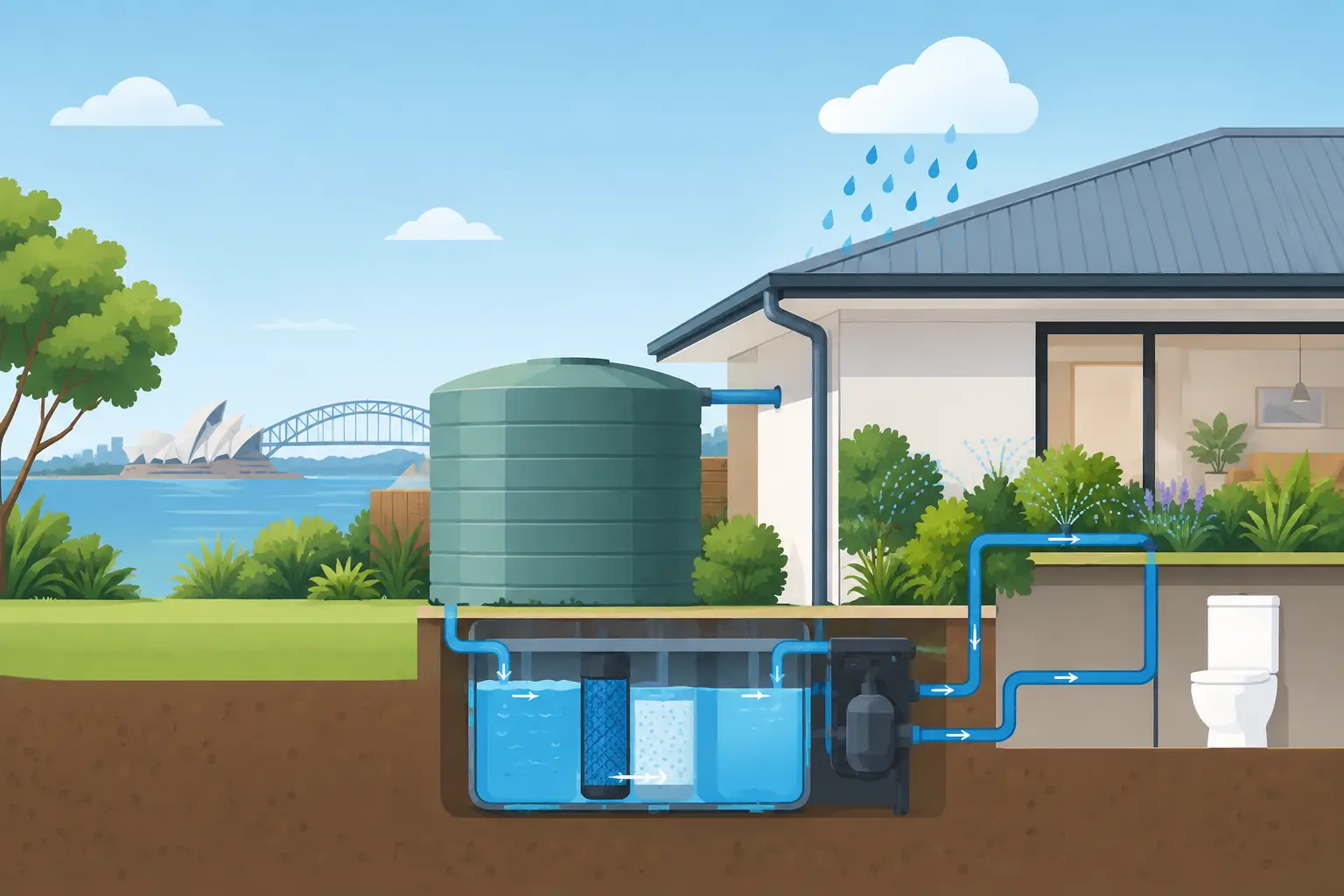
Rainwater harvesting begins at the roof. Gutters, leaf screens, first-flush devices, downpipes and tank inlets all affect the quality of water reaching storage. From there, a pump and filtration system move water to the house, garden, shed or stock troughs.
Greywater is water from showers, baths, hand basins and laundry use. It is different from rainwater because it can contain soaps, lint, oils and cleaning products. Kitchen water and toilet waste are generally excluded from simple domestic greywater systems because they carry higher contaminant loads. Greywater can be useful for subsurface garden irrigation, but it needs careful management and must meet the rules that apply in your state or local council area.
The aim is not to treat every litre to drinking-water standard. That can add unnecessary cost and complexity. The aim is to match water quality to the job at hand.
Start with the water source and end use
The most reliable systems are designed backwards from demand. A household using rainwater for laundry and garden watering has different requirements from a cattle property supplying troughs across several paddocks. A small business may need stored water for amenities, wash-down or fire protection, while a caravan or tiny home may need a compact system with low power demand.
Consider when water is needed, not just how much falls from the roof. Summer irrigation demand can be highest when rainfall is lowest. A tank that fills quickly in winter may still run short during a dry spell if the storage capacity does not suit the property’s usage pattern.
For rainwater intended for household use, a typical setup may include pre-tank screening, a first-flush diverter, a sealed food-grade tank, a pressure pump and filtration at the point of entry or point of use. Sediment filtration protects pumps and plumbing, while carbon filtration can improve taste and odour. UV sterilisation may be appropriate where microbial control is required, provided the water is filtered first so the UV unit can work effectively.
For irrigation, treatment may be less intensive, but filtration still matters. Fine sediment can block drippers, sprinklers and solenoids. Selecting the filter mesh or cartridge rating should be based on the irrigation equipment, water source and maintenance capacity.
Rainwater: the strongest starting point for many properties
Rainwater is often the most straightforward source to reuse because it starts relatively clean when the roof and collection system are maintained. It can be stored in poly, steel or Aquaplate tanks in sizes suited to the roof catchment, available space and demand.
Tank placement is a practical decision. Ground-level tanks are easier to inspect and service, but the pump must be correctly sized to deliver pressure and flow over the required distance and elevation. A tank positioned far from the house, irrigation area or livestock infrastructure may need larger pipework or a booster arrangement to avoid poor pressure at the outlet.
Tank hygiene is equally important. Keep lids secure, mosquito-proof screens intact and inlet strainers clear. Check gutters for leaf litter and bird droppings, particularly after storms or long dry periods. Sediment gradually builds at the bottom of every tank, and periodic tank cleaning helps protect water quality and pump performance.
Greywater: useful, but not a fit-and-forget system
Greywater reuse can reduce demand on potable water supplies, especially where gardens need regular watering. However, it requires more active management than a rainwater tank. Storage is usually limited because untreated greywater can develop odours and bacteria quickly.
The choice of detergents matters. Products high in salts, phosphorus, boron or harsh chemicals can affect soil structure and plant health over time. Greywater should generally be distributed below the surface rather than sprayed, avoiding contact with edible parts of plants and preventing pooling or runoff.
Rules differ between jurisdictions, and some systems require approval or installation by a licensed professional. Before planning a greywater system, confirm the requirements for your location and the intended use. This is one area where doing it cheaply can create ongoing problems for gardens, neighbours and compliance.
The core components of a dependable reuse system
A tank is central to water reuse, but it is only one part of the system. Components need to work together under real conditions: heavy rain, power outages, long dry periods, dirty roofs and variable daily demand.
Collection components should keep debris out before it reaches the tank. A first-flush device can divert the initial runoff from a roof, which may contain accumulated dust, leaves and contaminants. Overflow needs to be directed away from tank foundations and buildings, ideally to a suitable drainage point or additional storage.
Pumps must be selected for the required flow and pressure, not simply by their maximum rating. A pump that is too small may struggle with showers, taps and irrigation running at the same time. A poorly matched oversized pump can cycle excessively, use more power and place extra strain on fittings. Pressure controllers, dry-run protection and correctly sized pipework all contribute to reliable operation.
Filtration should be staged according to the water source and end use. A coarse screen will not replace a sediment filter, and a UV unit does not remove dirt or chemicals. For potable rainwater systems, using certified food-grade components and equipment suitable for Australian conditions provides a sound foundation. Where mains backup is included, the connection must protect the potable supply from cross-contamination.
Water reuse technology needs maintenance, not guesswork
Even quality equipment needs routine attention. Most issues are preventable when maintenance is planned around the seasons. After leaf fall or major rain, inspect gutters, screens and first-flush devices. During dry periods, check for sediment, algae risk, pump cycling and low-water cut-out operation.
Filter cartridges need replacement according to water quality and usage, not just the date written on the box. A noticeable pressure drop, cloudy water or reduced sprinkler performance can indicate a blocked filter. UV lamps also have a service life, and the quartz sleeve must remain clean for the system to provide effective disinfection.
Tank inspections should include the lid, vents, inlet screen, overflow, foundation and fittings. Look for signs of movement, leaks or damaged seals. Older concrete tanks may need repair work or relining to maintain water quality and prevent loss of stored water. Steel tank liners should also be checked for wear before small faults become expensive repairs.
Choosing the right level of investment
The best system is not automatically the one with the most treatment stages or the largest tank. A modest rainwater system supplying toilets, laundry and irrigation may offer excellent value for a suburban home. A larger rural property may benefit more from multiple tanks, separate stock and household supplies, and a pump layout that provides redundancy.
Budget for the complete installation: tank base, plumbing, pump, filtration, electrical work, overflow management and ongoing servicing. Buying a large tank without allowing for correct foundations, pipe sizes or water treatment can compromise the whole project.
North Coast Water Tanks can help property owners bring these decisions together, from storage and pumps to filtration, accessories and practical system advice. Working with one supplier makes it easier to check that each component suits the next.
A water reuse system earns its value over years, not on installation day. Build it around the water you have, the jobs you need it to do and the maintenance you can realistically keep up with. That approach delivers a dependable supply when conditions are at their toughest.