


A pump that starts, stops, then starts again while no one is using water is doing more than making an annoying noise. It is using extra power, placing wear on the motor and controls, and may be signalling a fault that will worsen if left alone. If you are asking, “why does pump keep cycling?”, the answer is usually linked to pressure loss, incorrect pressure settings or a problem with the pump’s control equipment.
For homes, farms and acreage properties using rainwater tanks, the first step is to work out whether the cycling happens only when a tap is open or when the system should be idle. Those are two very different situations. A pump that runs continuously while a shower is on may have a flow or capacity issue. A pump that repeatedly cuts in and out with every tap shut is commonly called short cycling and needs attention.
Why Does a Pump Keep Cycling?
Most tank pressure systems work by building pressure in the pipework. When pressure falls to the pump’s cut-in setting, the pump starts. Once it reaches the cut-out setting, it stops. If pressure falls again without intentional water use, the pump starts once more.
A small amount of cycling can be normal. For example, a pressure pump may restart while a washing machine fills, a toilet cistern refills or an irrigation solenoid opens. Frequent cycling every few minutes, or rapid on-off operation over a few seconds, is not normal. It means the system cannot hold pressure, cannot store enough pressure, or cannot correctly detect when it should stop.
A leak after the pump
Leaks are one of the most common causes. A dripping garden tap, leaking toilet cistern, split irrigation fitting, faulty float valve or underground pipe leak can slowly lower system pressure until the pump cuts in again.
Start with the obvious. Turn off all taps and appliances that use water, including irrigation controllers. Check external taps, troughs, toilets, filters and pipe connections around the pump. A toilet that continues quietly running into the bowl can waste a surprising amount of tank water and cause regular pump cycling.
If the system still loses pressure and no visible leak is found, the issue may be underground or within a building line. Wet ground, unexplained damp patches, a water meter movement where one is fitted, or reduced tank levels can help narrow it down. A plumber is generally the right person to investigate concealed pipework leaks.
A leaking non-return valve or foot valve
Where a pump draws water from a tank through a suction line, a failed non-return valve or foot valve can let water drain back towards the tank after the pump stops. The pressure then falls, and the pump restarts to rebuild it.
This fault is particularly common on older suction installations. Air may enter through a small fitting leak even if water is not visibly escaping. Signs can include difficulty priming the pump, sputtering at taps, air in the line, or a pump that cycles after sitting unused.
Non-return valves are simple components, but they must be correctly sized, installed in the proper direction and suited to the water system. Replacing one without checking the rest of the suction line can leave the underlying problem unresolved.
A pressure tank with lost air charge
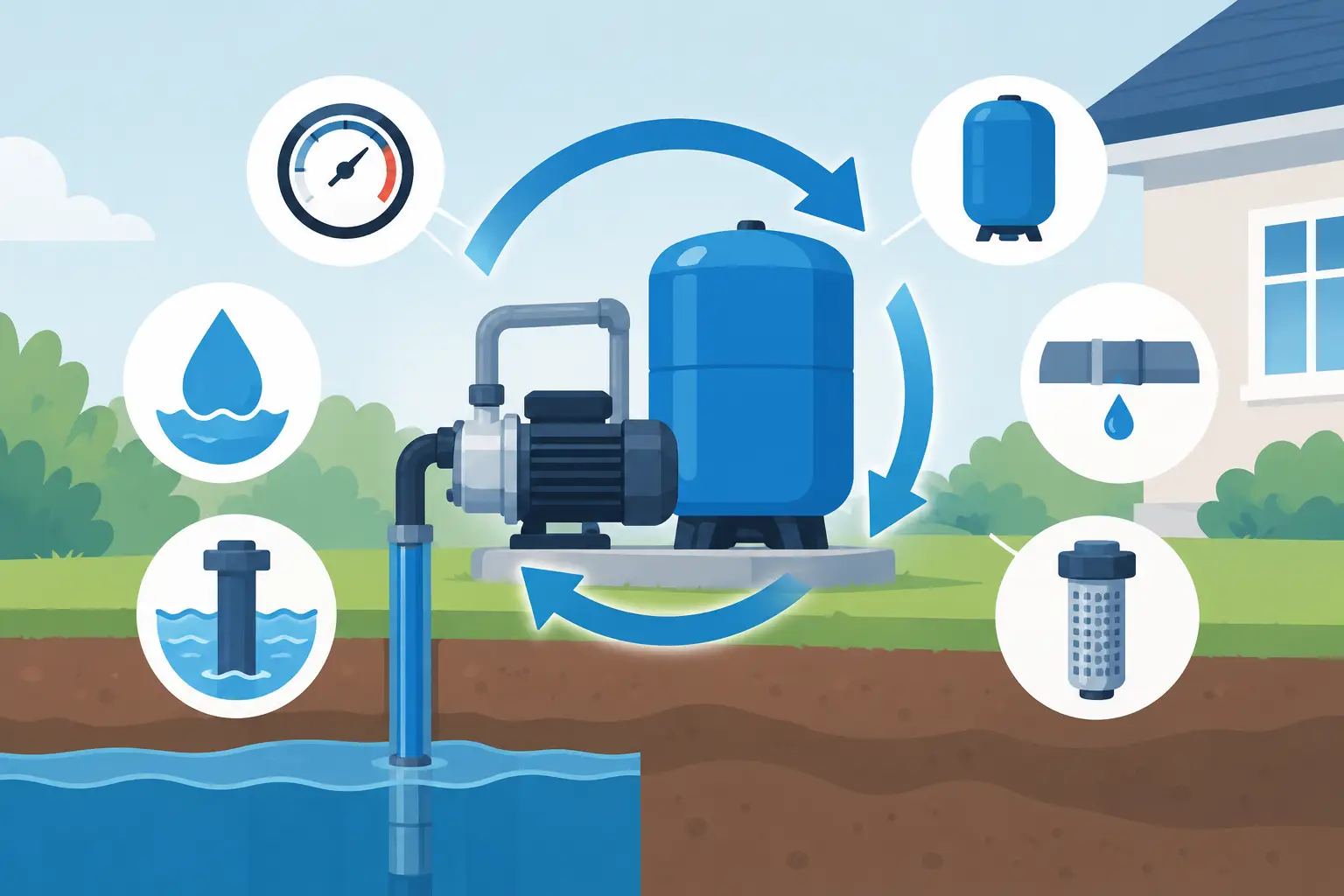
Many pressure pump systems use a pressure tank to reduce starts and stops. Inside the tank is usually an air chamber or bladder. That stored air provides a small reserve of pressurised water, allowing the pump to run for longer, more efficient cycles rather than switching on every time a tap is opened.
When the bladder fails or the air charge is incorrect, the tank holds very little usable water. The pump can then cut in and out rapidly, particularly during low-flow use such as handwashing or a toilet refill. The tank may feel full of water from top to bottom, and tapping it can produce a dull sound rather than a hollow sound near the top.
Checking a pressure vessel involves isolating the pump, releasing water pressure and testing the air pressure at the valve. The required pre-charge depends on the pump’s pressure switch settings, so use the manufacturer’s specifications rather than guessing. If water comes out of the air valve, the internal bladder has failed and the pressure tank normally requires replacement.
Incorrect pressure switch settings
A conventional pressure switch controls when the pump starts and stops. If its cut-in and cut-out settings are too close together, incorrectly adjusted, or out of step with the pressure tank pre-charge, cycling becomes more frequent.
Pressure switches can also wear over time. Contacts may become burnt or stick, while the small pressure sensing port can become blocked with sediment. These faults can make pump operation erratic rather than simply frequent.
Pressure adjustments should not be made casually. A setting that is too high can exceed the pump’s capability or place unnecessary stress on filters, fittings and household plumbing. If you are unsure of the existing settings or whether the pump is designed for them, have a qualified pump technician assess the system.
A blocked filter or restricted water supply
A blocked cartridge filter, clogged pump strainer or restricted suction line can reduce the amount of water reaching the pump. The pump may struggle to build pressure, run longer than normal, or stop and restart unpredictably as flow changes.
This is especially relevant after heavy rain, tank cleaning, plumbing work or a period of poor water quality. Sediment stirred up in a tank can quickly load a filter cartridge. Check the condition of filter housings, strainers and any visible pre-filtration equipment, following the system’s isolation and pressure-release procedure.
Do not run a pump dry while checking supply issues. Make sure there is adequate water in the tank and that tank outlets, isolation valves and strainers are clear before restarting. Repeated dry running can damage seals and internal pump components.
A faulty pump controller or pressure sensor
Modern automatic pressure pumps often use an electronic controller, rather than a separate pressure switch and large pressure tank. These controllers respond to flow and pressure, and may include dry-run protection. When a controller develops a fault, the pump may cycle, fail to stop, or show warning lights.
Check whether the controller has a reset button, error indicator or display message. Also inspect for water around electrical connections, cracked housings or damage from insects, heat and weather exposure. Do not remove covers or carry out electrical repairs unless you are licensed to do so.
Electronic controllers are not interchangeable in every installation. The replacement needs to suit the pump’s power, pressure range, flow rate and intended use. A household rainwater system, livestock supply and irrigation pump can each have different control requirements.
Safe Checks Before Calling for Help
Before arranging a service visit, it is useful to note what the pump is doing. Turn off all water use and watch whether it restarts. Then isolate the outlet line after the pump, if your installation has a suitable valve. If cycling stops with the outlet isolated, the pressure loss is likely somewhere downstream. If it continues, the issue may be at the pump, pressure vessel, controller, suction line or non-return valve.
Also record how often the pump starts, whether it reaches normal pressure, and whether there are leaks, unusual noises or air at the taps. This information helps identify the likely cause faster and avoids replacing parts that are still serviceable.
Avoid repeatedly resetting a pump that is tripping on dry-run protection or overheating. That protection is there for a reason. Likewise, isolate power before touching pump fittings, and engage a licensed electrician for wiring, switches or controller faults.
When Repair Makes Sense and When It Is Time to Upgrade
A worn valve, blocked filter, leaking tap or incorrect pressure vessel charge can often be repaired at modest cost. On the other hand, an older pump with recurring seal failures, poor pressure, obsolete controls or an undersized pressure tank may cost more in call-outs and power use than it is worth.
The right replacement depends on your water source, required flow, elevation, pipe size, filtration and number of outlets. A pump that is oversized can cycle excessively on small household demands, while an undersized unit may never maintain pressure during irrigation or peak use. Matching the pump, controller and pressure tank as a system matters more than choosing on price alone.
North Coast Water Tanks can assist with practical pump, filtration and tank system guidance for properties that need dependable stored water supply. A properly matched setup protects your equipment, improves day-to-day water pressure and makes faults easier to diagnose.
If your pump is cycling, treat it as an early warning rather than a background noise. A quick check of leaks, filters and pressure equipment now can prevent a failed pump or an empty tank when you need water most.