


A rainwater tank can hold excellent household water, but the water quality is decided well before it reaches the kitchen tap. Leaves on the roof, bird droppings, dust, insects, poorly sealed inlets and a neglected filter can all affect the supply. This household rainwater treatment guide explains how to build a practical treatment train for Australian homes, rural properties and lifestyle blocks where tank water is used every day.
The right setup depends on whether rainwater supplies the whole house, only outdoor taps and toilets, or drinking water as well. A reliable system is not simply a tank with a pump attached. It is a series of controls that keep contaminants out, remove what gets in, and make maintenance straightforward.
Start with clean water collection
Treatment begins at the roof. A sound, well-maintained roof and gutter system reduces the load on every filter that follows. Keep gutters clear of leaf litter, sediment and nesting material, particularly after windy weather or extended dry periods. Overhanging branches should be trimmed where practical, as they add debris and give birds and rodents easier access to the roofline.
Roof materials matter. Rainwater collected from suitable, well-maintained roofing is commonly used for household supply, while old roofs, deteriorating paintwork, exposed lead flashing or inappropriate surface coatings should be assessed before drinking water is collected. If there is any doubt about the roof catchment, seek local advice and arrange water testing rather than assuming a filter will solve every issue.
At the tank inlet, fit quality gutter guards or leaf diverters, a first-flush device and a fine insect-proof screen. Gutter guards reduce larger debris but do not replace cleaning. A first-flush diverter sends the first, dirtiest roof runoff away from the tank after dry weather. It needs to be sized for the roof area and cleaned so it can reset properly between rainfall events.
The tank itself should be closed, light-proof and securely screened. Light encourages algae growth, while gaps around lids, overflows and pipe penetrations allow insects, frogs and other pests into the water. A screened overflow is particularly important in mosquito-prone areas. Check that the tank lid is secure and that nearby drainage directs surface runoff away from the tank base.
Choose treatment for the water’s end use
A household treatment system should be designed around where the water is used. Water for gardens, stock washing or toilet flushing may need only good collection practices and basic sediment protection for pumps and valves. Water used for showers, washing machines, food preparation and drinking needs a higher level of control.
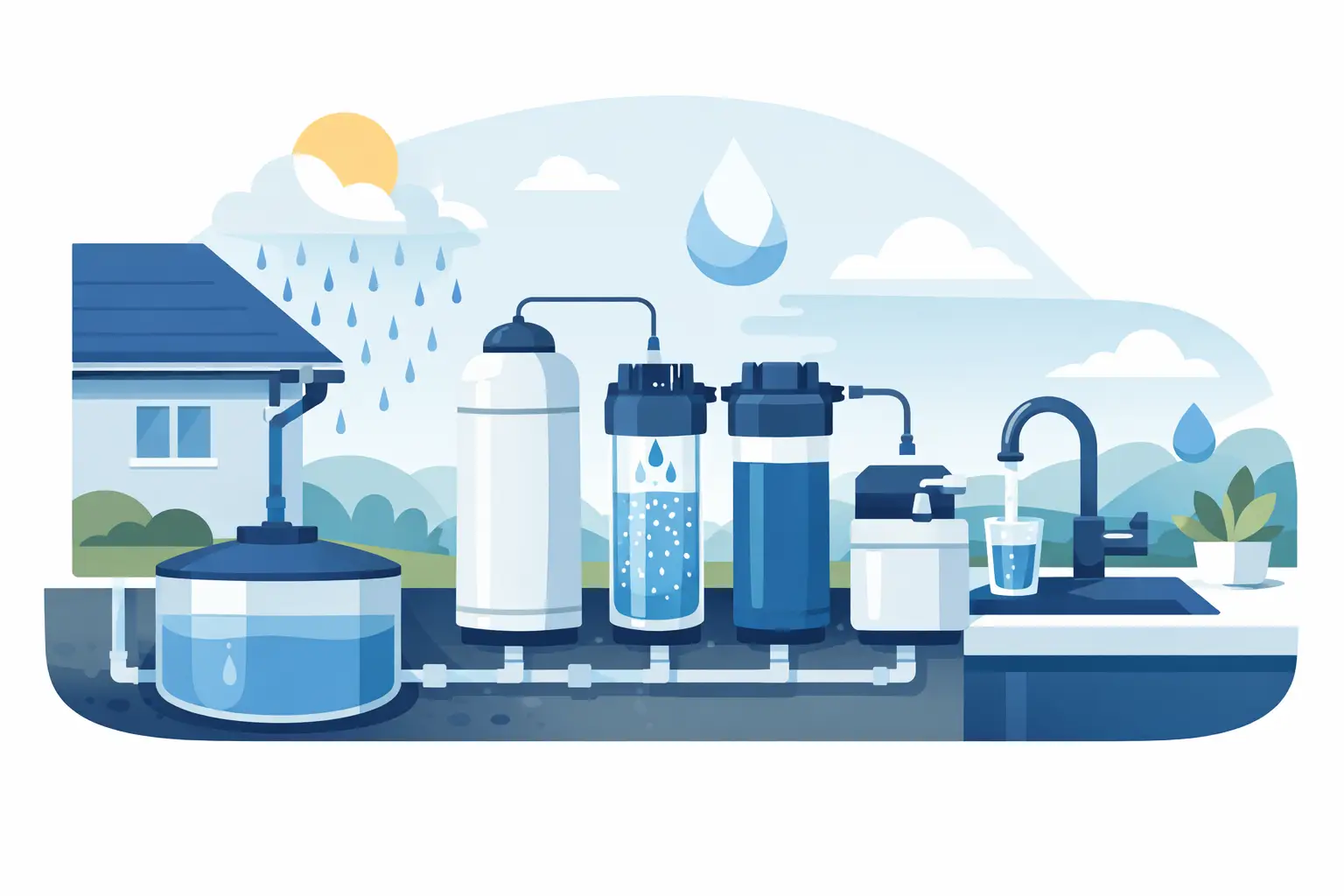
For whole-of-house tank water, a common arrangement is a sediment filter followed by a finer filter and ultraviolet disinfection. The exact micron rating and equipment size depend on water quality, household demand, pump flow and plumbing layout. A small cartridge may be adequate for a modest home, but it can cause pressure loss and frequent changes if it is undersized for a larger family or acreage property.
For drinking-water taps only, a point-of-use system can be a sensible option. This approach treats water at the kitchen sink while allowing the rest of the household supply to run through a simpler whole-house filter. It can reduce the ongoing cost of fine filtration, though it does not protect every tap in the home. The best choice depends on the household’s water use, budget and preference for whole-house protection.
Sediment filtration protects equipment first
Sediment filters capture fine particles such as grit, roof dust and tank sediment. They protect pumps, mixer taps, hot-water systems, UV units and finer filter stages from blockage and wear. A washable pre-filter can be useful where debris levels are high, followed by replaceable cartridges for finer treatment.
Do not select a cartridge based on micron rating alone. Filter housing size, available flow rate and expected sediment load are equally important. A very fine filter may produce clearer water, but if it is too restrictive it can reduce shower pressure and place extra load on the pump. Pressure gauges before and after the filter make it easier to see when a cartridge is blocking and needs attention.
Carbon improves taste, not every water problem
Activated carbon filters can improve taste and odour and reduce some organic compounds. They are often used as part of drinking-water treatment, particularly where stored water has a noticeable earthy or musty taste. However, carbon is not a substitute for clean collection or disinfection. It can also become a site for microbial growth if it is left in service beyond the recommended replacement period.
UV disinfection needs clear water
UV sterilisation is a practical chemical-free method for controlling microorganisms in rainwater, but it works only when the water entering the unit is sufficiently clear. Sediment can shield microorganisms from UV light, which is why filtration must come first. The UV unit must also be correctly sized for the pump’s actual flow rate, not just its maximum advertised capacity.
UV lamps require scheduled replacement even when they still appear to be working, because their germicidal output falls over time. The quartz sleeve around the lamp can collect mineral scale or staining and needs inspection and cleaning. A UV unit with an alarm or monitoring feature provides an added safeguard, particularly where the tank is the property’s only household supply.
Chlorination is another disinfection option, particularly after contamination events or during tank cleaning, but it needs careful dosing and ongoing management. It may affect taste and is not a set-and-forget answer. Where drinking water quality is uncertain, testing and professional guidance are more useful than adding treatment products at random.
A practical household rainwater treatment guide to maintenance
The most dependable system is one a household can maintain without guesswork. Keep a record of filter changes, UV lamp replacement, tank inspections and unusual water-quality events. This is especially useful for rental properties, holiday homes and farms where more than one person looks after the water supply.
Check the following areas on a regular basis:
- Gutters, roof valleys and leaf guards for accumulated debris.
- Inlet screens, lids and overflow mesh for tears, gaps or pest access.
- Filter pressure and water flow for signs of cartridge blockage.
- Pump cycling, pressure stability and visible leaks around fittings.
- Water appearance, smell and taste, particularly after long dry spells or major storms.
Tank cleaning intervals depend on the catchment, surrounding vegetation and the condition of the tank. Sludge at the bottom of a tank does not always mean the whole tank requires immediate cleaning, but heavy sediment can affect water quality and reduce usable capacity. A professional inspection can identify whether cleaning, a liner repair, improved inlet protection or a filter upgrade will provide the best result.
If water becomes cloudy, discoloured or has an unfamiliar smell, avoid treating the symptom as a simple filter-change issue. Inspect the roof and tank first. Heavy rain after a dry period can wash a large amount of material from the roof, while floodwater, dead animals in gutters, damaged screens or a compromised tank lid can create more serious contamination risks. Use an alternative safe supply for drinking and food preparation until the cause has been identified and the system has been cleaned, treated or tested as needed.
Design details that prevent common problems
Good plumbing design makes treatment equipment easier to use. Install filters where cartridges can be changed without working in mud or cramped spaces, and allow enough room to remove a UV lamp and sleeve. Include isolation valves and a bypass where appropriate so servicing does not leave the property without all water. Protect exposed pipework and housings from direct sun and physical damage.
Pump selection also affects treatment performance. The pump must deliver adequate pressure and flow through filters, UV equipment and household fixtures without excessive cycling. A pressure controller, correctly sized pressure tank or variable-speed system may improve operation, but the best arrangement depends on the property layout and daily demand. Long pipe runs, elevation changes and multiple bathrooms all need to be considered.
For a new installation or an upgrade, North Coast Water Tanks can help match tanks, pumps, filtration and UV equipment to the way your property actually uses water. Quality Assurance starts with selecting compatible components, while Local Support helps keep the system practical to service over its working life.
Rainwater treatment is not about adding the most equipment possible. It is about protecting the water at each stage, choosing treatment that suits its intended use, and keeping every component maintained. A clean roof, sealed tank, correctly sized filters and a disciplined service routine will do more for dependable household water than any single product on its own.