


A rainwater tank can supply excellent water, but the water leaving the tank is only as good as the treatment system behind it. When comparing UV vs carbon filtration, the key point is simple: they do different jobs. UV targets living microorganisms, while carbon improves water by adsorbing particular chemicals, tastes and odours. For many Australian homes using tank water for drinking, the best answer is not one or the other, but the right combination in the right order.
UV vs Carbon Filtration: The Core Difference
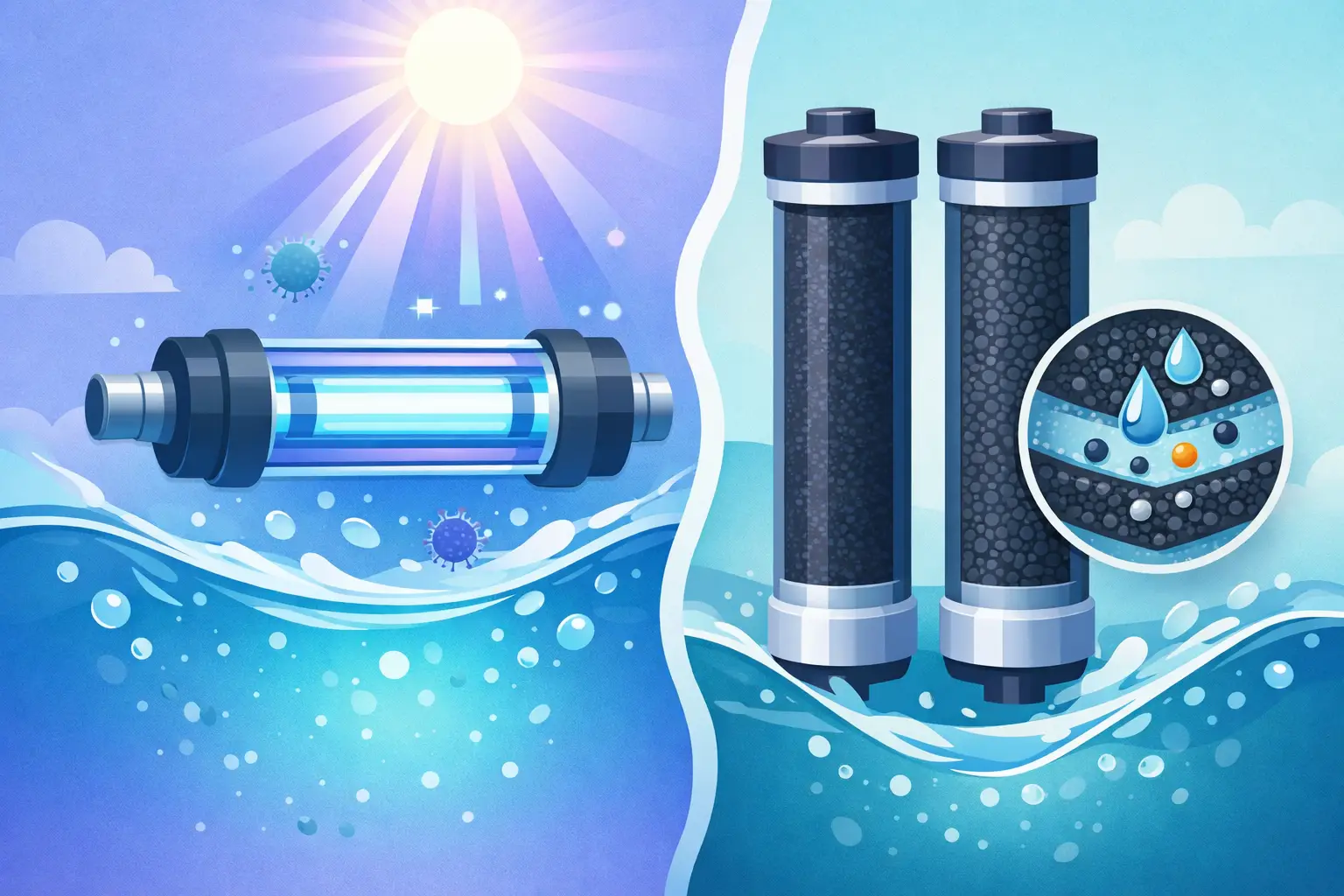
UV sterilisation uses ultraviolet light to inactivate microorganisms in water. When correctly sized and installed, a UV unit can treat bacteria, viruses and protozoa that may be present in rainwater following contamination from birds, possums, insects, dust, roof debris or tank sediment. It does not physically remove those organisms, but it prevents them from reproducing and causing illness.
Carbon filtration works differently. Activated carbon has a highly porous surface that adsorbs selected dissolved contaminants. It is commonly used to reduce chlorine, chemical tastes, earthy odours and some organic compounds. Carbon can make water more pleasant to drink, particularly where mains water is being treated or where tank water has picked up an unwanted taste or smell.
Neither system is a substitute for basic tank hygiene. A clean roof catchment, well-maintained gutters, leaf strainers, mosquito-proof screens, a first-flush device and a properly sealed tank all reduce the treatment load before water reaches your filters.
What UV Sterilisation Is Best For
A UV system is generally chosen where microbiological safety is the priority. This is particularly relevant for households relying on rainwater for kitchen, bathroom and drinking water use, as well as farms, accommodation sites, offices and other properties where multiple people use the supply.
UV treatment is chemical-free and does not alter the taste, colour or mineral content of water. Water passes through a chamber around a UV lamp, receiving a controlled dose of ultraviolet light. The system needs to be matched to the actual flow rate of the pump and household demand. An undersized unit may not provide adequate exposure at peak flow, while an appropriately sized unit gives reliable treatment capacity without restricting normal use.
There is an important limitation: UV needs clear water. Sediment, tannins, cloudiness and particles can block or scatter UV light, allowing microorganisms to pass through untreated. That is why a sediment filter is normally installed before a UV unit. In many tank-water systems, this may be a washable pre-filter followed by a finer cartridge filter, then UV as the final treatment stage.
UV is not designed to remove sediment, metals, salts, pesticides, bad tastes or odours. If these are the issue, UV alone will not solve them.
UV Maintenance Requirements
A UV system is dependable when it is maintained. Most UV lamps require replacement every 12 months, even when they still appear to be operating, because UV output declines over time. The quartz sleeve around the lamp also needs periodic inspection and cleaning, especially where water carries mineral deposits or fine sediment.
The unit should have a working lamp indicator or alarm so a failed lamp is not missed. Pre-filters must be replaced on schedule as well. A blocked or neglected filter can reduce water pressure and compromise the clarity needed for effective UV treatment.
What Carbon Filtration Is Best For
Carbon filters are most useful when water quality is acceptable from a microbiological perspective but unpleasant or affected by particular dissolved contaminants. For homes on treated town water, carbon is frequently used to reduce chlorine taste and smell. For rainwater supplies, it can help with musty, earthy or organic tastes that may develop from leaf matter or stored water conditions.
There are two common styles. Granular activated carbon filters contain loose carbon granules and are often used for general taste and odour improvement. Carbon block filters use compressed carbon and can capture finer particles while providing greater contact time. The right option depends on water quality, required flow rate and the contaminants being targeted.
Carbon does not provide reliable disinfection. While a carbon cartridge may physically trap some particles and organisms, it should not be relied upon to make potentially contaminated rainwater safe to drink. In fact, carbon can create a favourable surface for bacterial growth once the filter is exhausted or left unchanged for too long. This is one reason carbon is usually installed before UV where both are used.
Carbon also has limits on what it can remove. Performance varies by filter type, contact time and water chemistry. It may reduce some pesticides and organic chemicals, but it is not a universal solution for every contaminant. If testing identifies a specific issue such as high iron, hardness, salinity or PFAS, a purpose-designed treatment system may be needed.
Carbon Filter Replacement Matters
A carbon filter has a finite adsorption capacity. Once its pores are full, it stops effectively reducing taste, odour and target chemicals. There is no single replacement interval that suits every property because usage and source-water quality vary. A household with heavy water use, a large family or poor-quality incoming water may need more frequent changes than a lightly used weekender.
As a practical guide, replace carbon cartridges according to the manufacturer’s rated capacity and sooner if flow drops, taste returns or the filter has been exposed to prolonged periods without use. Regular replacement is a small cost compared with running a system that no longer performs as intended.
Choosing the Right Treatment Train for Tank Water
For many rainwater systems used for drinking, a staged approach provides the most dependable result. Water should first be protected at the collection point, then filtered to remove physical debris and fine sediment, with UV treatment installed last to address microorganisms in clear water.
A typical household arrangement may include a leaf strainer and first-flush diverter at the roof, a tank inlet screen, a pump pre-filter, a sediment cartridge and a UV steriliser. A carbon filter can be added before the UV unit if taste, odour or particular organic contaminants are a concern. The exact order and cartridge micron rating should suit the water source, pump performance and required household flow.
For non-potable uses such as garden irrigation, toilet flushing, stock washing areas or general outdoor cleaning, UV and carbon may not be necessary. A good screen and sediment filtration arrangement can be enough, depending on the application. However, any system supplying drinking taps, food preparation areas or accommodation should be designed more carefully, with maintenance and water quality testing taken seriously.
Questions to Ask Before Selecting UV or Carbon
Start with the water source and end use. Is the supply roof-collected rainwater, town water, bore water or a blended source? Will it be used only outdoors, or for showers, cooking and drinking? Is there visible sediment, a noticeable smell, staining, low pressure or a history of contamination?
It is also worth considering peak demand. A system for a small cabin has different requirements from a family home, dairy, farm stay or workshop with staff amenities. The filtration system must handle the flow delivered by the pump without excessive pressure loss. Installing a high-capacity UV unit behind restrictive or undersized filters will not produce a satisfactory result.
Water testing is valuable where quality is uncertain or where there has been flooding, bushfire ash, tank contamination or a change in taste. Testing gives a clearer basis for selecting equipment than relying on appearance alone. Clear water is not automatically safe water, and water that tastes unusual does not always indicate a health risk.
A Practical Decision
Choose UV when your priority is controlling microorganisms in clear, filtered water. Choose carbon when you need to improve taste and odour or reduce suitable dissolved organic compounds. Choose both when you want better drinking water quality and dependable microbiological treatment from a rainwater supply.
The most reliable systems are built around the whole property, not a single cartridge or appliance. North Coast Water Tanks can help match tanks, pumps, pre-filtration, carbon cartridges and UV equipment to the way your household, farm or business actually uses water. With the right treatment sequence and a simple maintenance routine, tank water can remain a practical, dependable part of your long-term water supply.