


A pump that starts every time the toilet flushes, then stops cleanly when the tap closes, is easy to take for granted. Until it does not. This water pressure controller review looks at what these devices actually do, where they suit tank water systems, and the details that separate a dependable installation from one that causes pump cycling, low flow or inconvenient call-outs.
For homes, farms and small commercial sites relying on rainwater, a pressure controller is not simply an accessory. It is the component that tells an automatic pump when water is needed and when to stop. Choosing one needs to start with the pump, plumbing layout and intended use, rather than the controller’s price alone.
What a water pressure controller does
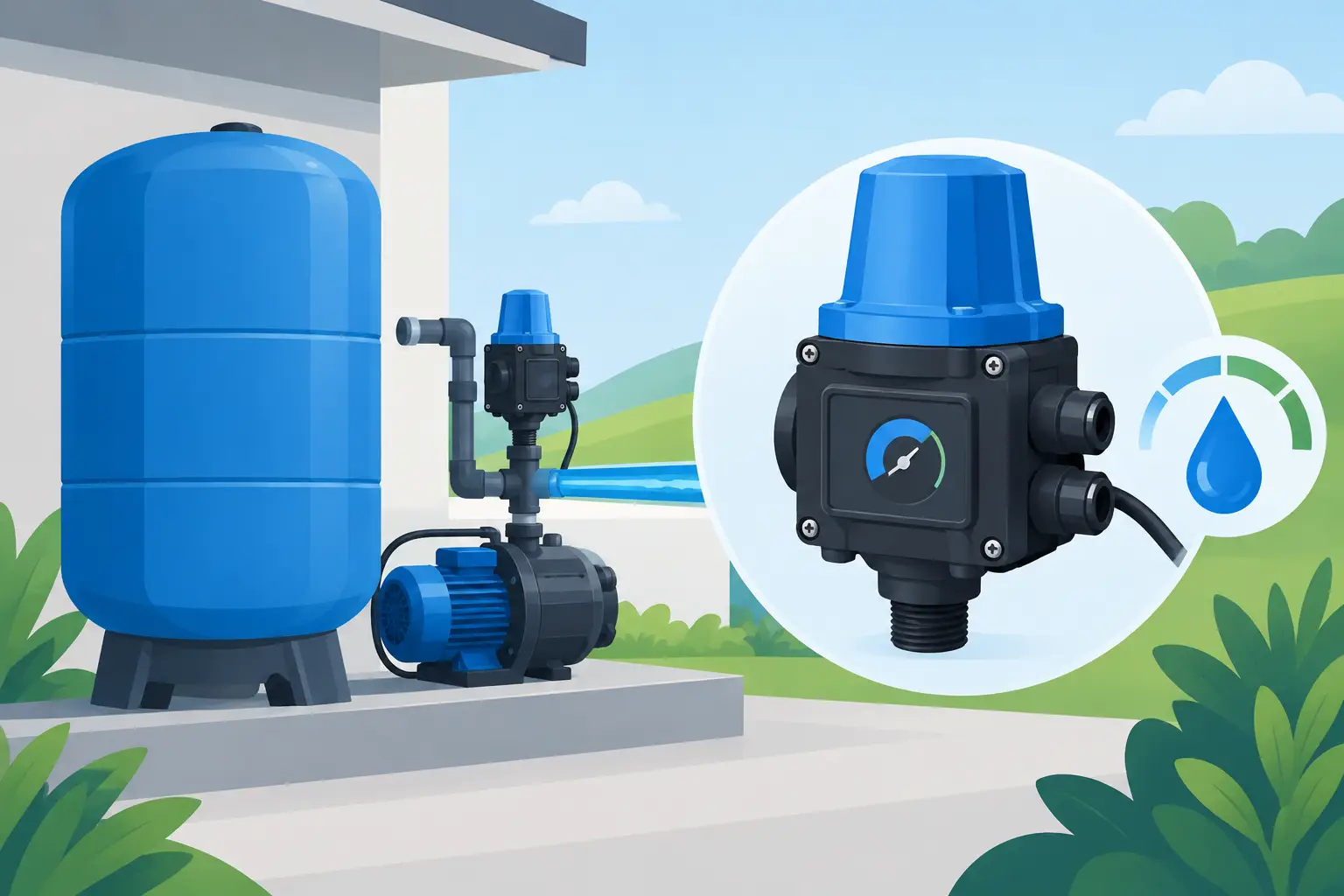
An electronic water pressure controller, often called an automatic pump controller or pump control, monitors pressure and water flow on the outlet side of a pump. Opening a tap drops line pressure and creates flow, prompting the controller to start the pump. Once taps are closed and flow stops, it shuts the pump down after a short delay.
This makes it a practical choice for many domestic rainwater tank systems. It provides automatic operation without the separate pressure tank and pressure switch arrangement used in some conventional systems. For a house supplied from a tank, it can keep daily water use straightforward: open a tap, use water, close the tap.
Most quality controllers also include dry-run protection. If the tank is empty, an inlet is blocked or the pump loses prime, the controller should detect the lack of water flow and stop the pump before extended dry running causes damage. That protection is valuable, but it is not a substitute for correct suction plumbing, a clean tank outlet and regular checks.
Water pressure controller review: what matters most
The best controller is not necessarily the one with the highest claimed pressure rating. It is the one that suits the duty of the pump and the property’s demand. A controller fitted to an undersized pump cannot create more water than the pump, tank outlet or pipework can deliver.
Pump compatibility comes first
Check the controller’s maximum motor power, voltage, current rating and maximum working pressure against the pump data plate. This is especially important where a larger multistage pump is used for acreage homes, irrigation support or multiple buildings. A controller that is electrically undersized can overheat, trip or fail prematurely.
Also consider the pump type. Many electronic controllers are designed for clean-water pressure pumps and are commonly fitted to surface-mounted jet pumps or multistage pumps. Submersible pumps may need a compatible controller and appropriate electrical protection. If the pump has a built-in controller or variable-speed drive, adding another automatic controller can create conflicting signals.
For basic household tank supply, a correctly matched controller on a quality pressure pump is usually a simple and proven arrangement. For larger farms, accommodation blocks or sites with changing demand, a pressure tank, pressure switch or variable-speed system may offer better control. The right answer depends on the system, not just the label on the box.
Starting pressure and available flow
A controller has a start pressure, commonly expressed in kilopascals or bar. When household line pressure falls below that setting, it starts the pump. The chosen setting must allow the pump to develop adequate pressure at the furthest outlet while still delivering useful flow.
A high start pressure can sound appealing, but it may be unsuitable if the pump cannot maintain it while several fixtures are running. This can lead to unstable operation, reduced flow at showers, or frequent starts and stops. Long runs of small-diameter pipe, elevated homes and uphill supply lines all increase the pressure the pump must overcome.
For most homes, assess real usage rather than a single tap. A shower, washing machine and kitchen tap can run at the same time. On a rural property, include stock troughs, wash-down points or a second dwelling where relevant. A pump curve and a practical understanding of the pipework are more useful than a headline pressure figure.
Dry-run protection is useful, with limits
Dry-run protection is one of the strongest reasons to use a quality electronic controller. However, controllers typically respond after detecting low flow or abnormal conditions. They cannot correct every cause of lost water supply.
A blocked inlet strainer, air leak on suction pipe, restricted foot valve, collapsed hose or heavily fouled filter can all affect performance. Some controllers may interpret low-flow fixtures, small leaks or irrigation solenoids differently from normal household demand. If a controller trips repeatedly, resetting it without finding the cause can place the pump at risk.
Tank systems should have sensible safeguards upstream: a screened outlet, appropriately sized pipe, clean filters, sound suction fittings and a tank level that is monitored during dry periods. Where a pump can run unattended on critical water supply, low-level protection provides another useful layer of defence.
Build quality and installation details
A pressure controller lives in a working environment. It may be exposed to heat, dust, moisture, insects and vibration beside a tank or pump shed. Look for a unit with a weather-resistant enclosure suitable for its installation location, clear electrical terminals, a visible reset function and connection sizes that match the system without improvised adaptors.
It should be installed upright where required by the manufacturer, on the pump discharge side, and protected from direct weather where practical. A correctly sized non-return valve is also important, particularly on suction systems. Use properly supported pipework so the controller is not carrying the weight of rigid plumbing.
Electrical work must be completed safely and in line with Australian requirements. Pumps installed outdoors or near wet areas need appropriate protection, including correctly rated cabling and switching. A licensed electrician should handle electrical connections where required, while plumbing installation should follow the product instructions and local regulations.
Common problems that can look like controller failure
A controller is often blamed when the actual issue is elsewhere in the water system. Before replacing it, inspect the basics. A pump that runs but does not build pressure may have lost prime, drawn air through a suction fitting, or have a blocked filter. A pump that starts every few minutes when nobody is using water often points to a leaking toilet cistern, dripping tap, faulty non-return valve or underground leak.
Short cycling can also occur when demand is below the controller’s minimum flow requirement. This is more likely with a small trickle line, certain water-saving fixtures, or a leak that never creates enough flow for the controller to recognise normal operation. In these cases, changing the controller may not solve the underlying problem.
If water pressure is poor only at one outlet, check that outlet first. Aerators, shower heads and under-sink filters can restrict flow. If poor pressure affects the whole property, work back through the filtration system, pump, controller and tank outlet in that order.
When an electronic controller is the right choice
Electronic controllers suit many rainwater systems supplying a single home, granny flat, shed or small workplace. They are compact, straightforward to operate and generally provide the automatic start-stop function most tank owners expect. They are particularly useful where there is no need to maintain a large pressure vessel.
They are less ideal where water use is highly variable, flow is very low for long periods, or the installation supports extensive irrigation zones. A conventional pressure tank system can reduce pump starts during small draws. A variable-speed pressure system can maintain more consistent pressure across changing demand, although it costs more and needs careful selection.
For properties using rainwater for drinking and household supply, the controller should be considered alongside the complete setup: tank materials, first-flush management, filtration, UV treatment where required, pump capacity and maintenance access. A quality component performs best as part of a properly designed system.
A practical buying checklist
Before ordering a controller, confirm these four points with the pump specifications and site layout:
- The controller’s motor and pressure ratings safely cover the pump’s requirements.
- Its start pressure suits the pipe length, elevation and expected outlets.
- The plumbing arrangement supports reliable priming and adequate flow.
- The unit will be installed in a protected, serviceable location with compliant electrical work.
At North Coast Water Tanks, the most useful advice starts with how the property actually uses water. A controller for a compact home tank setup may be very different from one supporting a long rural supply line or a pump feeding several buildings.
A well-matched water pressure controller should disappear into the background of daily life. If it is regularly resetting, cycling or leaving taps short of pressure, treat that as a reason to check the whole pumping system, not merely replace the controller.