


A pump that is right for a 22,500-litre rainwater tank beside a house may be completely wrong for a creek-fed irrigation system or a deep bore. When comparing a submersible vs surface pump, the key question is not simply which one is more powerful. It is where the water sits, how far it needs to travel, how often the pump will run and how easily you need to inspect it.
For homes, farms, acreage properties and small commercial sites, the most dependable setup is one that matches the water source and demand. A well-chosen pump provides steady pressure, protects the system from unnecessary wear and makes stored water genuinely useful when you need it.
Submersible vs surface pump: the main difference
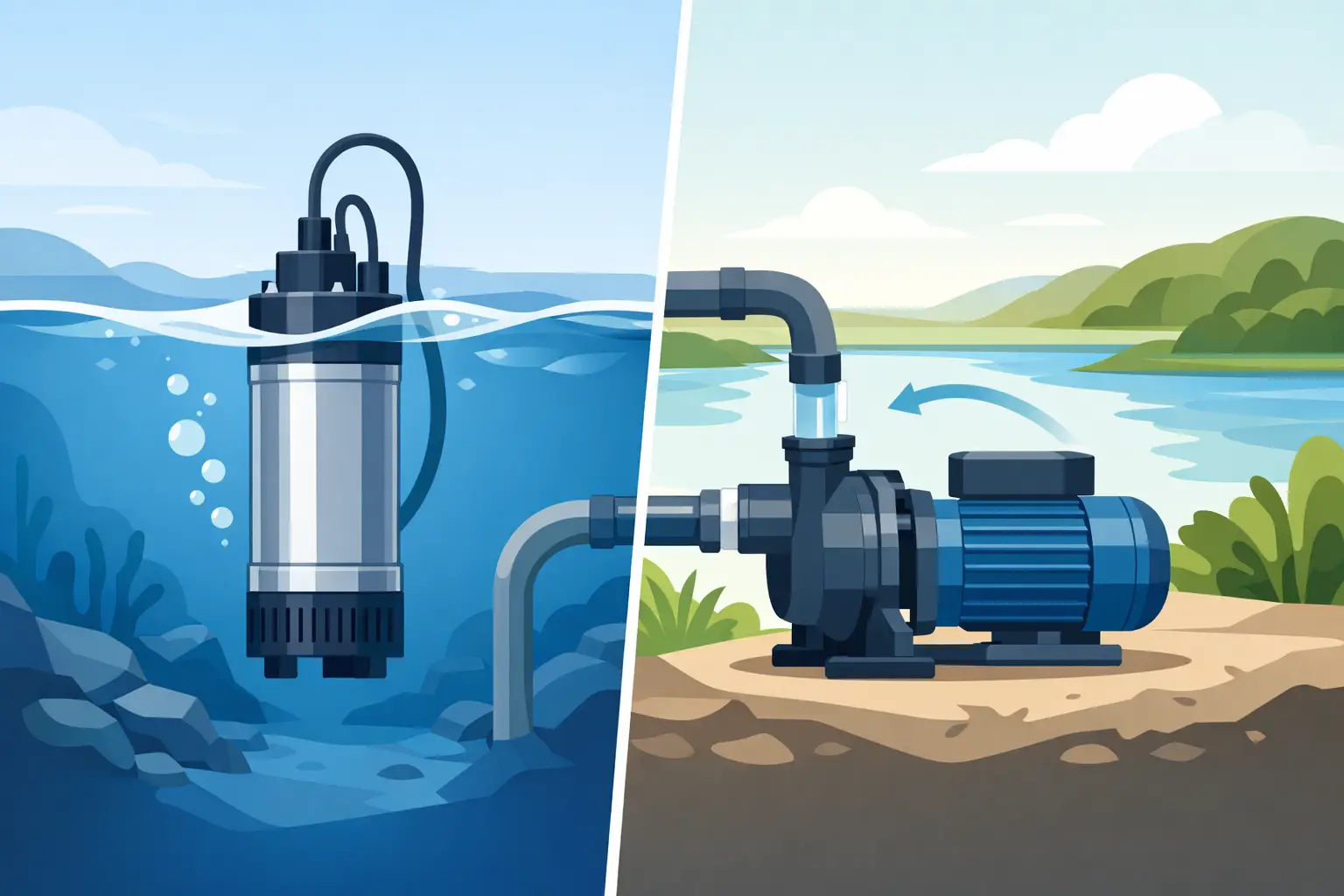
A submersible pump operates underwater. It is lowered into a water tank, well, bore, dam or other suitable water source and pushes water up through the delivery pipe. Because the pump is already surrounded by water, it does not need to pull water up from a distance before it can deliver it.
A surface pump, often called an external pump, sits outside the water source. It draws water through a suction line and then pushes it through the system. Surface pumps are commonly installed beside rainwater tanks, in pump covers, sheds or protected service areas.
This difference between pushing and pulling water has practical consequences. Surface pumps have limits on suction lift, while submersible pumps are generally better suited to deep water sources. On the other hand, an external surface pump is easier to reach for servicing, adjustment and troubleshooting.
When a submersible pump is the better choice
Submersible pumps are a strong option where the water level is well below ground level, changes frequently or is difficult to access from the surface. They are widely used for bores, wells, deep tanks, sumps and some dam transfer applications.
For a bore supplying a rural home or livestock water system, a correctly sized bore pump can lift water from significant depths that an ordinary surface pump cannot manage. Surface pumps generally have a practical suction limit of around 7 to 8 metres under ideal conditions, and real-world performance may be lower due to pipe losses, fittings, elevation and air leaks. A submersible pump avoids this suction limitation because it pushes water from below.
A submersible pump can also be a tidy solution for a rainwater tank where noise and space matter. With the motor underwater, operating noise is lower at the tank site. There is no external pump body to expose to weather, accidental knocks or curious livestock. This can suit compact residential installations, caravan sites and properties where the tank is close to outdoor living areas.
There are trade-offs. Retrieval for servicing requires lifting the pump and delivery pipe out of the tank or bore. That is straightforward in some tank installations but more involved in deep bores. The pump must also be selected for the water quality and application. Sediment, sand, organic matter or debris can shorten pump life if the unit is not designed for those conditions or protected with suitable screening and filtration.
Pressure and protection matter
A submersible pump supplying household taps, toilets, washing machines and irrigation needs appropriate pressure control. Depending on the system, this may include an automatic controller, pressure switch, pressure tank or variable-speed control. It also needs dry-run protection where there is a risk of the source running low.
For rainwater use in a home, proper tank screening and filtration remain essential. A pump cannot compensate for poor tank hygiene, blocked strainers or contaminated water. Keeping gutters, inlet screens, first-flush devices and filters maintained helps protect both water quality and the pump itself.
When a surface pump is the better choice
A surface pump is often the practical choice for above-ground rainwater tanks supplying a home, garden, shed, stock troughs or irrigation zones. If the tank outlet is positioned near the base of the tank and the pump can sit close by, the pump has a short, simple suction path and is easy to inspect.
This accessibility is a major advantage. You can check the pump, clean the inlet strainer, inspect fittings and identify leaks without entering the tank or removing equipment from the water. For property owners who prefer straightforward maintenance, a quality external pressure pump installed in a weather-protected location is a proven setup.
Surface pumps are also suitable for tank-to-tank transfer, garden watering and pressure boosting where the water source is close to the pump. A multistage pressure pump is commonly used where consistent household pressure is required, while a transfer pump may suit moving larger volumes at lower pressure.
The main limitation is suction lift. A surface pump must draw water through a sealed suction line, so every fitting, valve and connection needs to be airtight. A small air leak can cause loss of prime, inconsistent flow or complete pump failure. Long suction lines, undersized pipework and too many bends also reduce performance.
Priming is part of the job
Most surface pumps require priming before first use and may need attention after maintenance or if the suction line has drained. Priming means filling the pump casing and suction line with water so the pump can create the vacuum needed to draw water from the source.
A good installation includes a suitable foot valve or check valve where required, correctly sized pipework and a protected location that stays as dry as possible. Pumps should not sit exposed to direct weather or be installed where leaking fittings can flood electrical connections. A pump cover can provide protection, provided it allows adequate ventilation and service access.
Compare performance by the job, not the pump label
Pump specifications can look technical, but two measurements make the decision clearer: flow and head. Flow is the volume of water delivered, usually measured in litres per minute. Head is the pressure or vertical lift the pump can overcome, often expressed in metres.
A pump may show an impressive maximum flow, but that figure is normally measured at very low head. Once water travels uphill, through long pipe runs, filters, pressure vessels and multiple outlets, available flow drops. For that reason, pump selection should be based on the required duty point, not the largest number on the carton.
A household rainwater system may need enough pressure for a shower, toilet refill and kitchen tap to operate without frustrating pressure loss. A farm system may prioritise higher flow to fill a header tank, run a wash-down point or supply several troughs. Irrigation may need a particular pressure to operate sprinklers efficiently. Each application can point to a different pump type and size.
Installation factors that affect reliability
Whether you choose a submersible or surface pump, installation quality has a direct effect on service life. Use pipework sized to suit the pump and expected flow. Restrictive pipe, excessive elbows and undersized filters make a pump work harder, increasing power use and wear.
Electrical safety also needs proper attention. Pumps should be installed in line with manufacturer instructions and applicable Australian electrical requirements. Outdoor connections need suitable weather protection, and any electrical work should be completed by a licensed electrician. For pumps connected to drinking water systems, use components rated for potable water where required.
For rainwater systems, plan for maintenance from the beginning. Install isolation valves so filters, pressure controllers and pumps can be serviced without draining the whole tank. Include a reliable inlet strainer and inspect it regularly. If the tank supplies household water, make sure filtration and, where needed, UV treatment are designed around the actual water source and household use.
Cost, maintenance and long-term value
Purchase price is only one part of the decision. A less expensive pump that is undersized, poorly protected or difficult to maintain can cost more through early replacement, poor pressure and avoidable call-outs.
Surface pumps are usually less costly and simpler to access for routine checks. Their external position, however, means they need protection from weather and careful management of suction lines and priming. Submersible pumps can have a higher installation cost, particularly in bores, but they solve deep-water lifting problems and reduce noise around the tank area.
For either type, look for quality components, suitable duty ratings and dependable local support. The right pump should have enough capacity for normal demand without being oversized for the system. Oversizing can create short cycling, unnecessary energy use and added stress on pressure controls.
Choosing the right pump for your property
Choose a submersible pump when water must be lifted from a bore, well, deep tank or source beyond the practical suction capability of a surface pump. It is also worth considering where a quieter, concealed tank installation is preferred.
Choose a surface pump when your water tank or supply source is nearby, access for servicing is important and you need dependable pressure for household, garden or light agricultural use. For many above-ground rainwater tank systems, this remains the most straightforward option.
Before purchasing, confirm the water source depth, pipe distance, height to the highest outlet, number of outlets, expected flow and whether filtration or irrigation equipment adds pressure loss. North Coast Water Tanks can help match tanks, pumps, filtration and accessories as one coordinated water system. A few accurate details at the planning stage can prevent years of low pressure, pump faults and unnecessary maintenance.