


If your bore water is staining troughs orange, blocking filters too quickly or leaving scale through the plumbing, the problem usually is not the bore itself – it is the treatment after the bore. Bore water filtration is what turns a variable raw water source into something your pumps, pipes, appliances and stock systems can handle reliably.
On many Australian properties, bore water is essential. It can support household supply, irrigation, livestock, washdown and business operations when rainwater is low or mains water is unavailable. But bore water quality varies widely from site to site. Two properties in the same district can produce very different water, which is why a filtration setup should be based on water quality, flow rate and end use rather than guesswork.
Why bore water filtration matters
Raw bore water often carries more than just visible dirt. Sediment, dissolved iron, manganese, hardness minerals, tannins, sulphur odour and microbiological risks can all show up depending on the aquifer and local conditions. Some issues are obvious straight away, such as cloudy water or staining. Others take longer to show themselves through blocked valves, shortened pump life, damaged hot water systems or poor taste and smell.
A properly planned bore water filtration system does two jobs at once. It improves water quality for the intended use, and it protects the wider water infrastructure around it. That includes pumps, pressure systems, household fixtures, irrigation lines, trough valves and storage tanks. For many property owners, the savings in maintenance and replacement costs are just as important as the water quality outcome.
What is in bore water?
The first thing to understand is that bore water problems are not all the same. Sediment is common, especially where fine sand or silt is drawn into the line. This can wear pumps, clog sprinklers and fill cartridges quickly. Iron and manganese are also frequent issues in groundwater and can leave red, brown or black staining on tanks, basins, concrete and fittings.
Hardness is another major factor. Water with high calcium and magnesium can create scale in pipes, hot water units and appliances. In some areas, bore water may also have elevated salinity, low pH, unpleasant odours or bacterial contamination. If the water is intended for household use, these are not minor issues. They directly affect usability, maintenance and health protection.
This is why water testing matters before selecting equipment. You can install a sediment filter and still have serious iron problems. You can add UV sterilisation and still have poor performance if the water is cloudy. The right system depends on what the water contains and what standard it needs to meet at the point of use.
Bore water filtration is not one-size-fits-all
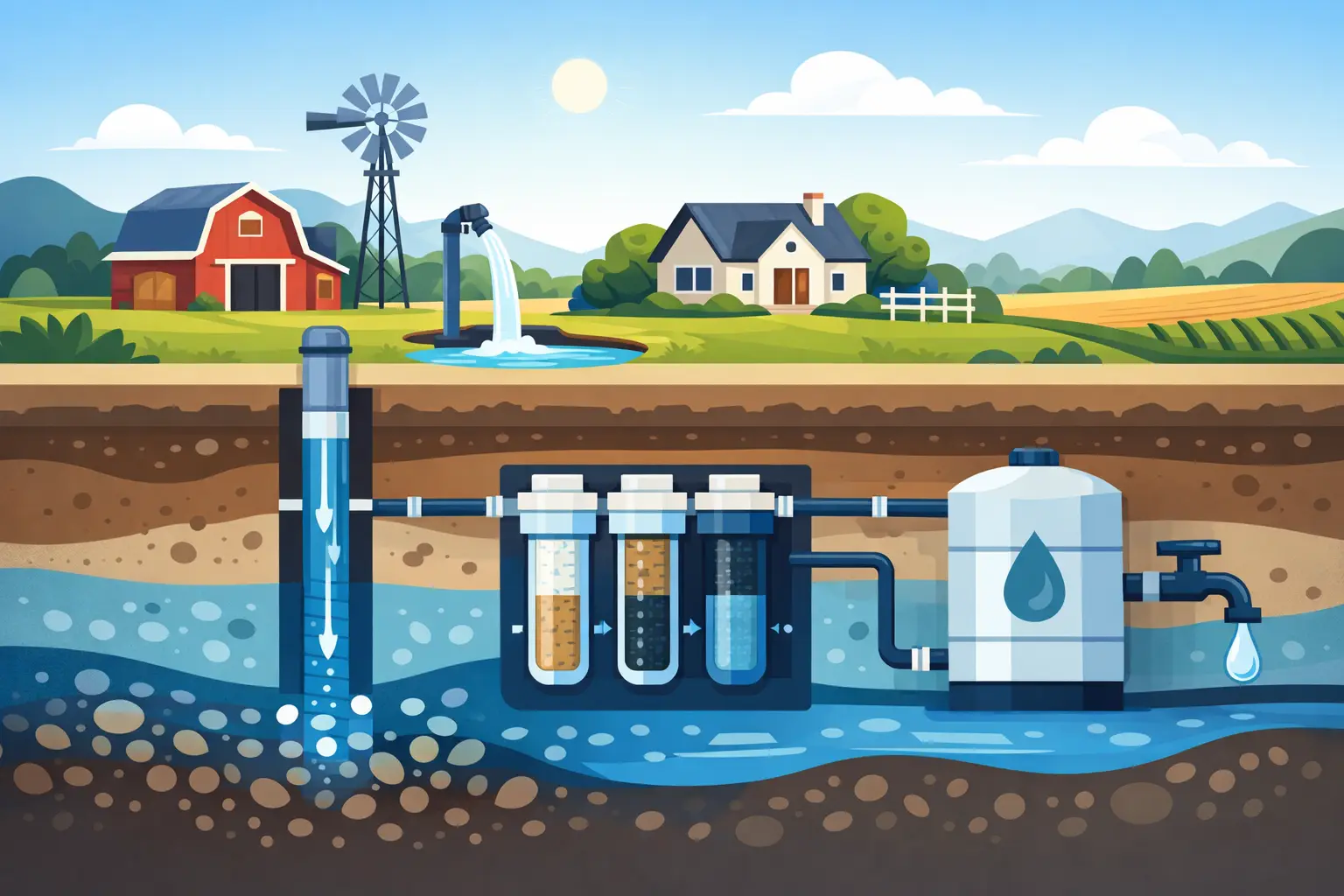
A common mistake is assuming one filter will fix everything. In practice, bore water filtration usually works best as a treatment train, with each stage doing a specific job. The order matters, and so does matching the equipment to the pump flow and daily demand.
A straightforward setup might start with a sediment stage to remove sand, grit and suspended particles. From there, the system may include media filtration for iron or manganese reduction, carbon filtration for taste and odour, water softening for hardness, and UV sterilisation where microbiological control is needed. Some sites need only one or two stages. Others need a more complete treatment approach because the water is being used inside the home or in a commercial setting.
The trade-off is cost versus outcome. Simpler systems are cheaper to install and easier to maintain, but they only solve limited problems. More advanced systems can deliver much better water quality, although they need correct sizing, periodic servicing and realistic expectations around consumables and maintenance.
Matching filtration to how the water is used
Household use
If bore water is feeding a house, filtration needs to be more thorough. People notice staining, odour, scale and poor taste quickly, and household plumbing is less forgiving than stock or irrigation systems. Water used for showers, toilets, laundry and kitchen supply usually needs staged treatment, especially where iron, hardness or bacterial risk is present.
If the bore water is for drinking as well as general household use, treatment should be based on test results rather than assumptions. UV sterilisation may be part of the solution, but UV is only effective when the water reaching the unit is already clear enough for proper light transmission.
Stock water and agriculture
For livestock, washdown and general farm supply, the filtration target is often equipment protection and operational reliability rather than polished drinking water quality. Sediment removal may be enough in some systems. On other properties, iron or manganese treatment is worthwhile because deposits can foul troughs, valves and irrigation emitters.
Agricultural systems need to handle larger flow rates, and that changes the equipment choice. A domestic cartridge filter that works well at a house is often unsuitable for a farm line with high demand and continuous use.
Irrigation and commercial applications
Irrigation systems are especially sensitive to fine particles and mineral deposits. Drippers, sprays and solenoids can fail if the water is not treated properly. In commercial settings such as nurseries, workshops or accommodation sites, the cost of downtime makes correct system design even more important. In these cases, bore water filtration should be planned as part of the broader pumping and storage setup, not as an afterthought.
Common filtration stages for bore water
Sediment filtration is usually the starting point. This stage removes sand, silt and suspended matter before it reaches downstream equipment. Depending on the water source, that might involve a washable screen, disc filter or cartridge housing.
Where iron and manganese are present, specialised media filters are often used. These systems oxidise and capture dissolved minerals before they stain surfaces or build up in the pipework. The right media depends on the water chemistry, especially pH, dissolved oxygen and contaminant concentration.
Carbon filtration can help with taste, smell and some organic compounds, but it is not a fix for all bore water issues. Water softeners are used where hardness is causing scale and appliance wear. UV systems provide disinfection at the end of the treatment line, provided the water has already been filtered to the required clarity.
Each of these components has a purpose, but none should be selected in isolation. The best results come from designing the full system around the water test and the job the water needs to do.
Getting the sizing right
Sizing is where many filtration systems go wrong. If the unit is too small, pressure drop becomes a problem and filter elements clog faster than expected. If it is oversized or poorly matched, performance may be inconsistent and upfront cost can be higher than necessary.
Pump output, peak demand, pipe size and storage arrangement all influence the correct setup. A bore feeding a header tank may need a different filtration arrangement from a direct pressure pump supplying a house. Likewise, a system for a small acreage home will not be the same as one supplying sheds, stock troughs and irrigation across a working property.
This is where dealing with a supplier that understands tanks, pumps and treatment together makes a real difference. Filtration does not operate on its own. It has to work with the rest of the water system every day.
Maintenance is part of the system
Even the best bore water filtration system needs maintenance. Cartridge filters need replacement. Media filters need backwashing or periodic service. UV lamps need scheduled replacement, and quartz sleeves need cleaning. If maintenance is ignored, water quality drops and equipment wears faster.
The good news is that a well-specified system is easier to live with. Correct pre-filtration extends the life of downstream components. Proper sizing reduces nuisance blockages. And a practical service schedule helps property owners avoid expensive surprises, especially in summer or during periods of high demand.
It also pays to retest bore water from time to time. Water quality can shift with seasonal conditions, groundwater movement and bore ageing. If the water changes, the treatment may need adjustment.
Choosing a practical long-term solution
The best filtration system is not necessarily the most complex. It is the one that suits your water, your site and your daily use. For some properties, that means basic sediment protection ahead of stock and irrigation lines. For others, it means a staged household treatment system with iron removal, softening and UV.
What matters is starting with evidence, not guesswork. Test the water, look at how it is being used, and choose equipment that is built for Australian conditions and supported locally. North Coast Water Tanks works with property owners who need that whole-of-system thinking, from storage and pumping through to treatment and maintenance support.
Good bore water can be a dependable asset for years. The filtration is what makes it workable.