


A concrete tank can give decades of reliable service, but when cracks start weeping, the walls show signs of wear, or the water level keeps dropping for no obvious reason, it needs attention quickly. Concrete water tank repairs are often the difference between a practical long-term asset and a storage system that slowly becomes unreliable, unhygienic, or expensive to maintain.
For many property owners, the first question is simple: can it be repaired, or is replacement the smarter option? The answer depends on the type of damage, the tank’s age, how it was built, and whether the structure is still fundamentally sound. Minor deterioration can often be repaired effectively. More advanced structural failure is a different story.
When concrete water tank repairs are needed
Concrete tanks are tough, but they are not maintenance-free. Over time, movement in the ground, repeated wet and dry cycles, tree root pressure, poor original construction, and age can all affect the structure. Some tanks develop fine shrinkage cracks that remain stable for years. Others start with a small leak and gradually worsen as water finds its way deeper into the concrete.
A visible crack is not always the main problem. In many cases, the bigger issue is water ingress and the damage that follows. Reinforcing steel can begin to corrode, sections of concrete may spall or break away, and internal surfaces can become harder to keep clean. If the tank supplies household water, stock water, or supports farm operations, any drop in reliability matters.
Common signs that repairs should be assessed include persistent leaks, damp patches on the outside of the tank, loose or flaking concrete, rust staining, reduced water quality, or signs that the tank is shifting or settling unevenly. A sudden increase in pump cycling can also point to water loss that has gone unnoticed.
What causes damage in concrete tanks
Not all deterioration has the same cause, and that matters because the repair method needs to suit the problem.
Hairline cracking can result from normal curing and age. Broader cracks may point to movement, settlement, impact, or structural stress. Surface erosion may come from years of exposure, especially if the tank has been left partly empty for long periods or if poor-quality water has affected the internal surface. In older tanks, corrosion of embedded steel is another common cause of damage. As steel rusts, it expands and forces the surrounding concrete to crack and break away.
Water chemistry also plays a part. If a tank is used in demanding agricultural or commercial conditions, or if it has held water with unusual mineral content, the internal surfaces can degrade faster. Poor drainage around the outside of the tank can add pressure to walls and bases, particularly after heavy rain.
What good repairs actually involve
Effective concrete water tank repairs are not just a matter of patching visible cracks and hoping for the best. A proper repair starts with identifying whether the issue is cosmetic, service-related, or structural.
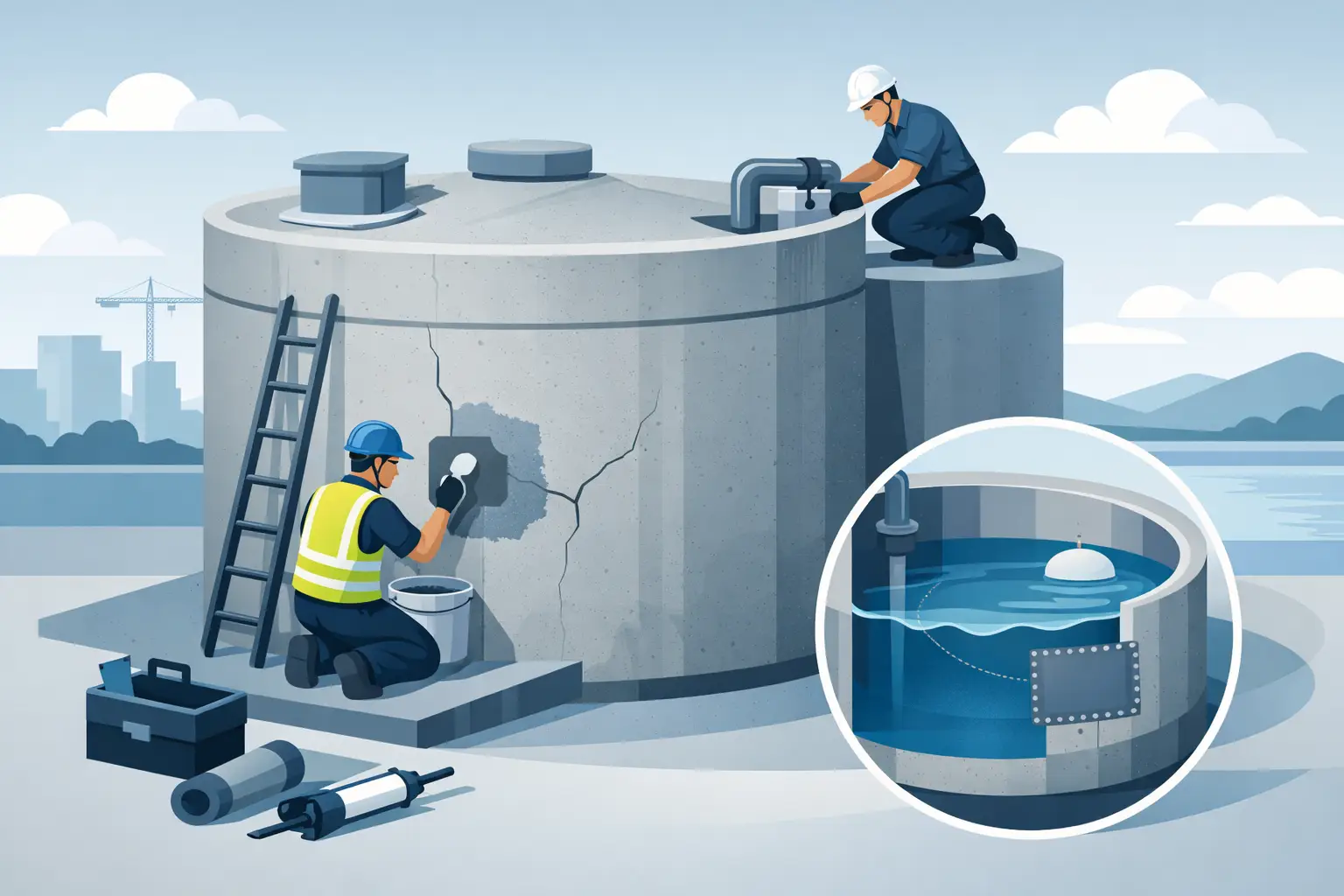
If the tank is repairable, the damaged areas usually need to be cleaned back to sound material. Cracks may require injection, sealing, or rebuilding depending on their size and cause. Areas of spalling concrete often need to be cut out, treated, and reinstated with suitable repair materials. In some cases, internal resealing or relining is the best way to restore water tightness.
The right approach depends on how the tank is used. A tank supplying a home has different hygiene expectations from a tank used only for irrigation. Food-grade suitability, surface finish, and long-term water quality all need to be considered. Repairs should never create a new maintenance issue down the track.
Surface patching versus structural repair
This is where many tank owners get caught out. A quick surface patch may stop a leak for a while, but if the crack is caused by movement or deeper structural stress, the problem often returns.
Surface repairs can be suitable for minor localised defects where the surrounding concrete remains strong. Structural repair is more involved and may include crack injection, reinforcement treatment, rebuilding damaged sections, or adding a liner system to restore a secure barrier between the stored water and the original tank shell.
There is no one-size-fits-all answer. A sound tank with localised defects can often be restored cost-effectively. A tank with widespread cracking, major settlement, or advanced corrosion may absorb repair money without delivering dependable performance.
When relining makes sense
Some concrete tanks remain structurally usable but no longer hold water as they should. In those cases, relining can be a very practical option. A liner creates a contained water barrier inside the existing shell, reducing reliance on aged or porous concrete surfaces.
Relining is often worth considering when the tank walls and base are generally stable, but the internal finish has deteriorated or multiple minor leaks are present. It can also be a sensible choice where maintaining water quality is a priority. That said, lining is not a fix for severe structural failure. If the tank shell is moving, collapsing, or badly cracked, the liner may only mask a larger issue for a limited time.
Repair or replace?
For most owners, the decision comes down to cost, remaining service life, and confidence. If the tank is in a good location, has suitable capacity, and the structure can be restored properly, repair is often the more economical path. It avoids demolition, site disruption, and the cost of installing a completely new system.
Replacement may be the better investment if the tank is undersized, poorly located, difficult to access, or showing broad structural failure. Sometimes a repair quote can look reasonable on paper, but once the age of the tank and the likelihood of future issues are considered, a replacement tank offers better value over the next 20 years.
This is also the point where system planning matters. If you are already dealing with an ageing tank, it can be worth reviewing the full setup – pumps, filtration, inlet design, overflow management, and access for cleaning. Fixing the tank while ignoring other weak points can leave the overall water system underperforming.
Concrete water tank repairs and water quality
Leaks and cracks are only part of the issue. The condition of the tank directly affects water hygiene. Damaged internal surfaces can trap sediment, encourage microbial growth, and make cleaning less effective. If the tank is used for household supply, these issues should be taken seriously.
Repairs should restore more than water tightness. They should also support safe storage conditions, practical maintenance, and compatibility with any filtration or treatment equipment already in place. A repaired tank still needs sound inlet screening, a secure lid, controlled overflow, and a cleaning schedule that matches the property’s needs.
Why professional assessment matters
Many property owners are capable and hands-on, and there is real value in keeping an eye on tank condition before small problems become major ones. But diagnosing concrete failure is not always straightforward. A crack that looks minor might be active. A damp patch could be linked to something more serious in the wall or base. What appears to be surface wear may actually point to internal corrosion.
A proper assessment gives you a clearer picture of risk, repair scope, and likely lifespan after the work is done. It also helps avoid spending money on temporary fixes that need to be redone. For rural and regional properties, where dependable stored water is essential, certainty has value.
At North Coast Water Tanks, that practical view matters. Customers are not looking for guesswork. They want to know whether a tank can be brought back into reliable service, what the repair should involve, and how it fits into the wider water system on the property.
Getting ahead of future damage
Once repairs are complete, a few straightforward habits can help extend tank life. Keep the tank maintained, avoid letting defects sit unattended, manage drainage around the structure, and organise periodic inspections if the tank is older or heavily relied on. If the tank is emptied for cleaning or seasonal reasons, check internal surfaces while access is available.
It is also worth paying attention to surrounding conditions. Large trees too close to the tank, uncontrolled runoff, or vehicle traffic near the base can all contribute to future problems. A well-repaired tank lasts longer when the site around it is working in its favour.
A concrete tank does not need to be perfect to remain useful, but it does need to be sound. The right repair work can restore performance, protect water quality, and buy many more years of service. If there is uncertainty, act early – small defects are usually cheaper to manage than the damage that follows when they are left alone.