


A pump that is perfectly adequate for a garden tap can be the wrong choice for a two-storey home, a dairy washdown point or a trough line a long way from the tank. When comparing surface pumps versus submersibles, the practical question is not which type is universally better. It is which pump can deliver the required flow and pressure reliably, while fitting the way your water tank and property are set up.
For rainwater harvesting systems across homes, acreage properties and farms, both pump styles have a place. The right choice comes down to tank access, water demand, pipework distance, noise, maintenance preferences and the consequences of losing water pressure when you need it most.
Surface pumps versus submersibles: the key difference
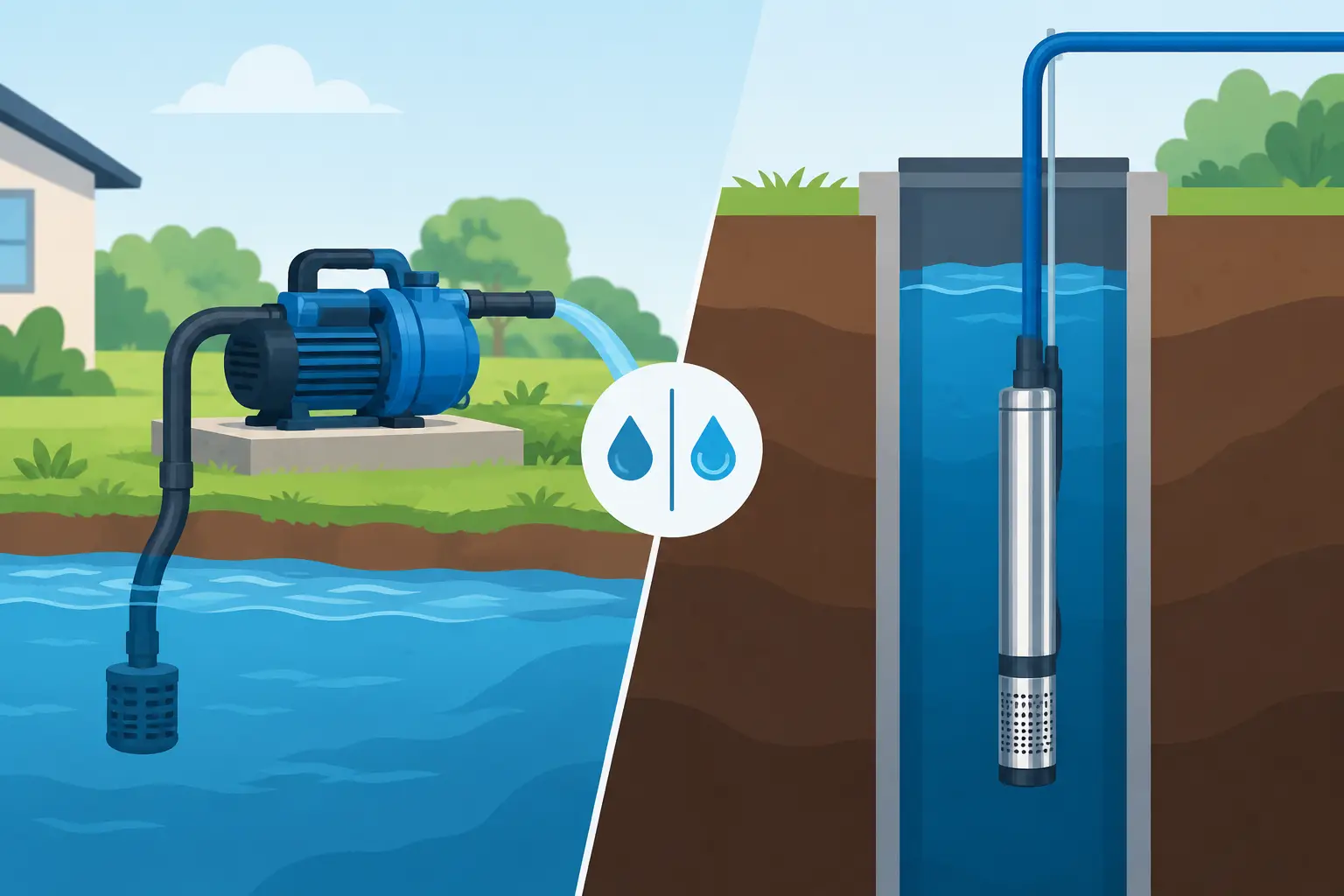
A surface pump sits outside the water source, usually beside the tank, in a pump cover or on a concrete pad. It draws water through a suction line, then pushes it through the delivery pipe to the house, garden, sheds, stock troughs or irrigation system. Most common domestic pressure pumps fall into this category.
A submersible pump is installed inside the tank or bore and operates below the waterline. Rather than pulling water up from the source, it pushes water out through its outlet pipe. The motor is sealed and cooled by the surrounding water.
That difference affects more than installation. Surface pumps are generally easier to see, inspect and service. Submersibles are quieter and avoid the suction limitations that can affect above-ground pumps. Neither design automatically guarantees better pressure or better reliability – pump sizing, controls and installation quality matter just as much.
When a surface pump is the practical choice
Surface pumps are a familiar option for household rainwater systems because they are accessible and straightforward to integrate with tank pipework. If the pump needs checking, cleaning or replacing, it can usually be reached without entering or draining the tank.
They suit properties where the water tank is close to the house or the pump location, and where there is room for a weather-protected installation. A correctly selected pressure pump can provide consistent water to taps, toilets, washing machines and garden hoses, provided the pump curve matches the property’s demand.
Access makes routine maintenance simpler
A surface pump allows you to inspect the pressure controller, pressure vessel, filter and pipe connections from ground level. This is useful where leaves, sediment or tank debris may occasionally affect the system. It also makes fault finding easier when pressure drops, the pump cycles repeatedly or a controller shows an error.
The trade-off is that a surface pump and suction line must remain airtight. Even a small air leak at a fitting, check valve or suction connection can lead to lost prime, poor flow or intermittent operation. The suction lift must also stay within the pump manufacturer’s limits. In practice, surface pumps are best located close to the tank outlet and as low as practical relative to the water level.
They can be noisier
A surface-mounted pump produces motor and vibration noise. On many rural blocks this is not an issue, but it can matter when a tank is near a bedroom, outdoor entertaining area, holiday cabin or neighbouring boundary. A solid base, flexible connectors and an appropriate cover can reduce vibration, but they will not make an external pump silent.
A pump cover should protect the equipment from sun and rain while still allowing airflow. An enclosed, poorly ventilated box can shorten motor life through heat build-up.
When a submersible pump is the better fit
Submersible pumps are often chosen where quiet operation is a priority or where the tank location makes an external pump inconvenient. With the motor underwater, operating noise is greatly reduced. This can be a significant advantage for compact blocks, homes with tanks close to living areas, and accommodation sites.
Because the pump is pushing rather than drawing water, a submersible also avoids many priming concerns associated with long or awkward suction lines. It can be a sensible option for tanks set below a house, tanks with limited space around them, or installations where the pump must lift water from a lower level before supplying the property.
Better protection from weather, with different access needs
The tank protects a submersible pump from direct sun, rain and accidental knocks. There is no external motor to protect with a pump shelter, and the installation can look tidier where visual impact matters.
However, maintenance access requires more planning. A quality submersible should be installed so it can be lifted out safely using its designated lifting rope or retrieval arrangement. Never use the electrical cable to lift a pump. The tank opening needs to accommodate removal, and pipework should be arranged so servicing does not become a major job.
For potable rainwater systems, use suitable food-grade components and ensure the installation does not compromise the tank’s insect-proofing or water hygiene. Electrical connections and controls should be installed correctly by a licensed electrician.
Dry-run protection is essential
Submersible pumps rely on surrounding water for cooling. If a tank runs low and the pump continues operating without adequate water, it can be damaged. A low-water cut-out, float switch or dry-run protection system is not an optional extra on a rainwater tank that may run down during a dry spell.
This also applies to surface pumps. They can be harmed by running without water, especially if they lose prime. Whatever pump type you choose, make sure the control system protects it when the tank level is too low.
Pressure and flow: look beyond the pump type
It is easy to focus on whether a pump is surface-mounted or submersible and overlook the numbers that determine performance. The pump needs enough flow for the fixtures or outlets operating at the same time, and enough pressure to overcome elevation, pipe friction and required outlet pressure.
A modest household using one shower, a tap and a washing machine has different needs from a property running irrigation zones, stock water and a residence from the same storage. Long pipe runs, undersized pipe and steep sites all add resistance. A pump that seems powerful at the tank may deliver disappointing pressure at the furthest outlet.
Ask these questions before selecting equipment:
- How many outlets may run at once during normal use?
- What is the highest point the water must reach above the pump or tank?
- How far is the pump from the house, troughs or irrigation area?
- Is the supply for drinking water, general household use, garden watering, livestock or all of these?
- Will mains changeover, a pressure controller, filtration or UV treatment be part of the system?
A pressure vessel can also improve performance in some systems by reducing frequent pump starts. This is particularly useful where small draws of water are common. The ideal arrangement depends on the pump controller and the property’s usage pattern.
Filtration and pump placement work together
Rainwater pumps do not operate in isolation. Leaf strainers, tank screens, first-flush devices, sediment filters and household treatment equipment all affect water flow. A blocked cartridge filter can look like a pump fault, while a poorly placed filter can restrict supply or make maintenance unnecessarily difficult.
For surface pumps, a filter is often positioned where it can be easily checked and changed. For submersible pumps, the tank’s internal pickup arrangement and any pre-filtration need consideration before installation. Keep serviceable components accessible, particularly on properties where tank water is the only supply.
If rainwater is used for drinking, water quality should be addressed from roof catchment to tap. Good tank hygiene, sealed access points, effective inlet screening and correctly maintained filtration are just as important as pump selection.
Cost, lifespan and backup planning
Upfront price is only one part of the decision. A surface pump may be less involved to repair or replace because it is accessible, while a submersible may save space and reduce noise for years. Quality components, correct sizing and proper protection from dry running often have more influence on pump life than the style of pump alone.
Consider what happens during a fault as well. If household water supply is critical, plan for accessible isolation valves, a bypass where appropriate and a clear method for checking the system. Farms and commercial sites may also benefit from duty-and-standby arrangements where water interruption is not acceptable.
North Coast Water Tanks can help match tanks, pumps, filtration and accessories into a practical system rather than treating each item as a separate purchase. Local conditions, tank location and intended water use should guide the final specification.
Choose the pump that suits the whole water system, not just the space beside the tank. A well-sized, protected and serviceable installation will give you more dependable water than choosing on pump style alone.