


A pump that starts pulsing, weak shower pressure or a filter cartridge that clogs far too quickly usually points to the same issue: too much sediment is reaching the system. Choosing the best sediment filters for rainwater tanks is not simply about buying the finest micron rating. The right filter needs to suit the amount and type of debris entering your tank, the flow rate your household or property requires, and whether the water is being used for gardens, stock, toilets or drinking.
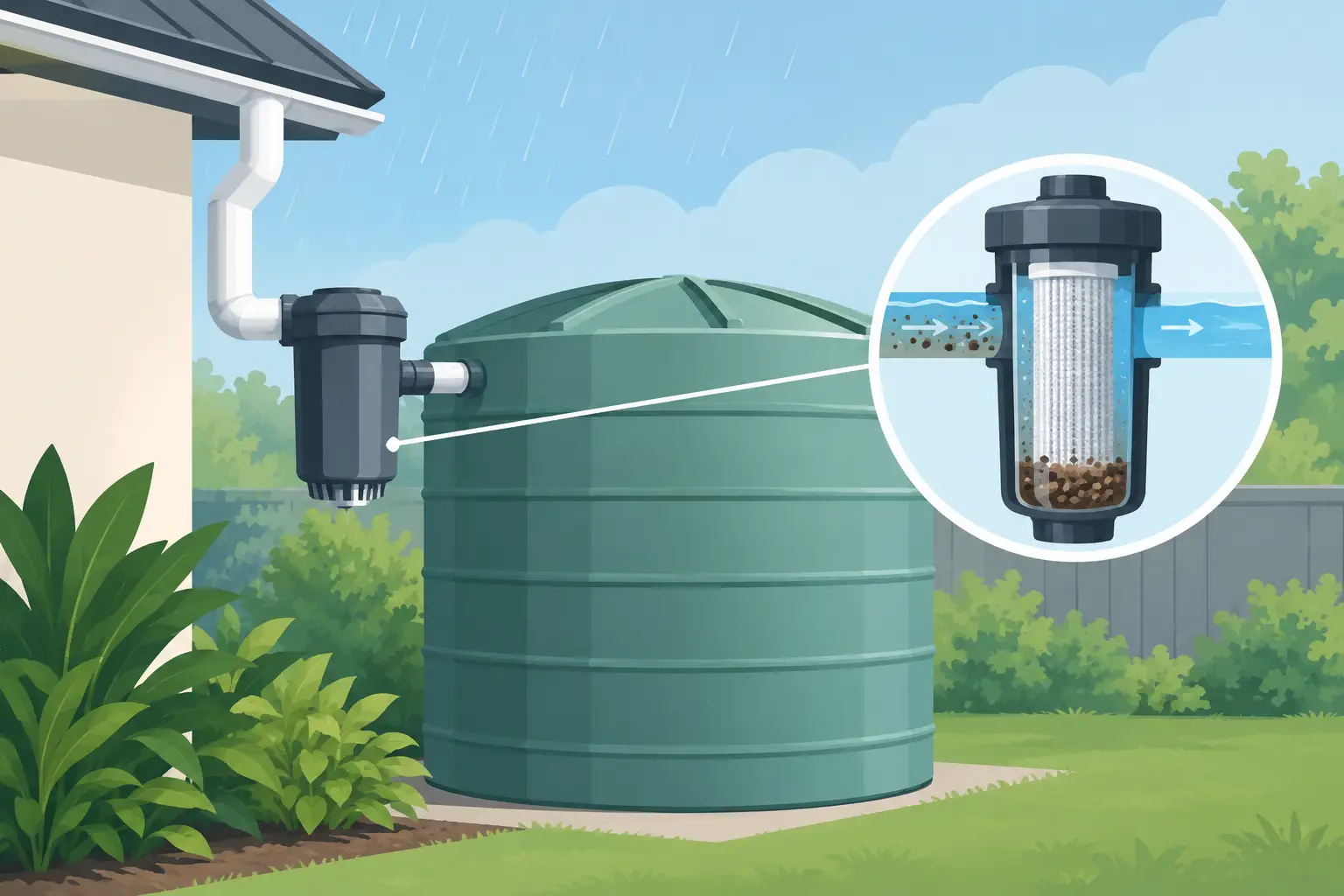
For most rainwater systems, sediment filtration works best as a staged process. Larger leaves, insects and grit should be stopped before water reaches the tank. Finer particles can then be removed after the pump, protecting plumbing, appliances and any downstream carbon or UV treatment. This approach gives better flow, lower maintenance and more dependable water quality.
What a sediment filter does in a rainwater system
A sediment filter captures physical particles suspended in water. In a rainwater tank, that can include fine roof dust, sand, silt, tank scale, pollen, insect debris and fragments that pass through the inlet screen. It does not remove dissolved chemicals, taste or odour, and it does not make water microbiologically safe on its own.
That distinction matters when rainwater is used inside the home. A sediment cartridge is normally the first treatment stage after the pump. If potable water is required, it may be followed by a carbon filter and an appropriately sized UV steriliser. The sediment stage protects those more specialised components from fouling, while also preventing grit from wearing pump seals, tapware, hot-water systems and washing-machine valves.
The filter itself is only one part of the result. A well-fitted leaf diverter, screened tank inlet, first-flush device and secure tank lid reduce the load on post-tank filtration considerably. If large debris is constantly entering the tank, even a premium cartridge will become an expensive maintenance item.
Best sediment filters for rainwater: the main options
There is no single cartridge that is best for every tank. The most suitable type depends on water quality, expected demand and how often you are prepared to service the system.
Washable screen and disc filters
Washable filters are often a practical choice where water contains visible grit, organic matter or coarse sediment. A screen or disc element can be removed, rinsed and reused, which reduces ongoing cartridge costs. They are commonly useful as a first filter stage for rural properties, irrigation systems, stock water and larger domestic supplies.
Their trade-off is that they generally do not provide the fine filtration needed as the final sediment stage for household drinking-water treatment. They also require regular cleaning. Leaving a reusable element clogged can restrict flow and put unnecessary strain on the pump.
Spun polypropylene cartridges
Spun sediment cartridges are a common and cost-effective option for domestic rainwater filtration. They are made from graded polypropylene fibres that trap particles through the cartridge depth, rather than only on the outer surface. This gives them a useful dirt-holding capacity where water quality varies after heavy rain or extended dry periods.
A 5-micron spun cartridge is often used before carbon filtration or UV equipment. It can be a sensible all-round choice for household rainwater, provided the system has good pre-tank screening and the housing is sized for the required flow. Cartridges are disposable, so replacement frequency needs to be allowed for in the running cost.
Pleated washable cartridges
Pleated cartridges have more surface area than many standard spun cartridges and can offer strong flow performance at a given micron rating. Some are washable and reusable, making them attractive where sediment levels are moderate and a property owner is willing to clean the cartridge correctly.
They can be particularly useful where a system experiences pressure drop with a finer disposable cartridge. However, fine debris can lodge deep in the pleats. If it cannot be thoroughly cleaned, replacement is the better option. Reusing a damaged or heavily fouled cartridge can compromise filtration performance.
High-flow filter housings
The housing size matters as much as the filter media. Standard 10-inch housings can work well for low-demand applications, such as a small cabin, caravan, tiny home or a single outlet. For a full household, acreage property or farm office, a larger 20-inch or high-flow housing generally provides more cartridge area, higher flow and longer service intervals.
Undersizing the housing is a common mistake. A very fine cartridge inside a small housing may look thorough on paper, but it can quickly create poor shower pressure and frequent changes. A correctly sized larger housing often performs better and is easier to live with.
Choosing the right micron rating
Micron rating describes the approximate particle size a filter is designed to capture. Lower numbers capture finer particles, but they also create more resistance to flow and tend to clog sooner. The goal is not to choose the smallest possible number. It is to remove the sediment that matters without starving the system of pressure.
For rainwater tank systems, these ranges are a useful starting point:
- 50 to 100 micron filtration suits coarse protection where leaves, grit and larger debris are the primary concern.
- 20 micron filtration is often a good pre-filter stage for visibly dirty water or irrigation applications.
- 5 micron filtration is commonly used for household rainwater before carbon and UV treatment.
- 1 micron filtration can be appropriate where very fine sediment needs to be reduced, but it requires clean incoming water, adequate housing capacity and regular servicing.
A staged arrangement is usually more reliable than asking one fine cartridge to do every job. For example, a washable 50-micron pre-filter followed by a 5-micron cartridge can extend cartridge life significantly on a property with dusty roofing, overhanging trees or variable tank water quality.
Match filter capacity to pump flow
Every filter introduces some pressure loss, and that loss increases as the element becomes dirty. Before selecting a sediment filter, check the pump’s flow rate and pressure, the number of fixtures likely to operate at once, and the pipe size through the filtration line.
A family home with two bathrooms needs a different arrangement from a garden pump supplying one hose. Likewise, a commercial washdown system or irrigation zone may require a dedicated high-flow filter that does not restrict the pump. Restriction can lead to poor water delivery, pump cycling and customer frustration that is wrongly blamed on the tank or pump.
Install a pressure gauge before and after the filter where practical. The difference between the two readings gives a clear indication of when the cartridge is becoming blocked. This is more reliable than replacing filters purely by calendar date, especially when rainfall and roof conditions change through the year.
Installation details that improve filter life
For most pressurised rainwater systems, install sediment filtration after the pump. This protects the household supply while maintaining positive pressure through the filter housing. Use isolation valves so cartridges can be serviced without draining the system, and ensure housings are accessible rather than hidden behind pipework or stored items.
Keep replacement cartridges on hand if the property depends on tank water. A blocked filter rarely arrives at a convenient time, particularly after a storm or during a busy holiday period. It is also worth confirming that the housing, fittings and cartridges are suitable for potable-water contact where drinking water is involved.
If your tank has accumulated sludge, no filter setup will perform at its best until the source issue is addressed. Tank cleaning, checking inlet strainers and repairing gaps around lids or screens can restore the system before new filtration equipment is installed.
A practical setup for most homes
For a typical Australian home relying on roof-collected rainwater, start with effective gutter protection, a leaf diverter or rain head, and a screened tank inlet. After the pump, use a generously sized sediment housing with a filter rating suited to the water condition. Where water is used for drinking, add carbon treatment and UV sterilisation only after the sediment stage.
North Coast Water Tanks can assist with matching tanks, pumps, filter housings, cartridges and treatment equipment so the components work together rather than creating a bottleneck in the line. Local support is especially valuable when a system serves both household demand and property water use.
The best result is a filter system you can maintain confidently. Check it after the first major rains, watch for pressure changes, and adjust the micron stages if cartridges are blocking too quickly or fine sediment is still reaching your fixtures.