


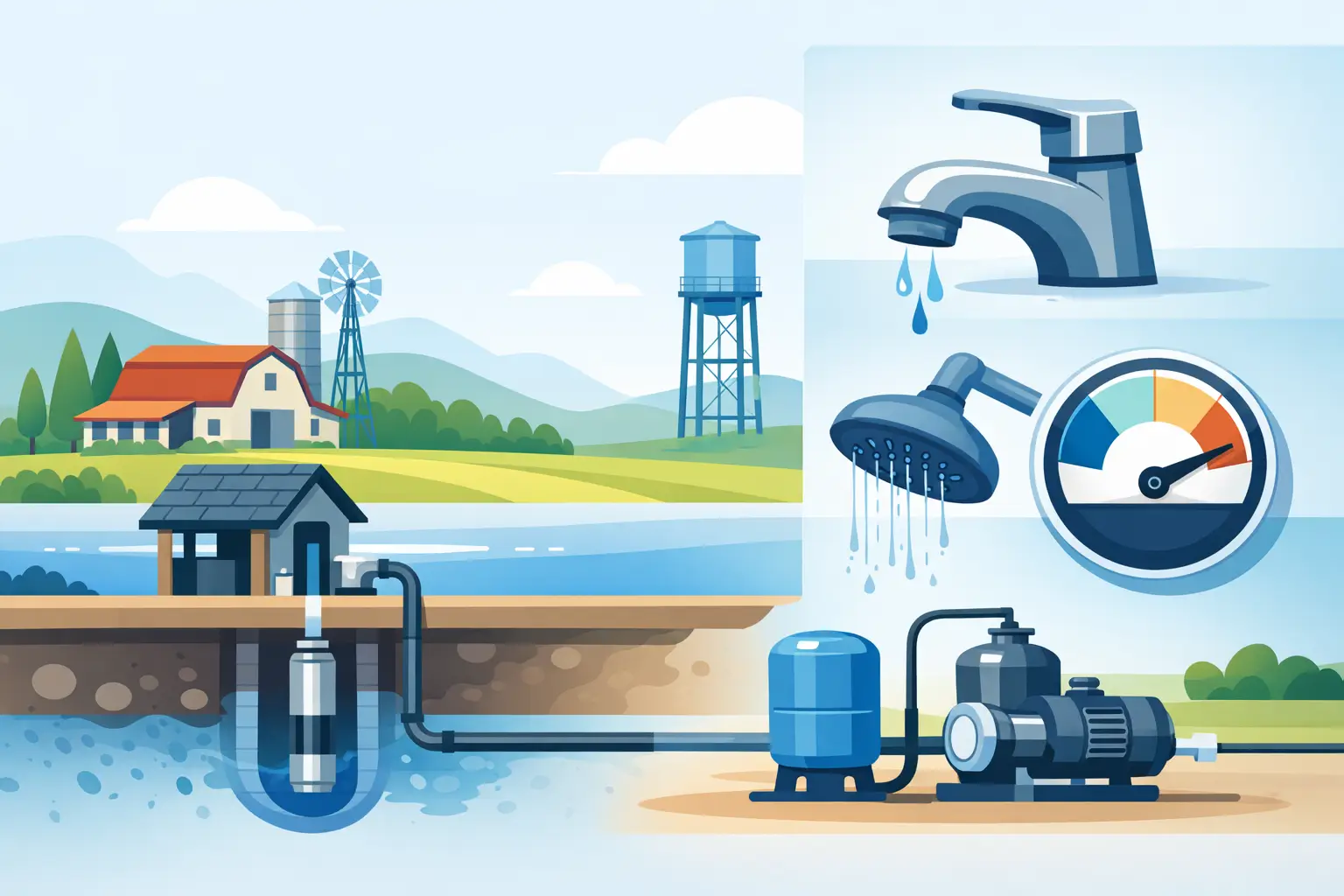
A shower that drops to a trickle when someone turns on a tap is more than an inconvenience on a rural property. Rural water pressure problems can interrupt household use, restrict stock watering, reduce irrigation performance and put unnecessary strain on a pump. The cause is not always the pump itself. Tank water level, blocked filtration, undersized pipework and incorrect pump settings can all produce the same frustrating result.
The quickest way to resolve the issue is to separate pressure from flow, then work through the system in order. A practical check can prevent an unnecessary pump replacement and help protect the water supply your household, farm or business relies on.
Pressure and flow are not the same thing
Pressure is the force that pushes water through pipework, generally measured in kilopascals (kPa). Flow is the volume of water delivered over time, often measured in litres per minute. A system can show reasonable pressure with a tap closed, then deliver poor flow as soon as water is required.
This distinction matters. A pressure gauge may indicate that the pump reaches its cut-out setting, yet a blocked cartridge filter or restricted pipe can still limit water at the shower, trough or irrigation outlet. Conversely, a pump that cannot build pressure may have an air leak, a worn impeller or a control problem.
Start by observing where the issue occurs. If every outlet is weak, the fault is likely near the tank, pump or main line. If one tap, toilet, trough or irrigation zone is affected, look first for a local blockage, partially closed valve or damaged branch line.
Start with the water source and tank level
A pump cannot deliver water that is not available. Check the tank level before investigating anything more complicated, particularly after a dry spell or a period of heavy water use. Low tank levels can expose a pickup point, draw sediment from the base of the tank or allow a pump to pull air.
Inspect the tank outlet and isolation valve as well. A valve that has been partly closed, seized internally or damaged can create a major restriction. On older installations, leaves, sediment or insect material may collect around strainers and foot valves. If the system uses water from a creek, dam or bore, the intake condition deserves the same attention.
Tank placement also affects available pressure. Gravity systems produce roughly 10 kPa for every metre of vertical height between the water level and the outlet. That may be suitable for a basic stock trough or garden use, but it is usually not enough for comfortable household fixtures, filters or irrigation. Most homes supplied from a ground-level rainwater tank need a correctly sized pressure pump.
Check filters before replacing the pump
Blocked filtration is one of the most common and most easily missed causes of poor flow. Sediment cartridges gradually load up with fine material, especially after roof runoff carries dust, pollen, ash or debris into a rainwater tank. The water may still look clear, but the restriction can be substantial.
A noticeable pressure drop after a filter change interval is a useful clue. Compare flow before and after the filter housing if isolation valves and fittings allow it. Do not run untreated household water permanently around a filter simply to improve pressure, particularly where the system includes carbon filtration or UV treatment. Instead, replace or clean the relevant component and check that its micron rating suits the water source and expected flow rate.
A filter that is too fine for the application can be just as restrictive as a dirty one. For example, a household system may need staged filtration – a sediment filter first, followed by carbon or UV treatment where appropriate – rather than relying on one very fine cartridge to do every job. The housing, cartridge size and pipe connections must also be sized for the pump’s intended flow.
Inspect the pump, controller and pressure vessel
If filters and tank outlets are clear, listen to the pump during operation. Frequent cycling, where the pump starts and stops repeatedly while a tap is running, often points to a pressure vessel issue, a leak or an incorrectly set controller. A pump that runs continuously but does not reach pressure may be losing prime, drawing air or working against a restriction.
For a pump with a pressure vessel, check the vessel’s air charge according to the manufacturer’s instructions. The pump must be isolated and the water pressure released before testing it. A flat or failed bladder can cause short cycling, which wears the pump and wastes power.
Electronic pump controllers can also fail or be unsuitable for the duty. They need enough flow to operate correctly and may struggle with very small leaks or low-flow fixtures. Pressure switches must be set to match the pump’s capability and the property’s requirements. Raising the cut-out pressure beyond what the pump can achieve does not improve supply – it can leave the pump running for too long and shorten its service life.
Electrical work, pump wiring and controller replacement should be handled by a licensed professional. Before any inspection around a pump, isolate power safely. Water and damaged electrical equipment are not a do-it-yourself risk.
Look for restrictions and leaks in pipework
Pipework is often overlooked because much of it is buried or out of sight. However, undersized pipes can be the reason pressure falls away at distant buildings, sheds or stock yards. Long runs, multiple bends, old galvanised lines and several outlets operating at once all add friction loss.
A small pipe may serve one tap adequately but struggle when a washing machine, shower and garden hose are used together. Increasing pipe diameter on a long main line can improve delivered flow without fitting a larger pump. The right answer depends on distance, elevation change, required flow and how many outlets may run at the same time.
Leaks reduce both pressure and water security. Check for wet ground, unexplained pump cycling, water around fittings and a tank level that falls faster than expected. A leak on the suction side of a pump may not always show water escaping. Instead, it can let air in, causing loss of prime, sputtering taps and inconsistent pressure.
Match the pump to the actual demand
Many rural systems are built up over time. A pump originally selected for a small cottage may later be asked to supply a larger home, granny flat, stock troughs and irrigation. It may operate, but not at a useful pressure when demand rises.
Pump selection should be based on the required flow and total head, not just the pump’s maximum pressure claim. Total head includes the height the water must be lifted, pressure needed at the outlet and friction losses through pipework, filters and fittings. A pump that appears powerful on paper can underperform if these losses have not been allowed for.
Consider the likely peak demand. A household may need steady flow for bathrooms, kitchen use and laundry, while a farm may need a separate allowance for trough filling or wash-down. In many cases, separating irrigation or stock supply from domestic water gives better control and protects household pressure. It can also reduce the chance of untreated or high-sediment water affecting domestic filtration equipment.
A practical fault-finding order for rural water pressure problems
Work from the simplest checks to the more technical ones. Confirm the tank has sufficient water and that all relevant valves are fully open. Check whether poor supply affects the entire property or one outlet only. Inspect and service filters, then look for obvious leaks, damaged fittings and blocked strainers.
Next, observe the pump while water is being used. Note whether it cycles rapidly, runs continuously, loses prime or fails to start. If available, record pressure gauge readings when no taps are open and while a high-flow outlet is running. These observations give a pump technician far more useful information than simply reporting “low pressure”.
Avoid adjusting pressure switches or bypassing safety devices without understanding the system. A temporary improvement can conceal a blocked filter, leak or undersized pipe and may create a more expensive failure later.
When professional advice saves time
Seek qualified help when the pump is noisy, repeatedly losing prime, tripping electrical protection, leaking from the motor or unable to reach operating pressure. Professional assessment is also worthwhile where the property has long pipe runs, mixed water sources, UV treatment, multiple buildings or expanding irrigation needs.
North Coast Water Tanks can assist property owners with practical guidance across tanks, pumps, filtration, accessories and system upgrades, helping ensure the components work together rather than creating a new bottleneck.
Reliable pressure comes from a balanced system: clean stored water, suitable filtration, correctly sized pipework and a pump matched to the job. Addressing the smallest restriction first often restores the dependable supply a rural property needs.