


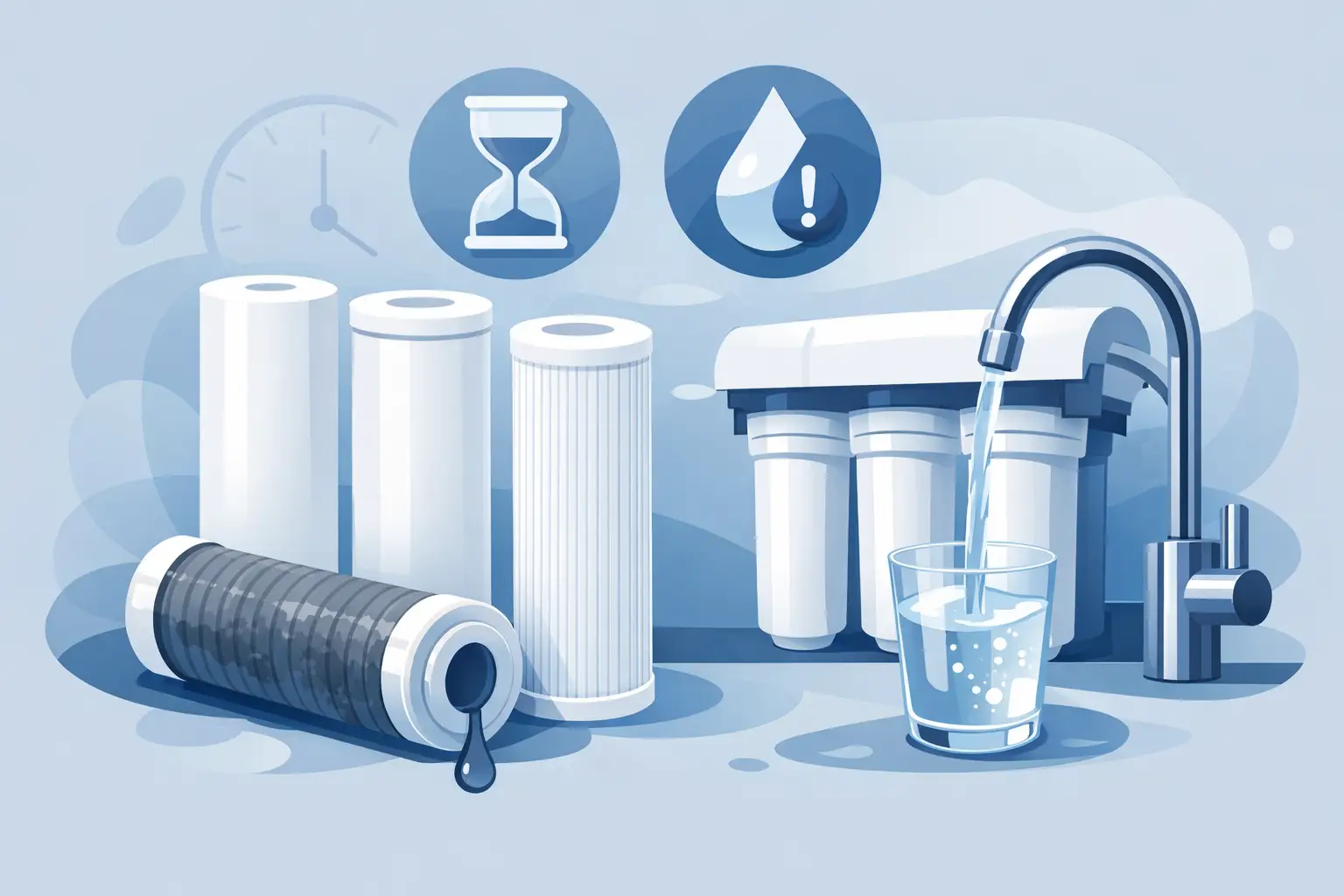
That first sign is usually subtle. The kitchen tap slows down a bit, the pump seems to work harder, or the water starts to carry a faint taste you did not notice before. If you are wondering when to replace water filter cartridge units, the short answer is this: replace them before performance drops too far, not after the water quality problem becomes obvious.
For homes, farms, sheds, workshops and commercial sites running on rainwater or stored water, cartridge changes are not just routine maintenance. They protect water quality, help pumps and UV systems do their job properly, and reduce the chance of sediment or organic matter moving further through the system. The right timing depends on your water source, filter type, cartridge size and daily usage.
When to replace water filter cartridge systems
Most cartridge filters need replacement somewhere between every 3 and 12 months, but that range is broad because real-world conditions vary. A household on clean municipal water may get far longer from a cartridge than a rural property treating tank water after heavy rain, leaf drop or dust events.
If your filtration setup is fed from rainwater tanks, creek supply, bore water or mixed sources, expect cartridge life to change with the seasons. A cartridge is effectively a consumable part. It is designed to catch sediment, rust, fine particles, taste and odour compounds, or specific contaminants. Once it loads up, performance drops. Keeping it in service too long can lead to poor flow, strain on the system, and reduced treatment efficiency downstream.
As a general working guide, sediment cartridges often need more frequent replacement than carbon cartridges, especially where tank water carries visible fine material. Carbon filters may still pass water even when their treatment ability has reduced, which is why relying on flow alone can be misleading.
The clearest signs your cartridge needs replacing
A calendar reminder helps, but the system itself usually tells you what is happening. Lower water pressure is one of the most common signs. If taps run slower than usual or appliances are taking longer to fill, the cartridge may be blocked with sediment. On pumped systems, you might also notice the pump cycling differently because it is working against more restriction.
Changes in taste, smell or clarity are another warning. If drinking water starts to taste flat, earthy, metallic or chlorinated, a carbon cartridge may be exhausted. If the water appears dirtier than usual, the sediment stage may no longer be coping with the load, or the cartridge may be bypassing due to age or poor fit.
Then there is the visual check. When you open a clear filter housing and see a cartridge that has darkened heavily, carries obvious staining, or looks coated in trapped debris, it is usually telling you the same thing. Replace it. Waiting longer rarely improves anything.
Filter type matters more than many people realise
Not all cartridges do the same job, so they do not all wear out the same way.
Sediment cartridges are there to catch physical particles such as sand, silt, rust and tank debris. These usually fail by blocking up. You feel the result as reduced flow and pressure. If your property uses rainwater harvesting and your tanks receive runoff after windy weather or roof contamination, sediment filters can load quickly.
Carbon cartridges are designed to reduce taste, odour, chlorine and some organic compounds. They often do not block as obviously, but their treatment media becomes spent over time. Water may still flow reasonably well while performance has already dropped. That is why manufacturer change intervals matter.
Pleated washable cartridges sit in a different category again. Some can be cleaned and reused several times, but only up to a point. Once the media is damaged, permanently stained, or no longer cleaning properly, replacement is the better option.
If your system includes UV sterilisation, the cartridge replacement schedule becomes even more important. UV works best when water reaching the chamber is clear enough for the light to penetrate effectively. A cartridge left too long can compromise that process.
How water source affects replacement timing
A suburban home on treated mains water generally puts less stress on a cartridge than a rural tank setup. But even among tank systems, conditions differ. A sealed tank with good leaf screening, first flush diversion and regular maintenance will usually support longer cartridge life than a neglected system with roof debris, mosquito access or sludge buildup.
Bore water brings its own challenges. Fine sediment, iron, hardness and variable chemistry can shorten cartridge life considerably. In agricultural settings, high daily demand can also mean the cartridge simply processes more litres in less time.
Seasonal weather matters too. After dry spells, the first decent rain often washes dust, bird droppings and organic matter from the roof into the collection system. After storms, you may find a cartridge that normally lasts six months only lasts two or three. That does not mean there is something wrong with the filter. It usually means the filter is doing its job.
Should you follow time or water volume?
If the cartridge packaging gives both a monthly interval and a litre rating, use both. Replace at whichever limit comes first. That approach is more reliable than following one number in isolation.
For example, a household with low usage may hit the time limit before the volume limit because carbon media can lose effectiveness with age. A larger family, farm office or workshop amenities block might hit the litre rating much sooner. Systems serving stock water, washdown areas or accommodation can all have very different duty cycles.
Where usage is hard to estimate, keep a simple maintenance record. Note the installation date, the cartridge type and when performance changed. After a couple of replacement cycles, the pattern on your site becomes much clearer. That practical record is often more useful than a generic estimate.
Common mistakes that shorten cartridge life
One of the biggest mistakes is using the wrong micron rating. A cartridge that is too fine for the incoming water quality may block too quickly and create unnecessary pressure loss. On the other hand, a cartridge that is too coarse may let too much material through to the next stage.
Another issue is skipping upstream maintenance. If gutters are dirty, strainers are damaged, first flush devices are not operating properly, or tanks have excessive sediment, the cartridge becomes the system’s last line of defence. It will clog faster and cost more to maintain.
Some property owners also wait until water quality is clearly poor before changing the cartridge. By then, the system has often been underperforming for some time. Preventive replacement is usually cheaper and more reliable than running a filter to failure.
How often to check your filter housing
Even if the expected replacement interval is six months, do not ignore the system for six months. A quick inspection every four to six weeks is sensible, particularly after major rain, tank cleaning, roof work or seasonal changes.
Look for pressure drop, discolouration, leaks around the housing, and any signs that the cartridge has shifted or collapsed. If your setup includes pressure gauges before and after the filter, use them. A growing differential pressure gives a clearer picture of restriction than guesswork at the tap.
On larger properties or commercial sites, regular inspections are even more valuable. Water supply issues are disruptive enough in a home. On a farm, food business, tourist site or workshop, they can affect operations quickly.
Choosing the right replacement interval for your setup
There is no single rule that suits every property, but a practical starting point works well. For sediment cartridges on rainwater systems, check them regularly and expect replacement around every 3 to 6 months in many Australian conditions. For carbon cartridges, 6 to 12 months is common, provided water quality and usage stay within the product’s intended range.
If your cartridges are needing replacement far more often than that, it is worth looking at the broader system design. You may need better pre-filtration, improved tank hygiene, a different micron sequence, or a larger-capacity housing. North Coast Water Tanks often sees replacement frequency improve once the system is matched properly to the site rather than treated as an off-the-shelf afterthought.
The most reliable answer to when to replace water filter cartridge units is this: change them on schedule, check them after major events, and adjust the interval to match what your water source is actually doing. Good filtration is not just about having a filter installed. It is about keeping every part of the system working as intended, so the water coming through stays fit for the job.
A cartridge is a small component, but it carries a lot of responsibility. Replacing it at the right time is one of the simplest ways to protect your water quality, your equipment and your confidence in the supply coming out of the tap.