


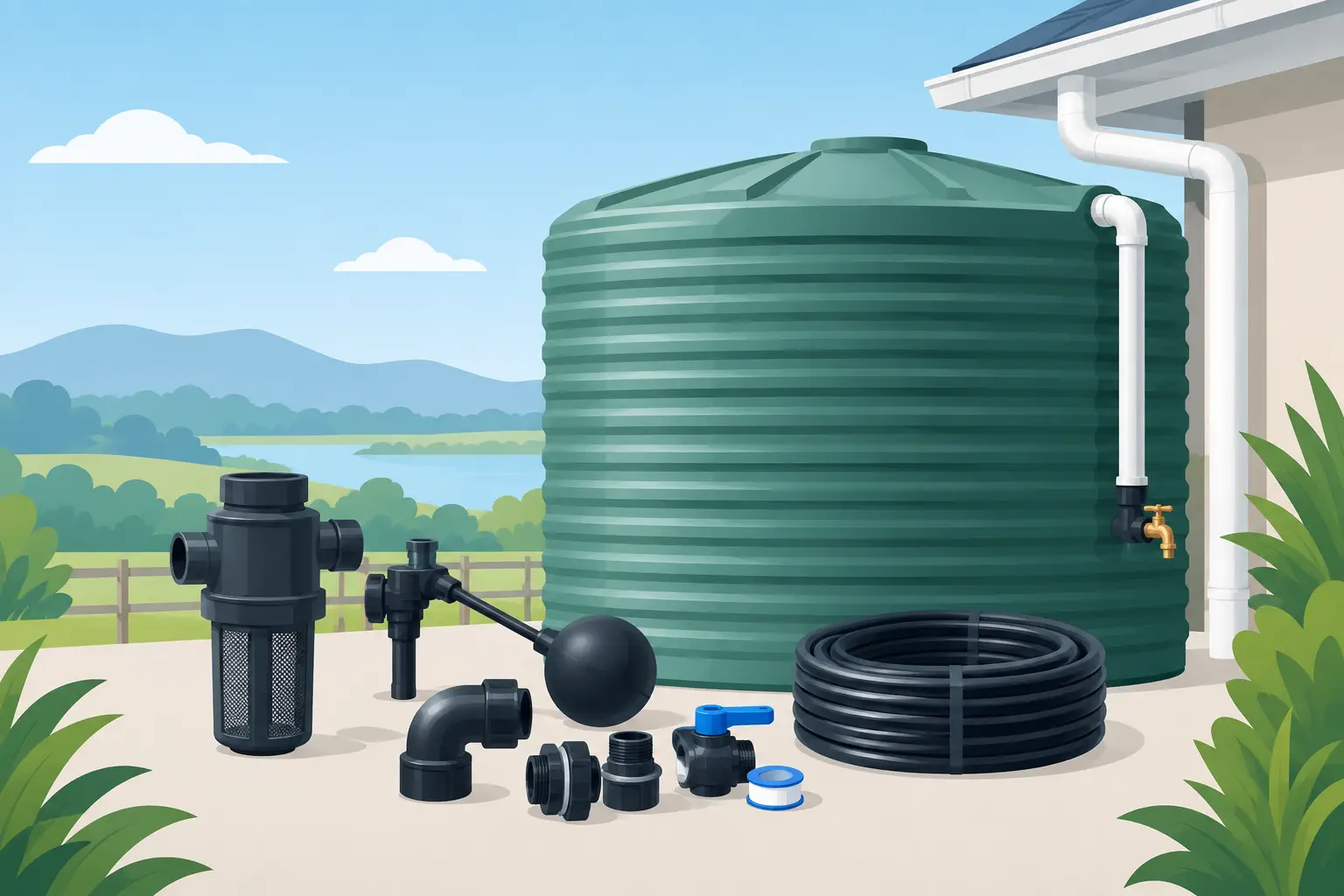
A tank on its own stores water. The right water tank accessories Australia property owners choose determine whether that water stays clean, reaches the tap at useful pressure and remains available when rain is scarce. For homes, farms, acreage blocks and small commercial sites, accessories are not optional extras. They are the working parts of a dependable water system.
A well-planned setup protects the tank from contamination, reduces pump wear and makes routine maintenance far simpler. The right combination depends on your roof catchment, tank material, water use and whether the supply is for gardens, stock, washing or drinking.
Start with water quality at the tank
Rainwater can be an excellent supply, but every roof collects leaves, dust, bird droppings and fine debris. Stopping that material before it enters the tank is easier and more cost-effective than removing it later.
A quality inlet strainer or leaf screen should sit at the tank entry point and be accessible for cleaning. Fine mesh helps keep out insects and larger debris, while a properly sized inlet allows heavy rain to enter without backing up the guttering. In leafy areas or coastal locations with wind-blown debris, this simple fitting needs regular checks, particularly after storms.
First-flush diverters are another practical addition for drinking-water systems. They divert the first portion of runoff, which commonly carries the highest load of dust and roof contaminants, away from the tank. The volume required depends on roof area and local conditions. A small suburban roof with regular rainfall may need a different arrangement from a long shed roof on a rural property that experiences extended dry periods.
Tank overflow components also matter. An overflow should safely direct excess water away from the tank base, buildings and footings. Fit a mosquito-proof screen to the overflow outlet to help prevent insects and pests entering the stored water. Poorly screened openings are one of the most common weak points in an otherwise clean rainwater system.
Essential water tank accessories in Australia
The best accessories support the whole system, from collection through to delivery. When comparing products, prioritise food-grade materials where water may be used around the home, UV-stabilised components for exposed installations and fittings suited to Australian conditions.
Outlets, valves and fittings
A tank outlet needs to suit both the tank wall and the pipework it connects to. Poly tanks, steel tanks and older concrete tanks can require different fitting methods. Using the correct bulkhead fitting, flange or threaded outlet helps prevent slow leaks and unnecessary stress on the tank wall.
Install an isolation valve close to the outlet. This allows you to shut off water for pump servicing, filter changes or repairs without emptying the tank. It is also wise to allow for a lower drain point where practical, as sediment can settle over time and may need to be flushed from the system.
Do not select fittings by diameter alone. Consider the intended flow rate, pump size and pipe run. An undersized outlet or restrictive valve can limit a capable pump, while oversized pipework may add cost without improving performance on a small household setup.
Tank level indicators
Knowing how much water is available changes how confidently you can manage your supply. A mechanical tank gauge is a straightforward option for many properties, using a float inside the tank to show the water level from outside. It is particularly useful where the tank is not visible from the house or sits below ground level.
Digital monitors and remote sensors can suit larger properties, multiple tanks or sites where water levels need to be checked without travelling across the block. They cost more than a basic gauge, but can be worthwhile for farmers managing stock water, holiday properties or commercial operations where running dry creates immediate disruption.
Pumps and pump protection
A pressure pump moves stored water to household taps, toilets, irrigation lines or wash-down points. The correct choice comes down to flow and pressure requirements, not just motor size. A small home with one bathroom has different demand from a house, shed, garden and livestock troughs operating at the same time.
Pump covers protect equipment from sun, rain and physical damage, while allowing enough ventilation to prevent overheating. Dry-run protection is equally valuable where tanks may run low. It can shut down the pump when water is unavailable, helping avoid seal damage and premature pump failure.
For installations using mains water backup, the changeover arrangement must be designed correctly to protect the drinking water supply. Seek practical advice before connecting any rainwater system to household plumbing, particularly where the water is intended for internal use.
Filters and UV treatment
Filtration should match the intended use of the water. A basic sediment filter can protect appliances and improve water clarity by catching fine particles before they reach taps or pumps. Cartridge size and micron rating matter: a finer filter captures smaller particles but may need changing more often, especially after a dry spell or heavy rainfall.
For rainwater used for drinking, cooking or food preparation, a staged filtration system may include sediment filtration followed by carbon filtration to improve taste and reduce odours. UV sterilisation can provide an additional treatment barrier by inactivating microorganisms, but it only works effectively when the water is already clear. A UV unit is not a substitute for clean gutters, inlet screens and maintained filters.
Filter housings should be installed where cartridges can be changed without difficulty. If they are tucked behind a tank or positioned too low to access comfortably, routine maintenance is more likely to be delayed.
Match accessories to how you use water
A garden-only tank can often operate with a simple screened inlet, secure overflow, outlet valve and suitable pump or gravity feed. Household rainwater systems generally need more attention to filtration, plumbing layout and maintenance access. Agricultural systems may place greater value on high-flow outlets, reliable transfer pumps, trough valves and monitoring across several tanks.
For a caravan, tiny home or off-grid setup, compact components and power use become more significant. A 12-volt pump, low-flow fixtures and compact filtration may be appropriate, provided they can meet actual demand. On a larger property, choosing a pump that is too small can lead to poor shower pressure, slow filling and frustration whenever more than one outlet is used.
It also pays to consider future expansion. If there is a chance you will add another tank, irrigation zone, dwelling or stock trough later, allow for isolation valves and pipework connections now. This is usually more economical than digging up installed lines or replacing fittings later.
Maintenance accessories save larger repair costs
A few service items make it easier to look after the system properly. Keep spare filter cartridges, replacement O-rings, thread tape and appropriate fittings on hand, especially if you live in a regional area. A tank cleaning access point and safe means of inspecting internal components can also make a real difference over the life of the tank.
Check strainers, guttering and first-flush devices regularly. Inspect pump connections for weeping, listen for unusual cycling and confirm overflows are clear before the wet season. If water quality changes, do not assume the filter alone is the issue. Check the roof catchment, screens, tank lid, inlet and any possible entry points for pests or debris.
Older concrete tanks and lined tanks deserve particular attention around outlets, cracks, seals and liners. Repairs should address the source of the problem rather than simply covering a leak from the outside.
Choose quality parts and practical support
Cheap accessories can become expensive when they crack under UV exposure, restrict flow or fail at the point where you need water most. Look for components suited to potable applications where required, compatible with your tank and plumbing, and backed by clear product information. Quality Assurance is especially important for fittings that affect water hygiene, structural integrity or pump protection.
North Coast Water Tanks can help property owners bring the tank, pump, filtration and accessory choices together as one practical system. Local Support is valuable when the answer depends on site conditions rather than a generic product description.
Before ordering, measure existing pipe sizes, confirm the tank outlet type, note the distance and height between tank and point of use, and decide exactly what the water must do. Those details turn a collection of parts into a water supply you can rely on when the tap is turned.