


A UV system can still show a blue glow after its lamp has passed the point where it can reliably disinfect water. That is why UV lamp replacement is a maintenance job with a fixed service interval, not something to put off until the unit stops lighting up. For homes, farms and small commercial sites relying on tank water, the lamp is a critical part of the treatment train.
UV sterilisation works by exposing clear water to ultraviolet light at a specific wavelength. This damages the genetic material of microorganisms, preventing them from reproducing. The process is chemical-free and effective when the system is correctly sized, the water is suitably filtered and the lamp is operating at its required output.
When should you replace a UV lamp?
Most domestic UV lamps are designed to be replaced every 12 months of continuous operation. Some commercial systems have different intervals, so always check the equipment manual and the lamp manufacturer’s recommendation for your particular model.
The key point is that a lamp can remain illuminated while producing less UV-C output than the system needs. It gradually loses intensity through normal use. Waiting until it fails completely can leave a period where water is passing through the chamber without dependable disinfection.
Many controllers include a countdown timer, audible alarm or service reminder. Treat these alerts as a prompt to arrange replacement, rather than simply muting the alarm. If the unit has no reminder, add the date to your property maintenance calendar or write it on a label near the controller.
There are a few situations where an earlier change may be sensible. Repeated power cycling, electrical faults, a damaged lamp or visible darkening around the lamp ends can affect performance. A lamp that has been handled roughly, dropped or exposed to moisture around its electrical connections should also be inspected before the system is put back into service.
UV lamp replacement is only one part of water safety
A new lamp cannot compensate for poor water quality entering the UV unit. UV light needs reasonably clear water to reach microorganisms effectively. Sediment, tannins, iron staining and cloudy water can reduce UV transmission and create shadowing within the chamber.
For most rainwater systems, the UV unit should sit after appropriate pre-filtration. This commonly includes a sediment filter, with the micron rating selected for the water source and the UV equipment requirements. A carbon filter may be used where taste, odour or certain chemical contaminants are a concern, but it is not a substitute for sediment removal.
Keep an eye on filter condition. A blocked cartridge can restrict flow and reduce household pressure, while a poorly maintained filter can allow dirty water through to the UV chamber. Tank hygiene matters as well. Clean roof catchments, sound tank screens, first-flush diversion and periodic tank maintenance all reduce the load on the filtration system.
Choosing the correct replacement lamp
UV lamps are not interchangeable simply because they look similar. The replacement must match the UV system’s brand, model, wattage, length, connector type and electrical specifications. Installing the wrong lamp may prevent the unit from operating, trigger an alarm or provide uncertain treatment performance.
Start by checking the label on the UV chamber or controller. Record the system model, lamp part number and, where shown, the sleeve part number. If the old lamp is still available, compare the connector carefully, but do not rely on visual appearance alone.
It is also worth checking whether your system uses a standard lamp or a lamp with an integrated connector and ballast arrangement. Some units require a genuine replacement component to maintain the correct electrical operation and rated UV dose. The lower upfront price of an unsuitable lamp is not a worthwhile trade-off where drinking water is concerned.
At the same time, inspect the quartz sleeve. The sleeve is the clear tube separating the lamp from the water. Mineral scale, fine sediment or iron deposits on its surface can substantially reduce UV transmission, even with a new lamp installed. Depending on water quality, the sleeve may only need careful cleaning, or it may need replacement if it is etched, cracked or cannot be cleaned properly.
How to replace a UV lamp safely
The exact steps vary between systems, so use the manufacturer’s instructions as the primary reference. If you are unsure about isolation valves, electrical components or the chamber seals, arrange qualified assistance. UV equipment combines mains power, glass components and pressurised water, so a rushed job can create a leak or electrical hazard.
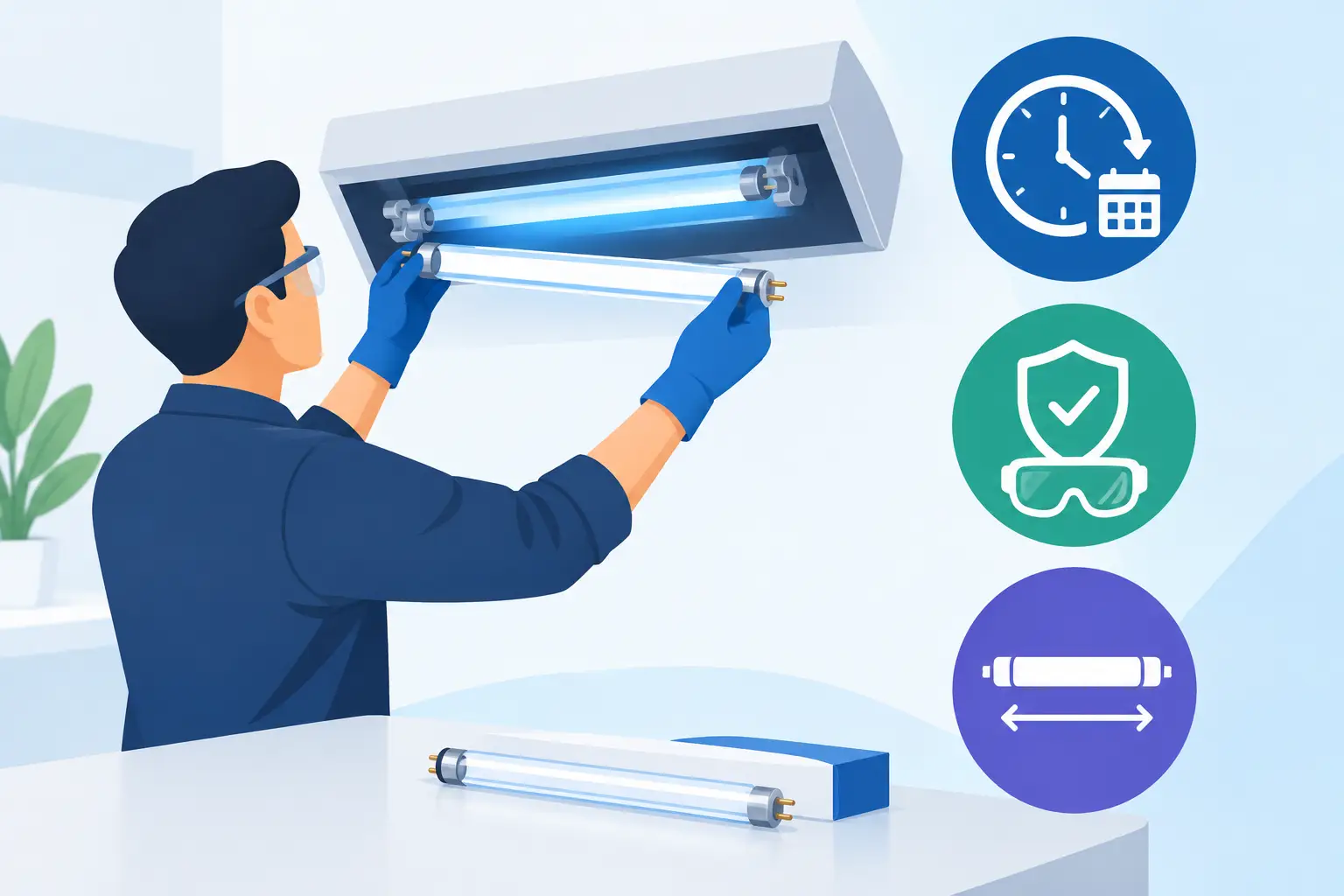
Before starting, switch off power to the UV controller at the power point. Isolate the water supply to the UV unit and relieve pressure by opening a nearby tap. Allow the lamp to cool if the system has been operating, as lamps and surrounding components can become warm.
Remove the controller or lamp connector as directed, then withdraw the lamp carefully from the chamber. Do not force it. The lamp is fragile and may be longer than expected, so make sure there is enough clear space to remove it without knocking it against a wall, pipework or ceiling.
Avoid touching the glass of the new lamp with bare hands. Oils from skin can create hot spots and shorten lamp life. Use clean gloves or a lint-free cloth. If the glass is touched accidentally, wipe it carefully using a suitable cleaning method specified by the manufacturer.
If you are servicing the quartz sleeve, drain the chamber fully and follow the sealing instructions closely. Check O-rings for wear, flattening or damage, lubricating or replacing them only with compatible products. Reassemble the chamber, restore water slowly and inspect for leaks before reconnecting power.
Once the system is powered on, confirm that the controller shows normal operation. Reset the lamp timer if your unit requires it. Run water through the system and check again for leaks around the end caps and sleeve seals. If an alarm continues, do not assume it is a false alert. Recheck the lamp fitment, connector and controller instructions.
Common mistakes that shorten UV system performance
The most common mistake is treating the annual lamp change as the only maintenance requirement. A UV system relies on clean water flow, a clean sleeve and correct installation. Replacing a lamp while leaving a fouled sleeve or overdue sediment filters in place limits the benefit of the work.
Another issue is running water at a higher flow rate than the UV unit is rated to treat. Greater flow means less exposure time inside the chamber. This can happen after a pump upgrade, changes to pressure settings or plumbing alterations. The UV unit, pump and filters should be considered together as one water treatment system.
Power interruptions also deserve attention. If your property experiences frequent outages, check that the UV controller restarts correctly and that any alarm is audible. During an outage, the UV lamp will not operate. Properties relying on rainwater for drinking should have a clear plan for water use during extended loss of power, particularly where a generator or backup supply is involved.
Finally, do not dispose of old UV lamps in general rubbish. Many contain a small amount of mercury and should be handled according to local recycling or hazardous waste requirements. Keep the old lamp protected from breakage until it can be disposed of appropriately.
Build UV servicing into your annual water system check
An annual UV lamp replacement is a good time to review the broader condition of your water setup. Check tank screens and leaf strainers, clean or replace filter cartridges, inspect pump operation and pressure, and look for leaks or damaged pipework. On rural and acreage properties, seasonal changes can quickly expose weaknesses in a system that was working well a few months earlier.
Keep a simple service record showing the lamp date, filter changes, sleeve cleaning and any water-quality concerns. It makes future maintenance easier and gives you useful information when troubleshooting changes in pressure, taste or clarity.
For the right lamp, compatible parts and practical advice on maintaining a rainwater treatment system, North Coast Water Tanks can help you match the replacement to your existing equipment. A correctly selected lamp and a clean, well-maintained UV unit give your household water system the dependable support it was designed to provide.