


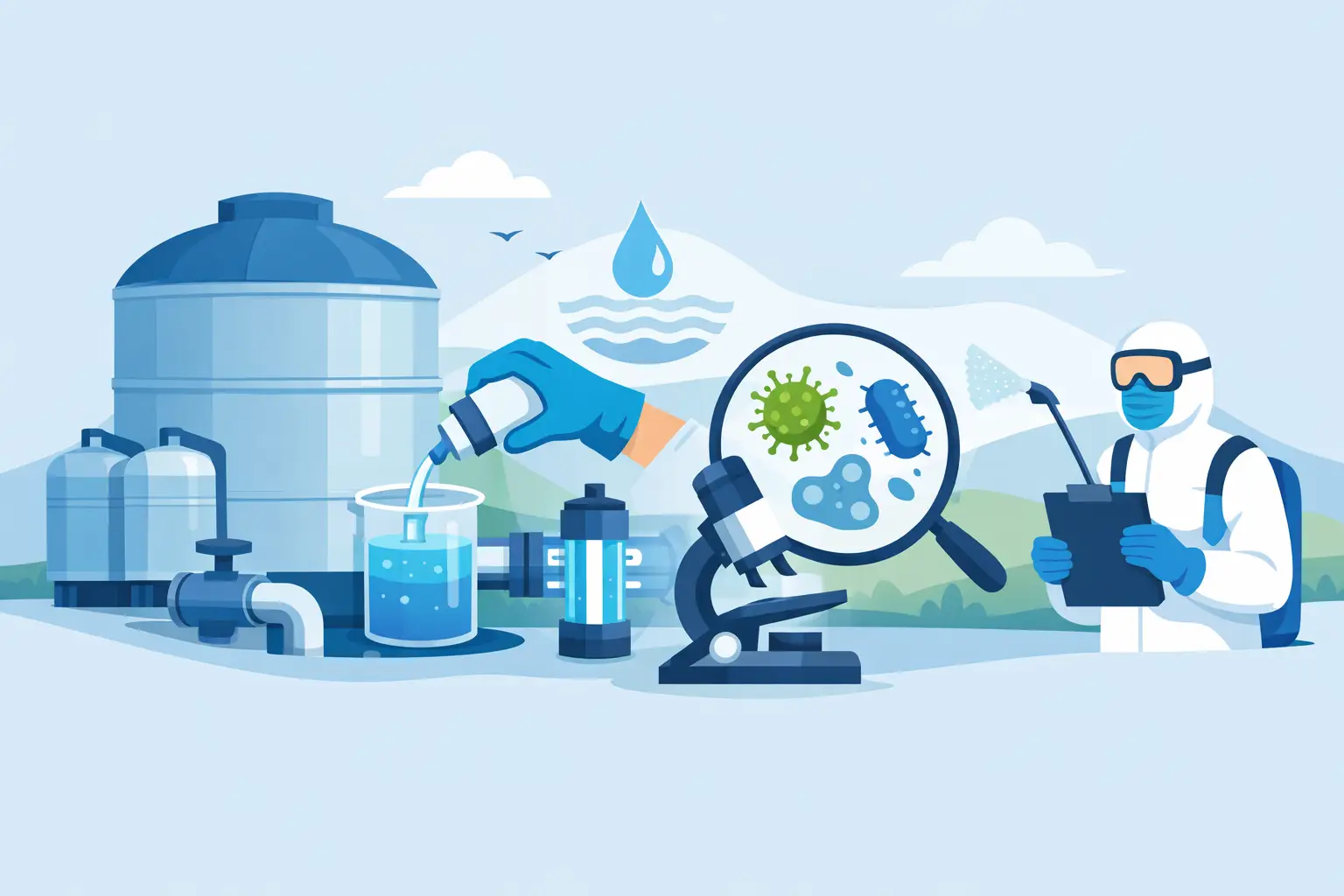
If your tank water has developed a smell after heavy rain, sat unused for a while, or tested positive for contamination, the question is usually immediate: how to disinfect tank water without creating a bigger problem. The right method depends on what the water is used for, how badly it is affected, and whether your tank setup includes filtration or UV treatment. A quick chlorine dose can help in some cases, but if sludge, dead animals, leaf matter or damaged fittings are involved, disinfection on its own will not fix the source.
When disinfecting tank water is the right step
Disinfection is used to reduce bacteria, viruses and other microorganisms in stored water. It is most useful after contamination events, after tank cleaning, when a system has been opened for repairs, or when rainwater is being prepared for household use and extra treatment is needed.
It is not a substitute for basic tank hygiene. If the gutters are full of leaf litter, the inlet has no mosquito-proof screen, or sediment has built up across the tank floor, the water can be re-contaminated quickly. In those cases, disinfecting the water may give short-term improvement, but the underlying issue remains.
For many property owners, the trigger is practical rather than technical. The water looks cloudy, there is an earthy or sulphur-like odour, livestock are refusing it, or a test has shown bacterial activity. Those are all signs to assess the full system, not just the water inside the tank.
How to disinfect tank water with chlorine
For most tanks, chlorination is the most common and practical disinfection method. It is widely used because it is accessible, effective when dosed correctly, and suitable for emergency treatment where contamination is suspected.
Household bleach can be used, but only if it is plain, unscented bleach with no added detergents, fragrances or thickeners. Products with additives are not suitable for drinking water systems. The goal is to achieve a chlorine residual strong enough to disinfect the water, then allow enough contact time before use.
As a general guide, many tank owners aim for shock chlorination when disinfecting a contaminated system. The exact dose depends on tank volume, water quality and chlorine strength. Clean water needs less chlorine than dirty water because organic matter consumes chlorine quickly. That is why heavily contaminated tanks often need cleaning before treatment rather than a bigger chemical dose.
If you know the tank capacity, measure carefully. Overdosing can leave the water with a strong taste and odour, and it can affect pumps, filters and some plumbing components if mismanaged. Underdosing, on the other hand, may not disinfect the system at all.
After adding chlorine, circulate the water through the pipework if the system supplies a house, shed or trough network. Open each outlet until you can smell chlorine, then close it off. This helps disinfect not only the tank but also the connected lines where bacteria can sit.
Leave the treated water to stand for the required contact time, commonly several hours and often longer for a full shock treatment. If the water is intended for household drinking use, testing after treatment is the safer approach, especially where there has been known contamination.
A caution on taste, odour and system components
Chlorine is effective, but it has trade-offs. It can react with organic material, it can shorten the life of some filter cartridges if heavily dosed water is pushed through them, and it is not the best standalone solution for ongoing treatment where water quality is variable. If your setup includes carbon filters or UV sterilisation, those components need to be considered before and after chlorination.
Carbon filters can remove chlorine, which is useful for drinking quality, but they can also become a breeding ground for bacteria if they are old or overloaded. UV systems can inactivate microorganisms, but only when the water is clear enough and the unit is sized and maintained properly. In many household systems, the strongest result comes from combining good tank hygiene, sediment filtration and UV treatment rather than relying on repeated chemical dosing.
Start with the contamination source
Before you disinfect, check why the water has become unsafe or unpleasant. This part is often skipped, and it is where many recurring water quality problems begin.
Inspect the roof catchment, gutters, leaf guards, first flush diverters, inlet strainers and tank access points. Look for damaged lids, light entry, mosquito access, overhanging branches and evidence of vermin. If a dead animal has entered the tank or pipework, the water should not be treated as a simple chlorine job. The tank should be isolated, assessed and usually drained and cleaned properly.
Sediment matters too. A layer of sludge at the bottom of the tank can harbour microorganisms and consume disinfectant. If the build-up is significant, tank cleaning is usually the first step. Adding chlorine to dirty water can mask the problem for a short time, but it rarely gives a reliable long-term result.
When cleaning is better than disinfecting
Some tanks do not need a chemical treatment as the main fix. They need maintenance. If the water is discoloured from sediment, has ongoing odour issues, or the tank has not been cleaned in years, a physical clean may do more than a disinfectant dose ever will.
This usually involves removing settled sludge, checking internal surfaces, cleaning strainers and checking that the inlet and overflow are screened correctly. Once the tank and pipework are in better order, disinfection can be used as a final step rather than a first attempt.
For household drinking water systems, this is often the safer path. Clean infrastructure gives any treatment method a better chance of working properly.
Is tank water safe to drink after disinfection?
It depends on the reason for treatment and how the water is used. If the tank serves garden taps or stock water only, the standard may be different from a house supplying kitchen, bathroom and laundry use. Drinking water deserves a higher level of caution.
Disinfection can reduce microbial risk, but it does not remove sediment, heavy metals, chemical contamination or all taste and odour problems. If roof runoff has been affected by ash, spray drift, industrial fallout or other non-biological contaminants, chlorine is not the answer.
That is why many Australian properties rely on a full treatment train for potable rainwater. A sound tank, screened inlets, a first flush device, appropriate filtration and UV sterilisation provide more dependable protection than occasional chlorination alone.
Ongoing prevention is easier than repeated shock treatment
If you find yourself disinfecting regularly, the system probably needs upgrading or servicing. A tank in good condition with proper screening and catchment management should not need constant emergency treatment.
Simple preventative work makes a real difference. Keep gutters clear, trim back branches, check for gaps around lids and access points, service filters on schedule and replace UV lamps as recommended. Make sure overflow outlets are screened and first flush devices are operating as they should. If the pump and pipework are ageing, inspect them as well, because biofilm can build up beyond the tank itself.
For rural properties, seasonal checks are worth the effort. Long dry periods, storms, bushfire ash and warm weather can all affect water quality. A quick inspection before and after major weather events can prevent a much larger clean-up later.
When to get expert help
If the tank supplies drinking water and there has been serious contamination, guessing is not worth it. Professional advice is sensible where there is dead animal contamination, repeated bacterial issues, heavy sediment loading, poor taste that keeps returning, or uncertainty about correct chlorine dosing.
The same applies if your system includes multiple tanks, pumps, filters and UV equipment. Disinfection has to work with the whole setup. Filters may need replacement after treatment, UV sleeves may need cleaning, and damaged fittings may need repair before the water can be relied on again.
For many property owners, the most practical approach is not just learning how to disinfect tank water, but knowing when disinfection is only one part of the fix. North Coast Water Tanks works with customers who need the full picture – tank hygiene, filtration, UV treatment, maintenance support and the right hardware for Australian conditions.
Safe tank water comes from a clean, well-maintained system. If you treat the cause as carefully as the water itself, you are far more likely to get a dependable result.