


A slimline tank can sit neatly beside a house, along a fence line or under an eave, but its low-profile shape makes cleaning different from a standard round tank. Knowing how to clean slimline tanks properly helps protect stored water, preserve pump performance and prevent sediment from reaching taps, troughs or irrigation equipment.
For most properties, the aim is not to sterilise the tank at every clean. It is to remove built-up sludge and debris, inspect the tank and fittings, and correct the cause of contamination before it becomes an ongoing problem. If the tank supplies household drinking water, the cleaning process needs extra care.
Know when a slimline tank needs cleaning
A well-maintained rainwater system should not need frequent full cleaning. In many Australian conditions, a slimline tank may only require internal cleaning every two to five years. The timing depends on roof debris, local dust, nearby trees, bird activity, gutter maintenance and how quickly the stored water turns over.
Check the water sooner if you notice a stale smell, discolouration, visible particles, reduced pump flow or sediment coming through at the first draw-off point. A sudden change after heavy rain can indicate that leaf litter or roof contaminants have bypassed the inlet protection.
Slimline tanks can be harder to inspect because the access opening is often smaller and the tank is shallow and long. Use a torch through the lid or inspection port where possible. Do not enter the tank. Even an apparently empty water tank can be a confined space with serious risks from low oxygen, fumes, slippery surfaces and restricted access.
Prepare the system before cleaning
Choose a dry period if possible and plan where the remaining water will go. Water that is not suitable for household use may still be useful for established garden beds, provided it has not been treated with chemicals and does not contain obvious contamination. Avoid sending a large volume towards buildings, septic systems or areas that will become boggy.
Turn off the pump at the power source and isolate any automatic changeover equipment. Close the outlet valve if your plumbing arrangement allows it, then disconnect or protect sensitive filters and UV equipment according to the manufacturer’s instructions. Sediment-heavy water can quickly block cartridge filters, so cleaning the tank before replacing filters avoids wasting new consumables.
You will generally need a submersible dirty-water pump or suitable suction pump, a hose, a wet vacuum for small residual areas, a soft brush or long-handled tank-cleaning tool, a torch, and clean water for rinsing. Wear enclosed non-slip footwear, gloves and eye protection. Keep electrical connections well away from standing water.
How to clean slimline tanks step by step
Start by diverting the inlet or disconnecting the downpipe so fresh rainwater and roof debris cannot enter during the clean. Remove the lid carefully and inspect the mosquito mesh, inlet screen and overflow screen. Replace damaged mesh rather than trying to patch it. Fine insect-proof screening is a small component with a major role in keeping mosquitoes, vermin and leaves out of the system.
Pump out most of the stored water through the normal outlet or with a submersible pump. Where practical, leave a shallow layer at the bottom until you are ready to remove the sediment. Draining the tank through a lower outlet too early can stir sludge into the line, potentially carrying it to pumps, filters and connected plumbing.
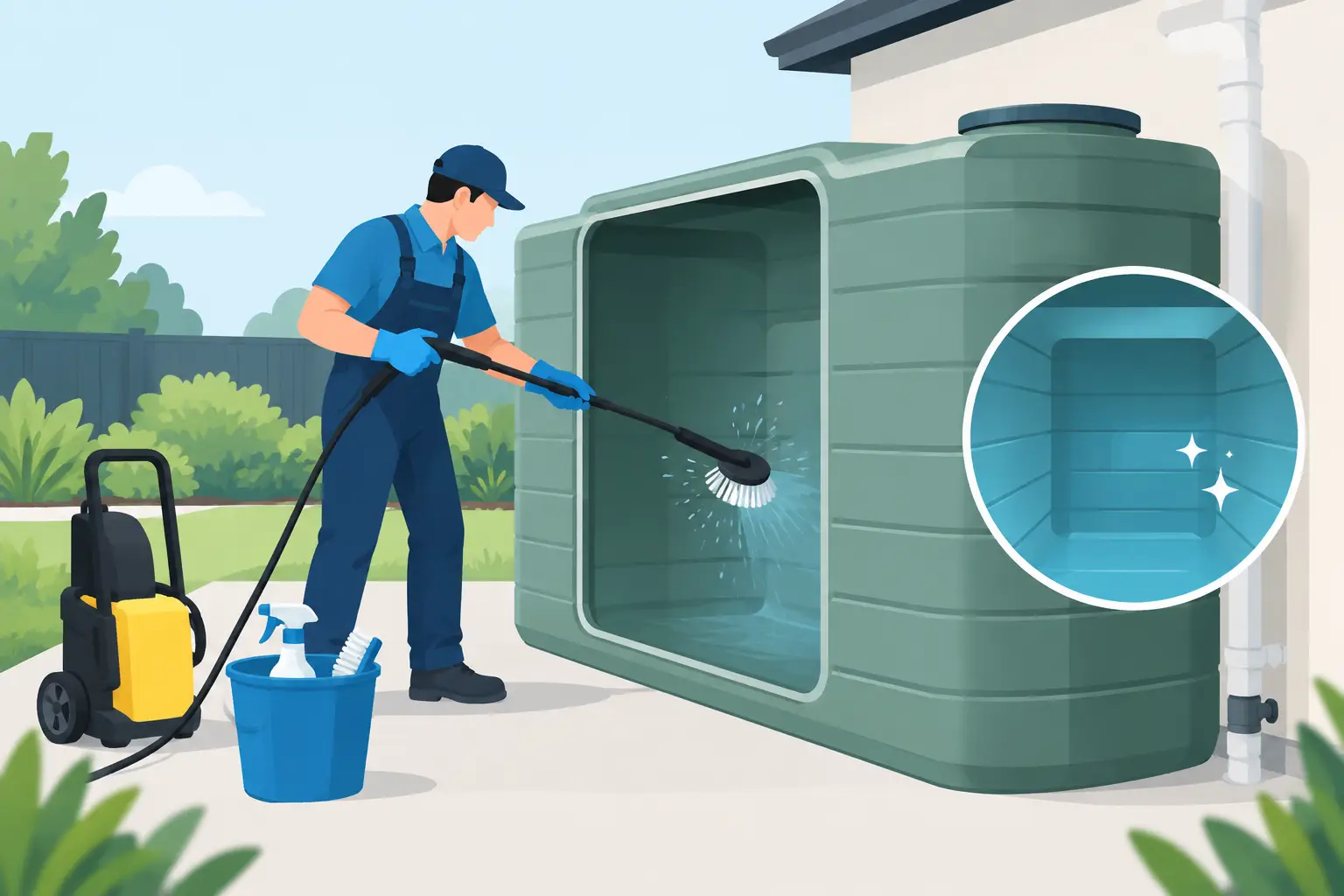
Once the water level is low, use the pump intake to remove the concentrated sediment from the lowest accessible area. Slimline tanks often have internal ribs and a long floor profile, so work methodically from one end towards the pump rather than trying to wash everything to the centre at once. A small amount of clean rinse water can help move fine sediment, but avoid using high-pressure equipment inside the tank. Excessive pressure may damage fittings, seals or the tank wall, particularly in older poly tanks.
Brush accessible surfaces gently to loosen biofilm or dirt, then pump out the rinse water. Do not use household detergents, bleach or degreasers as a routine solution. Residues can remain in the tank and may affect water quality, pumps, garden use or livestock. If there is clear evidence of significant contamination, such as animal droppings, a dead animal, sewage exposure or suspected chemical runoff, stop using the water for drinking and seek professional advice on disinfection and testing.
When the tank is visibly clean, inspect the internal outlet, overflow and base for cracks, distortion, loose fittings or signs of root intrusion around pipework. Also check that the tank is sitting evenly on its base. A slimline tank needs continuous, level support across its footprint. Uneven support can place stress on the tank as it fills and may contribute to warping or fitting problems.
Refit the lid and screens securely, reconnect the inlet and restore the pump system. Allow the tank to refill with the next rainfall, then flush the first water through an external tap or garden connection if sediment has been disturbed near the outlet. Replace or clean filters only after the tank and incoming water path are back in order.
Fix the cause, not just the sludge
Cleaning removes what is already in the tank, but good inlet management determines how quickly it returns. Clear gutters regularly, especially after wind events and before the wetter season. Trim overhanging branches where practical, and ensure downpipes are not carrying roofing debris directly into the tank.
A leaf diverter or rain head helps remove larger debris before it reaches the inlet. A first-flush diverter can also improve water quality by directing the first portion of rainfall away from the tank, carrying dust, bird droppings and contaminants that have accumulated on the roof. The correct first-flush volume depends on roof area, local conditions and whether the water is used for irrigation or household supply.
Check the overflow as well. It should discharge away from the tank base and building footings, with a secure screen to stop insects and small animals entering. A blocked overflow can create backflow at the inlet during heavy rain, sending debris into the tank when the system is under the most pressure.
Special care for drinking-water systems
If your slimline tank supplies water for drinking, cooking or bathing, cleaning is only one part of maintaining safe water. Use food-grade, Australian-standard-compliant tank components and keep the tank sealed from light and pests. Light entering through a poorly fitted lid or translucent section can encourage algae growth.
Filtration requirements vary. Sediment filtration protects plumbing and improves clarity, while carbon filtration can improve taste and odour. UV sterilisation may be appropriate where microbial control is required, but it works best when the water has already been filtered to remove fine particles. A UV unit cannot compensate for a dirty tank, blocked guttering or neglected inlet screens.
After a contamination event or a long period of disuse, consider water testing before returning the supply to drinking use. This is particularly sensible for rural properties, holiday homes and tanks connected to roofs with heavy tree cover or regular bird activity.
When professional tank cleaning is the safer option
A homeowner can manage basic maintenance and light sediment removal where access, drainage and equipment are straightforward. Professional tank cleaning is often the better choice where there is heavy sludge, difficult access, persistent odours, suspected contamination, a failed pump or a tank connected to a household water supply.
A trained technician can remove sediment without placing anyone inside the tank, assess valves and fittings, and identify issues that are easy to miss from above. For older installations, this can be a practical opportunity to review filtration, pump protection and inlet upgrades rather than repeatedly cleaning the same problem.
North Coast Water Tanks can assist property owners with practical tank cleaning and maintenance advice, along with the pumps, filtration and accessories needed to keep a rainwater system working reliably.
A clean slimline tank is most valuable when it stays clean. Set a reminder to inspect screens, gutters and overflow points after major weather events, and deal with small debris issues before they become a full tank-cleaning job.