


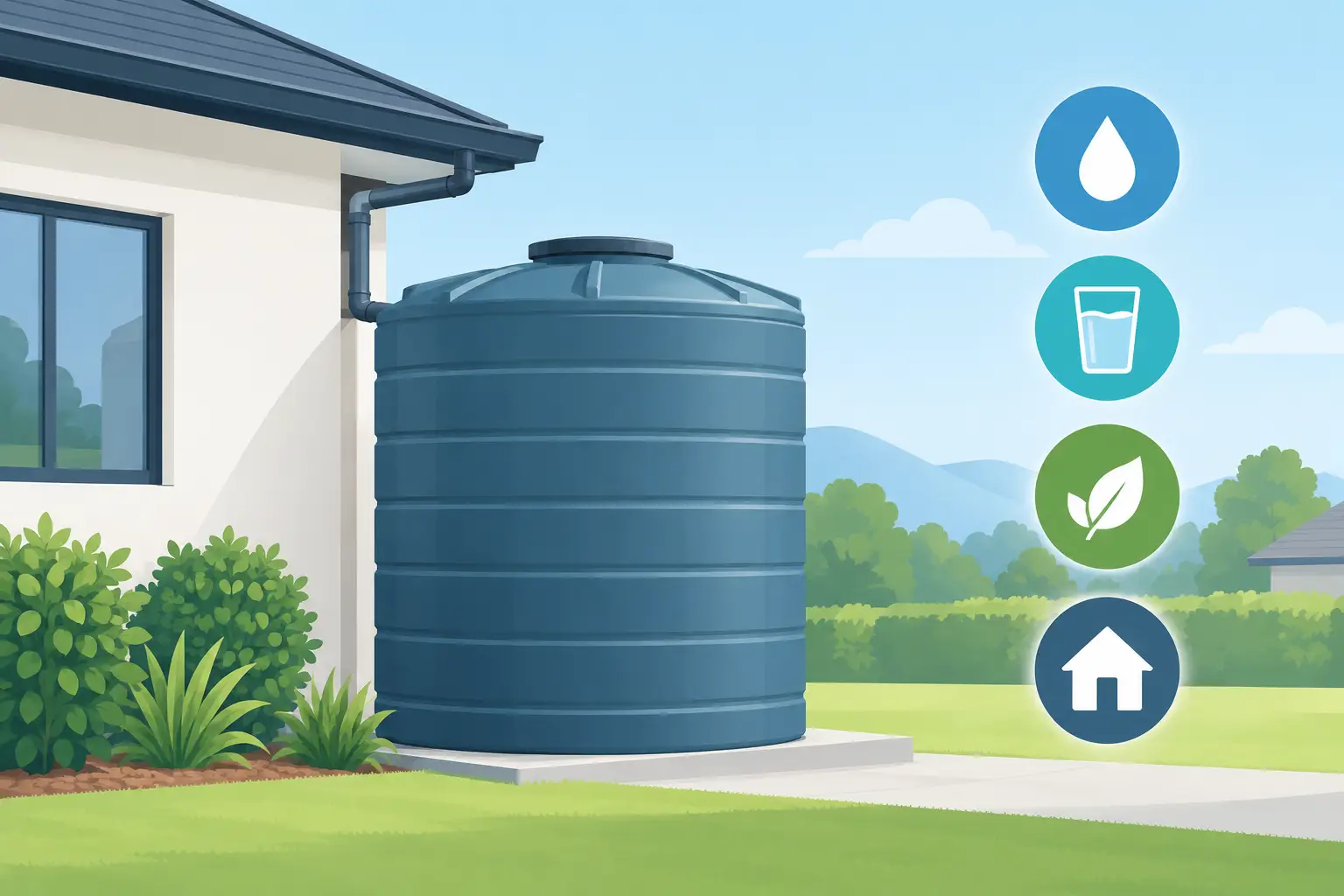
A food grade water tank is not simply a tank labelled for drinking water. It is part of a complete water supply system that needs suitable materials, clean collection surfaces, correctly selected fittings and ongoing maintenance. For homes, farms, acreage blocks and small businesses relying on rainwater, getting those details right protects both water quality and the value of your investment.
The right choice depends on how the water will be used. Water for gardens, stock or wash-down has different requirements from water that supplies kitchen taps, showers and drinking water. A tank that is appropriate for potable water storage gives you a sound starting point, but the roof, gutters, pump, pipework and filtration system all affect what reaches the tap.
What makes a food grade water tank suitable?
A food grade water tank is manufactured from materials intended for contact with potable water. For Australian properties, look for tanks and associated components that are certified or compliant for drinking-water applications, including relevant Australian standards such as AS/NZS 4020 where applicable. This standard assesses whether a product can affect the taste, odour or safety of drinking water.
The tank material matters, but so do the smaller components. Inlet strainers, screens, overflow fittings, seals, valves, pipework and internal liners should all be suitable for potable water where they contact the stored supply. A quality tank can be undermined by an unsuitable fitting, contaminated hose or poorly installed overflow.
Poly tanks are a common choice for residential and rural rainwater storage because they are corrosion-resistant, relatively straightforward to install and available in a wide range of capacities and colours. Food-grade polyethylene is well suited to stored drinking water when it is manufactured to the correct specification and installed properly. Darker tank colours can also help limit light penetration, reducing the conditions that encourage algae growth.
Steel tanks with an approved internal liner can be an excellent option where a larger capacity, traditional round-tank profile or a particular site layout is required. The liner is the water-contact surface, so its quality, suitability for potable water and correct installation are central to the tank’s performance. Concrete tanks can also store household water, although older tanks may require inspection, cleaning, sealing or repair before being returned to service.
Match the tank to the job, not just the capacity
Tank capacity is often the first figure people compare, and it is certainly important. However, choosing the biggest tank that fits the budget is not always the best answer. A suitable system balances roof catchment area, local rainfall, household demand, dry-period resilience, available space and the flow rate you need at taps or irrigation points.
A family home using rainwater for all household needs requires more storage and a more carefully planned filtration setup than a property using tank water only for toilets, washing machines and the garden. A farm may need separate storage for household supply, stock water and firefighting reserve. Separating these uses can make water management simpler and prevents high-demand tasks from reducing the household supply at the wrong time.
Site access also deserves attention before ordering. Check the delivery path, gate widths, slopes, overhead branches and the prepared tank base. A tank needs a stable, level foundation that supports its full operating weight. Water is heavy – a 10,000-litre tank holds around 10 tonnes when full – so base preparation is not an area to compromise on.
For slimline tanks beside a house, consider access for cleaning, fittings and future maintenance. For larger round tanks, allow room around the structure and make sure overflow can discharge safely away from buildings, footings and neighbouring properties.
Rainwater quality starts before the tank
The cleanest food grade water tank cannot correct every problem introduced before water reaches it. Roof material, leaf build-up, bird droppings, dust, ash, insects and debris all influence the quality of harvested rainwater. A well-designed collection system reduces this load before storage.
Start with clean gutters and downpipes. Fit appropriate gutter guards or leaf screens where practical, particularly under trees. A first-flush diverter can direct the first portion of dirty roof runoff away from the tank after a dry spell. It is not a replacement for maintenance, but it can reduce sediment and contaminants entering the stored supply.
At the tank inlet, a secure mosquito-proof screen keeps insects, leaves and larger debris out. The overflow should also be screened. These small details are particularly important in coastal and regional areas, where warm conditions, heavy leaf fall and intense rainfall events can quickly expose weaknesses in a setup.
Keep the tank lid closed and secure. Light entering through an open access point can encourage algae, while an unsecured lid creates a safety risk and provides an entry point for pests and contaminants. If a tank has been left open, flooded, contaminated or unused for a long period, arrange an inspection and cleaning before relying on the water for household use.
Filtration and treatment for household water
A food grade tank stores water safely, but treatment requirements depend on how the water is used and the risks at your property. For water supplied to household taps, a typical system may include sediment filtration to catch fine particles, followed by a carbon filter to improve taste and reduce some organic compounds. UV sterilisation can then provide an additional barrier against microorganisms, provided the water is clear enough for the UV unit to work effectively.
Filtration should be sized for the expected flow rate. A filter that is too small may restrict showers or pressure pumps, while an oversized system can add cost without a practical benefit. Cartridge replacement intervals also vary with water quality and use. If filters are not changed when required, flow can drop and water quality protection is reduced.
Pump selection is equally important. The pump needs to match the number of outlets, distance to the house, elevation changes and expected demand. A small cottage with one bathroom has very different requirements from a home with multiple bathrooms, irrigation zones and a separate shed. A pressure controller, dry-run protection and correctly sized pipework can help provide consistent supply while protecting equipment.
If you are uncertain about the safety of your supply, water testing provides useful evidence rather than guesswork. Testing is especially worthwhile after contamination, following major repairs, when using an older tank, or if the water has an unusual taste, smell or appearance.
Maintenance that protects stored water
A reliable rainwater system needs regular checks, not constant attention. Inspect screens, gutters, overflows and first-flush devices after heavy weather and during periods of high leaf fall. Clear blockages promptly so water does not back up or bypass collection points.
Periodically check the tank exterior for damage, settlement around the base, leaking fittings and signs that pests can enter. For steel tanks, inspect the roof and structure for corrosion or damage. For lined tanks, watch for changes in water level that could indicate a leak and seek advice before attempting a repair.
Tank cleaning frequency depends on the catchment, local conditions and the amount of sediment entering the system. There is no single timetable that suits every property. A tank beneath heavy tree cover may need more frequent attention than one supplied by a clean metal roof in an open location. Professional tank cleaning can remove settled sediment while helping identify issues with liners, fittings and internal components.
Questions to ask before you buy
Before choosing a tank, confirm whether it is intended for potable water storage and ask what certification or compliance information applies to the tank and fittings. Establish the usable capacity, dimensions, inlet and outlet positions, overflow arrangement, warranty conditions and base requirements. If the tank will supply drinking water, plan the pump, filters and UV treatment at the same time rather than adding components later without checking compatibility.
It is also worth considering future demand. A growing family, new granny flat, livestock expansion or planned irrigation can change the system you need. In some cases, installing a larger tank or allowing space for a second tank is more cost-effective than rebuilding the entire setup later.
North Coast Water Tanks can help property owners bring tank storage, pumps, filtration and accessories together as one practical system. The best result is a food-grade storage solution that suits your site, supports the way you use water and remains straightforward to maintain for years to come.