


A pump that suddenly sounds like it is pumping gravel is not simply noisy – it may be damaging itself. Pump cavitation causes are often traced to a suction-side restriction, excessive lift from a water tank, or a pump being asked to deliver more water than the system can supply. Left unattended, cavitation can reduce pressure, wear internal components and shorten the life of an otherwise reliable pump.
For rainwater systems, rural properties and commercial water setups, the practical answer is not always to replace the pump. The right fix starts with identifying where the pressure loss or restriction is occurring.
What cavitation does to a pump
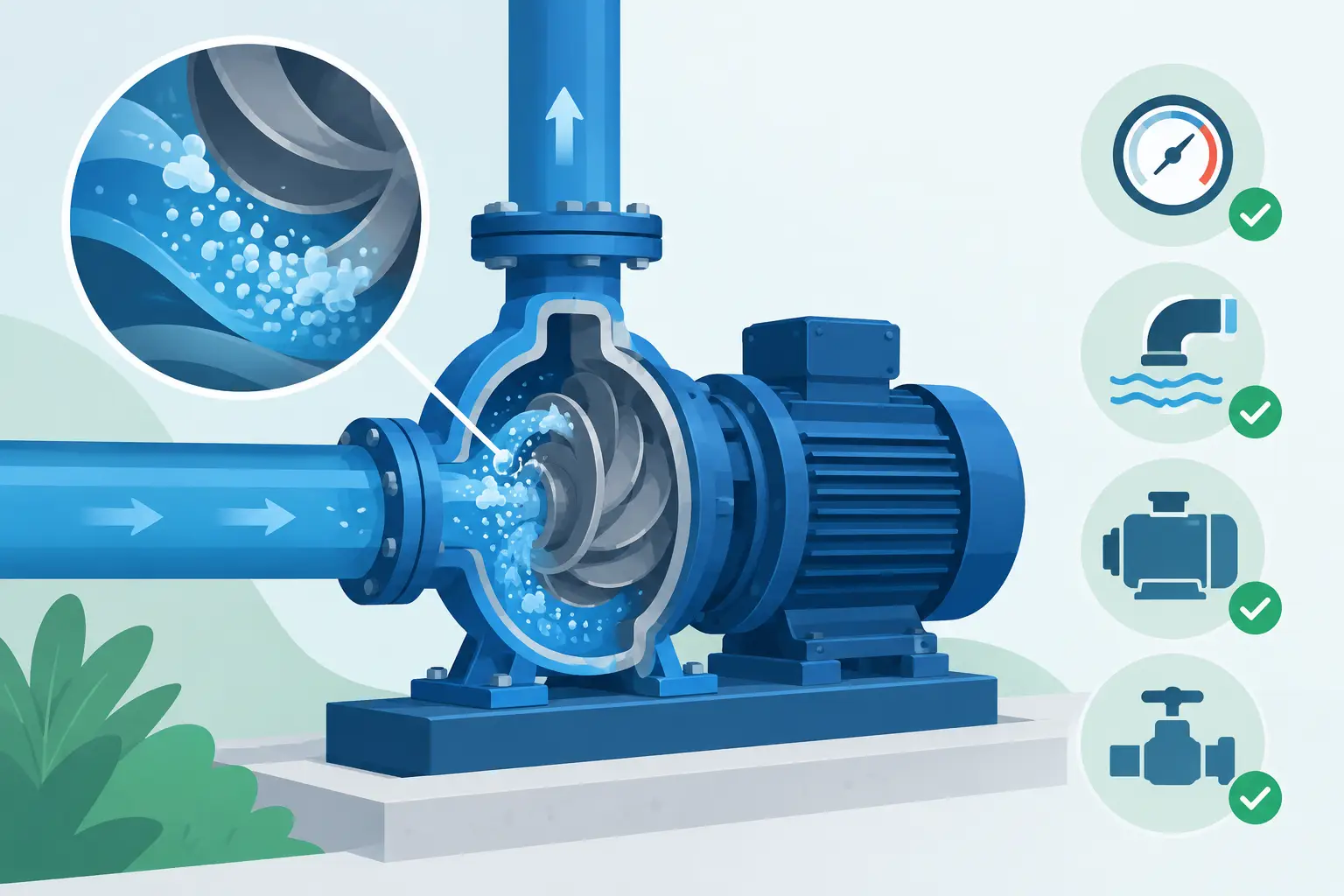
Cavitation occurs when pressure at the pump inlet falls low enough for water to form vapour bubbles. As those bubbles move into a higher-pressure area inside the pump, they collapse sharply. This creates the distinctive rattling, crackling or rumbling sound associated with cavitation.
The bubbles are small, but their repeated collapse can pit an impeller, damage seals and wear the pump casing. Performance may become inconsistent as well. You might notice fluctuating pressure at taps, reduced flow to irrigation, a pump that takes longer to prime, or a pressure controller cycling more often than usual.
Cavitation is most common on the suction side of a centrifugal pump, where the pump is trying to draw water from a tank, dam, bore or other water source. It can also occur when water is circulating internally because the pump is operating too far away from its intended duty point.
Common pump cavitation causes
Most cases come back to the pump not receiving water freely enough. The following issues are worth checking before assuming the pump itself has failed.
- Too much suction lift: Every metre the pump lifts water reduces pressure at its inlet. A surface-mounted pump positioned well above the tank outlet must work harder to draw water. Hot weather and warmer water can make this more likely, as water vapourises more readily at lower pressure.
- Undersized suction pipe: A suction line that is too narrow for the pump’s flow rate creates excessive friction loss. Long runs, multiple bends and restrictive fittings add further resistance. A pump may have a large inlet port, but it still cannot perform properly if the supply pipe is undersized.
- Blocked strainers, filters or foot valves: Leaf matter, tank sediment, insects, scale and debris can partially block a strainer or foot valve. Fine filtration installed before the pump can also be a problem unless it has been selected specifically for suction-side use and maintained regularly.
- Air leaks in the suction line: A suction pipe can draw air through a loose fitting, perished O-ring, cracked pipe or poorly sealed threaded joint without showing a water leak. Air entering the line reduces the pump’s ability to maintain a solid column of water and can produce symptoms similar to cavitation.
- Low tank water level or a poorly positioned outlet: When the water level is low, a pump has less available head at its inlet. If the outlet is near settled sediment, debris can also be drawn towards the line. In some setups, internal tank fittings or a vortex at the outlet can restrict flow.
- Pump is too large for the available supply: A high-flow pump can empty its suction line faster than water can move through it. This often happens when an older pump is replaced with a larger model without upgrading the pipework, tank outlet or valves.
- Operating outside the pump’s duty range: Pumps are designed for a specific relationship between flow and pressure. Running with valves nearly closed, using a pump for a much smaller flow than intended, or incorrect pressure settings can create internal recirculation and cavitation damage.
Start with the tank and suction line
On a rainwater harvesting system, inspect the water source before focusing on the pump. Confirm the tank contains sufficient water and that the outlet valve is fully open. If the system has a tank screen, floating pickup, foot valve or inlet strainer, check that it is clean and not restricted.
Then follow the suction line from the tank to the pump. Look for flattened flexible hose, unnecessary elbows, sharp bends, pipe joins and fittings that may allow air in. Suction pipe needs to be airtight and properly supported. Even a small leak can be enough to cause problems, particularly when the pump is mounted above the tank outlet.
A short, straight, generously sized suction line is generally the most dependable arrangement. Where possible, place a surface pump close to the water source and below the tank’s minimum water level, so water can feed to the pump by gravity. This reduces suction lift and makes priming more reliable.
It depends on the property layout, of course. A pump cannot always be positioned at tank level, particularly where flood exposure, access or power supply affects the installation. In those cases, pipe sizing, fitting quality and selection of a pump suited to the available suction conditions become even more important.
Check filters in the right position
Fine sediment and carbon filters protect household water quality, but they are usually best installed on the delivery side of the pump. When placed before a pump, a filter can starve it of water as the cartridge collects sediment.
A suitable coarse strainer may be required to protect the pump, especially where water is drawn from a dam or older concrete tank. The key is to use a strainer with adequate flow capacity and clean it on schedule. If pressure improves immediately after cleaning a strainer or filter, the restriction has likely been identified.
Match pump capacity to the system
Pump selection is not just about choosing the biggest flow rate on the shelf. The system must be assessed as a whole: tank outlet size, pipe diameter, pipe length, elevation change, number of taps or irrigation zones, and the pressure required at the point of use all matter.
For example, a household pressure pump supplying a home from a nearby water tank has different requirements from a pump feeding stock troughs over a long distance. A high-flow irrigation pump may be appropriate for open lines and sprinklers but unsuitable for a narrow domestic suction line. Similarly, a pump with an electronic controller may cycle poorly if the system has a small leak or its flow demand is below the controller’s minimum operating level.
Check the pump curve and manufacturer specifications rather than relying only on the maximum litres-per-minute figure. A pump should operate near its efficient working range, not continuously at the extreme low-flow or high-flow end. This is where experienced advice can avoid an expensive mismatch.
Signs that cavitation is already causing damage
The earliest sign is usually sound. A healthy pump has a consistent motor and water-flow noise. Cavitation often produces a harsh rattling, growling or intermittent crackling noise, especially when demand is high.
Other warning signs include reduced flow, pressure that drops while several fixtures are running, vibration, an overheating motor, repeated loss of prime and unexplained wear to impellers or mechanical seals. In severe cases, a pump may continue operating but deliver very little water.
Do not run a suspected cavitating pump for extended periods while waiting for the issue to resolve itself. Unlike a temporary air bubble in a pipe, persistent cavitation is mechanical stress. Switch the pump off if it is running dry, has lost prime, or is making severe noise, then inspect the water supply and suction arrangement.
A practical fault-finding sequence
Begin by checking the simple issues: water level, open isolation valves, clean strainers and a correctly primed pump. Next, inspect the suction pipe for air leaks and restrictions, paying close attention to threaded fittings, unions, valves and flexible connectors.
If the issue occurs only when several taps, irrigation zones or livestock lines are operating, the system may be demanding more flow than the pipework can provide. Try reducing demand temporarily. If the noise and pressure loss improve, review pump sizing, suction pipe diameter and system layout before replacing components.
Where a pump has been operating noisily for some time, an inspection of the impeller and seals may be needed. Pitting or erosion can remain after the original restriction is fixed, so performance should be checked again once the system is returned to proper operating conditions.
For complex tank, filtration or irrigation systems, North Coast Water Tanks can help assess the pump, pipework and water source as one working system. That approach is often more useful than replacing a single part and hoping the problem disappears.
A reliable water supply depends on water reaching the pump as easily as the pump can deliver it. Keeping the suction run short, clean, airtight and correctly sized is one of the most effective ways to protect your equipment and keep pressure dependable when you need it.