


A blocked inlet or overflow screen can turn a well-designed rainwater system into a maintenance problem quickly. Regular tank screen cleaning keeps leaves, insects and roof debris out of stored water while allowing the tank to fill and overflow as intended. For homes, farms and commercial sites relying on rainwater, it is a straightforward job that protects water quality, reduces strain on filtration equipment and helps prevent costly call-outs.
Screens are often overlooked because they sit at the top of the system, out of normal sight. Yet they are one of the first lines of defence between the roof catchment and the water you use. A few minutes of routine inspection after heavy rain, wind or nearby tree work can make a significant difference.
Why tank screen cleaning matters
Rainwater arrives at the tank carrying whatever has collected on the roof and in the gutters. Leaves, bark, seed pods, insects, bird droppings and fine sediment can all make their way towards the inlet. A quality gutter guard and rain head reduce that load, but neither removes the need for maintenance.
When an inlet screen becomes clogged, water may bypass the intended entry point, spill around the tank lid or back up into the downpipe. This can lead to erosion around the tank base, water damage near buildings, and reduced harvesting during the very rainfall event you need to capture. In severe cases, debris can be forced through damaged mesh and settle inside the tank.
Overflow screens are equally important. They let excess water leave the tank while restricting mosquito entry, vermin and larger insects. A blocked overflow can prevent the tank from releasing water freely, while torn or poorly fitted mesh creates a direct path for pests. For tanks supplying household water, this is not just a nuisance issue. It affects the hygiene of the whole storage system.
Clean screens also support pumps and filters. Less debris entering the tank means less sediment accumulating on the floor, fewer blockages at strainers and a lower burden on cartridge filtration or UV treatment equipment. The result is more dependable operation and fewer consumables used over time.
Know which screens your system has
Not every tank system is arranged the same way. Before starting, identify the components fitted to your roof water collection and storage system. The common screens include a gutter guard, rain head or leaf diverter screen, tank inlet screen, tank lid vent screen and overflow mosquito screen.
A rain head is installed on the downpipe before the tank. It catches larger debris and is usually the easiest component to inspect and clean. The inlet screen sits where water enters the tank and may be integrated into the tank lid or fitted beneath the downpipe. Overflow screens are generally located near the upper wall of the tank, often on the opposite side to the inlet.
Some systems also have a first-flush diverter. Its purpose is to divert the first, dirtiest portion of roof runoff away from the tank. It is not a screen, but it should be checked during the same maintenance visit. A diverter that is full, blocked or incorrectly set cannot do its job properly.
Fine stainless-steel mesh is effective for excluding insects, but it can clog more readily than a coarser screen in heavily treed areas. This is a practical trade-off. The right mesh size depends on the site, the level of leaf load, whether the water is used for drinking, and how often the system can realistically be maintained.
A safe tank screen cleaning process
Plan to clean screens from outside the tank. Do not climb onto a tank roof unless the tank manufacturer confirms it is safe and you have appropriate access equipment. Never enter a water tank to retrieve debris or inspect an internal screen. Confined spaces can contain dangerous low-oxygen or contaminated air and require specialist procedures.
Start by turning off the pump if your work could disturb fittings, electrical connections or pipework. Use a stable ladder on level ground, preferably with another person nearby. Gloves and eye protection are sensible, particularly when handling wet leaf matter, insect nests or bird debris.
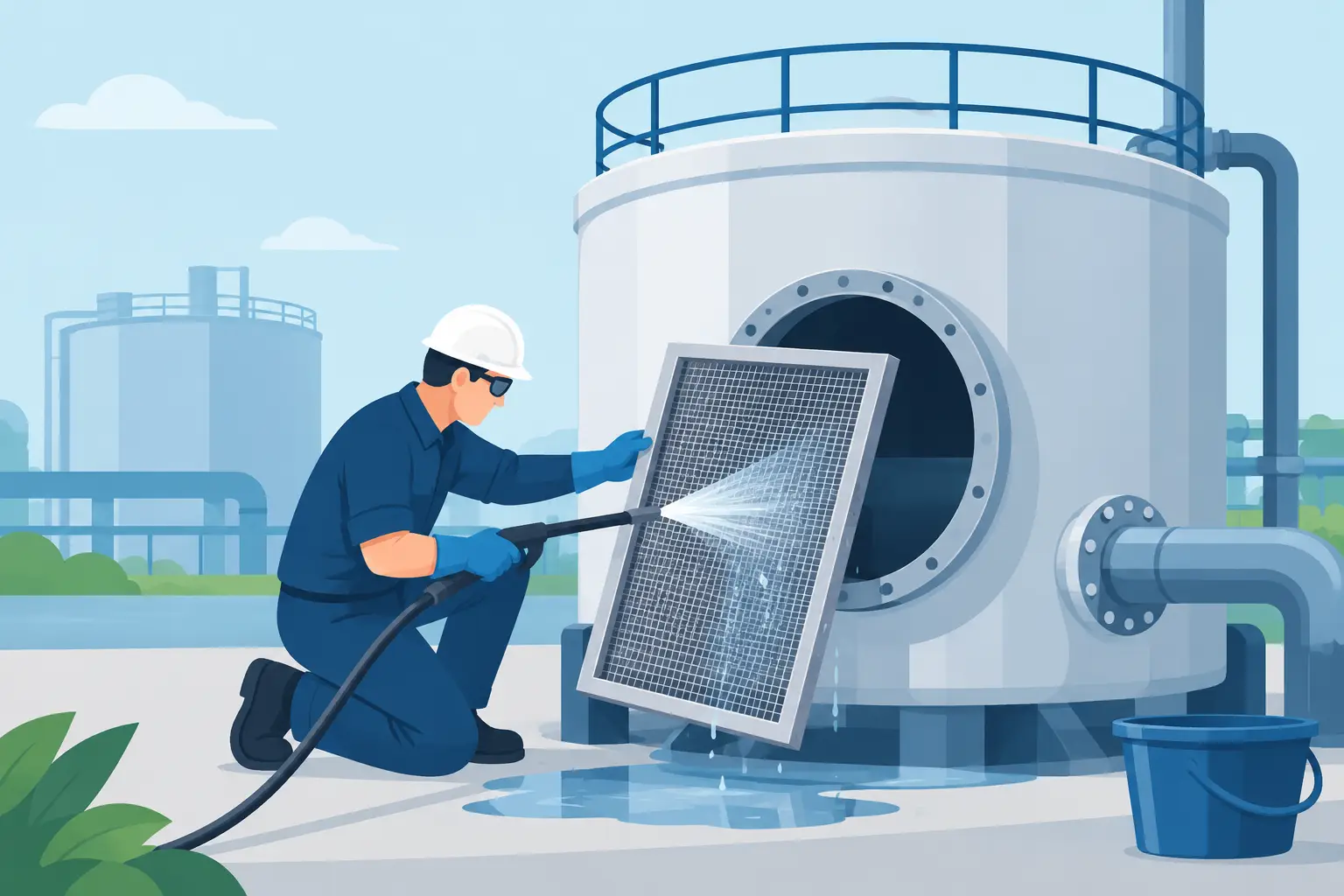
Remove loose debris by hand or with a soft brush. Rinse the mesh with clean water from a hose at low to moderate pressure, working from the cleaner side towards the dirty side where possible. This helps lift debris away rather than forcing it deeper into the mesh. Avoid high-pressure cleaning, as it can stretch fine mesh, damage plastic fittings or dislodge seals.
If the screen is removable, take it out carefully and inspect the frame as well as the mesh. Wash it over a bucket or a part of the yard where debris can be collected rather than allowing leaf material to wash back towards stormwater drains. Refit the screen squarely and make sure there are no gaps around the edge.
Avoid detergents, bleach and household chemicals on components connected to potable rainwater unless a suitably qualified water tank technician has specified an approved product and method. Residues can enter the tank and affect water quality. In most cases, clean water, a soft brush and physical removal of debris are all that is required.
What to check while the screens are off
Screen cleaning is a good opportunity to inspect the surrounding fittings. Look for split mesh, corrosion, brittle plastic, loose clips, missing seals and gaps where insects could enter. On older installations, mesh may appear intact but have pulled away from the frame at the edges.
Check that downpipes direct water cleanly into the inlet and that no water is running down the outside wall of the tank during rainfall. Look at the overflow outlet and discharge area too. Overflow should drain away from the tank footing, buildings and access areas without causing washout.
If your tank has a leaf strainer or rain head, check for debris caught behind the screen and confirm its outlet is not obstructed. For systems with a first-flush diverter, empty accumulated water and sediment according to the unit design. Also inspect the tank lid. It should sit securely, limit light entry and prevent animals or debris from entering the stored water.
How often should screens be cleaned?
There is no single interval that suits every property. A tank below open sky with minimal vegetation may only need a detailed clean two or three times a year. A rural property surrounded by gum trees, or a coastal site exposed to windblown leaves and salt, may need inspections monthly and after major weather events.
As a practical minimum, inspect tank screens at the start of the wet season, after extended dry periods when debris has accumulated on the roof, and following storms or high winds. Check more frequently during flowering and leaf-drop seasons. If your tank supplies drinking water, regular attention is particularly worthwhile because prevention is much easier than correcting contamination inside the tank.
Signs that cleaning cannot wait include water overflowing from an unusual point, slow flow through a rain head, visible leaf build-up, mosquitoes near vents or overflows, a sudden increase in sediment at filters, or an unexplained reduction in tank fill after rain.
When cleaning is not enough
A screen that repeatedly blocks may be telling you the system needs an upgrade rather than more frequent cleaning. Larger or better-positioned rain heads, improved gutter protection, a correctly sized first-flush diverter or a more suitable inlet arrangement can reduce maintenance substantially.
Likewise, if water has become discoloured, smells unusual, contains visible sediment or has had animal contamination, cleaning the screen alone will not restore tank hygiene. The tank, pipework, pump strainers and treatment equipment may all need assessment. This is especially relevant where rainwater is used for drinking, food preparation or livestock.
North Coast Water Tanks can assist with practical advice on tank cleaning, replacement screens, rainwater filtration and system components suited to Australian conditions. The most effective solution depends on your roof area, tank type, local vegetation, water use and access for ongoing maintenance.
Keep screen checks on the same schedule as gutter cleaning and pump inspections. It is a small piece of maintenance, but it helps your tank collect cleaner water every time it rains.