


A rainwater tank can give a household, farm or small business valuable independence, but stored water is only as good as the system protecting it. Effective water filtration removes the particles and contaminants that can enter from your roof, gutters, pipework and tank, helping deliver cleaner water to the point where it is used.
For many regional and coastal properties, rainwater is not simply a garden supply. It may feed kitchen taps, bathrooms, livestock troughs, laundries, accommodation facilities or irrigation lines. That makes filtration a practical part of the overall water system, alongside correct tank sizing, a reliable pump and regular maintenance.
Why rainwater needs filtration
Rainwater starts relatively clean, but it collects whatever is on the roof surface as it travels towards the tank. Dust, leaves, bird droppings, insects, pollen and fine sediment are common. In bushland or rural areas, ash and organic matter can be a larger issue after dry weather or storms. Near the coast, salt-laden air and windblown debris can also affect roof catchments and fittings.
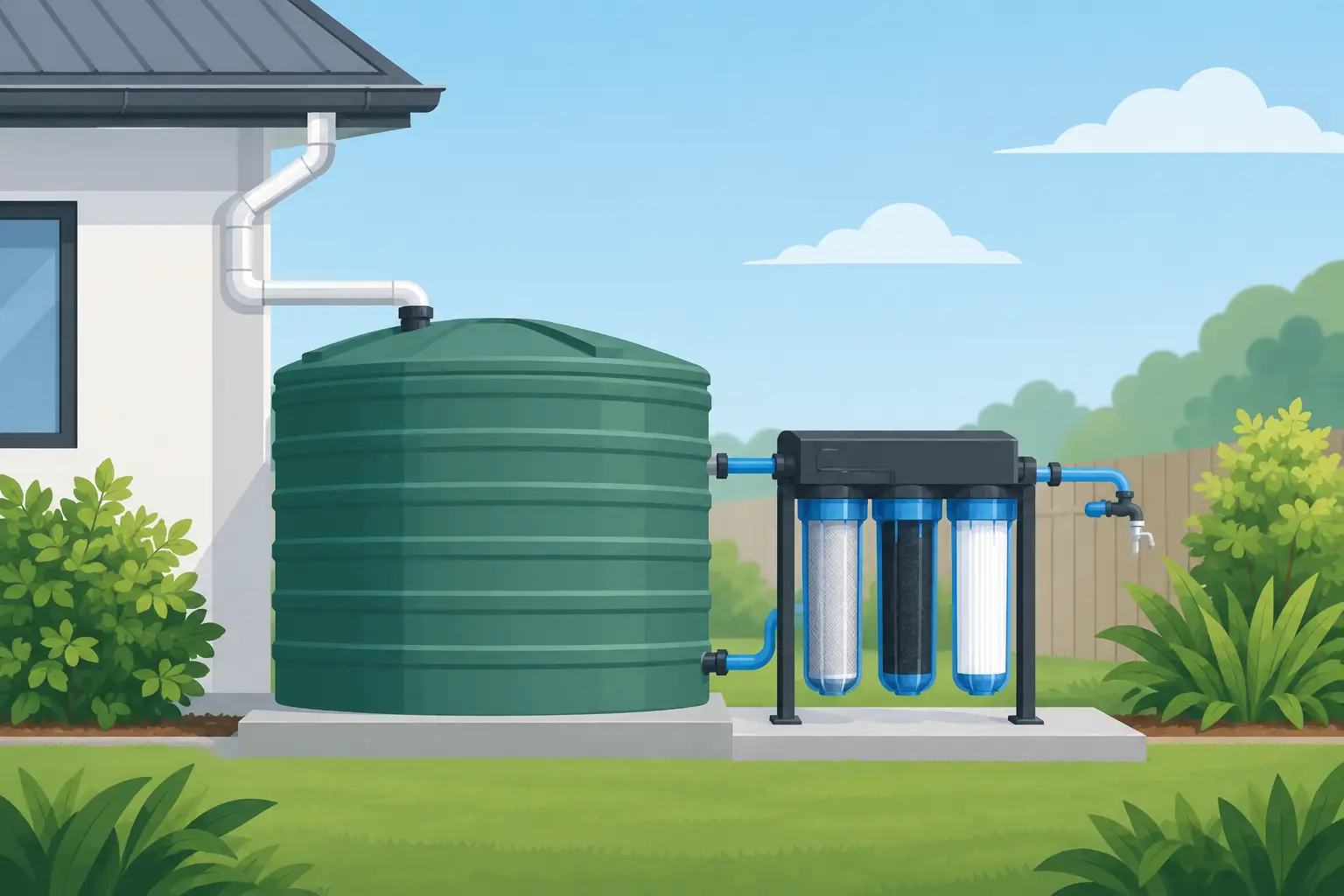
A good system manages contamination in stages rather than expecting one cartridge to do every job. Keeping larger debris out before it reaches the tank reduces sludge build-up. Filtering water after the tank protects pumps, taps and appliances. If the water is intended for drinking or food preparation, an additional treatment stage may be appropriate.
The right approach depends on how the water is used. Water for washing down equipment has different requirements to household drinking water. A filtration setup for a stock tank or drip irrigation system may prioritise pump protection and flow rate, while a home supplied solely by rainwater needs closer attention to fine sediment, taste, odour and microbiological safety.
Water filtration works best in stages
A complete system generally begins before the tank. Leaf strainers, gutter guards and first-flush diverters reduce the load entering your stored supply. These are often overlooked, but they are among the most cost-effective ways to protect water quality and reduce ongoing filter changes.
Pre-tank protection
A leaf strainer fitted to the tank inlet catches leaves, twigs and larger insects. It should be easy to inspect and clean, particularly under trees or after heavy rain. A first-flush diverter sends the initial runoff from a roof away from the tank. This first flow can carry much of the dust, bird waste and debris that has settled since the last rainfall.
Neither item makes water drinkable on its own, but both lower the burden on the rest of the system. They also help limit organic material in the tank, which can contribute to sediment and unpleasant odours over time.
Sediment filtration after the tank
A sediment filter is usually the first filtration stage after a rainwater tank and pump. It captures suspended grit, rust, silt and fine particles before water reaches household plumbing, pressure pumps, hot water systems and appliances.
Filter cartridges are commonly selected by micron rating. A larger rating, such as 20 microns, captures coarser particles and typically provides better flow with less frequent blockage. A finer cartridge, such as 5 or 1 micron, traps smaller material but may need changing sooner if the tank water carries a lot of sediment. The correct rating is a balance between water clarity, household demand and available flow.
For properties with visibly dirty water or recurring sediment, fitting only a very fine cartridge can be frustrating. It may restrict flow and require frequent replacement. A staged arrangement with a coarse filter followed by a finer filter is often a better long-term solution.
Carbon filtration for taste and odour
Activated carbon filters are useful where stored water has an earthy taste, odour or residual organic compounds. They can improve the water experience at taps, especially for households that rely on tank water every day.
Carbon is not a substitute for sediment filtration. Fine sediment can clog it prematurely, so it generally performs best after a suitable sediment stage. It also has a finite service life. Once exhausted, it will not continue to provide the same level of treatment, even if water is still passing through the housing.
UV sterilisation for drinking water
UV sterilisation treats water by exposing it to ultraviolet light as it passes through a chamber. It is commonly used as a final treatment stage for rainwater intended for drinking, cooking and brushing teeth. It can provide an added level of protection against microorganisms when the system is correctly specified, installed and maintained.
UV performance relies on clear water. If sediment is present, particles can shield microorganisms from the UV light. That is why pre-filtration is essential. The lamp, sleeve and seals also need scheduled maintenance according to the equipment requirements. A UV unit that has not been serviced may appear to be operating while delivering reduced treatment performance.
Choosing the right system for your property
Start with the water source and the intended use. A home with one tank, a modest roof catchment and two occupants will have different needs to a busy family home, dairy shed, farm accommodation building or commercial site. The pump flow rate and pipe size matter as well. An undersized filter housing can become a restriction point, particularly when multiple taps, showers or irrigation outlets operate at once.
Tank condition should also guide the decision. If there is heavy sludge on the floor of an older tank, installing new filters alone may not solve the problem. Tank cleaning, checking the inlet screen, inspecting the overflow and confirming that the outlet draws from a suitable level can make a meaningful difference. Concrete tanks may also require repair or lining work before a filtration upgrade can perform as intended.
For a typical household using rainwater for all domestic needs, a practical arrangement may include pre-tank screening, a first-flush device, sediment filtration and UV sterilisation. Carbon filtration can be added where taste and odour are a concern. Where water is only used outdoors, a simpler strainer and sediment filter may be sufficient, provided it matches the equipment being protected.
If mains water is available as a backup, consider where the supplies join. Backflow prevention, changeover arrangements and correctly installed valves are important to protect both water sources and keep the system straightforward to operate.
Maintenance is part of the filtration system
Filters cannot be fitted and forgotten. Regular checks are what keep water quality and pressure consistent. The timing will vary with rainfall, roof condition, tree cover and household use, but owners should inspect filter housings and inlet screens routinely rather than waiting for poor flow or discoloured water.
Signs that attention is needed include reduced pressure, a pump cycling more often than usual, sediment in toilet cisterns, a change in taste or smell, or visibly dark cartridges. After major storms, extended dry periods, nearby fire activity or roof works, it is sensible to inspect the catchment and filtration equipment early.
Keep a record of cartridge changes, UV lamp replacement and tank cleaning. This is particularly useful for farms, holiday accommodation and commercial properties where several people may be responsible for maintenance. It also makes it easier to identify whether a filter is blocking unusually quickly and whether the system needs a larger pre-filter or tank clean.
Avoid common filtration mistakes
The most common mistake is choosing a filter based only on price or cartridge size. A low-cost unit that is too small for the pump and household demand can create ongoing pressure problems and higher replacement costs. Another is treating UV as a stand-alone answer while overlooking dirty water, poor roof hygiene or a neglected tank.
It is also worth avoiding unnecessary complexity. More stages are not automatically better. Each component needs space, servicing and replacement parts. The best setup is one that suits the water quality, is easy to access, and can be maintained on schedule.
North Coast Water Tanks can help property owners match tanks, pumps, filtration equipment and accessories to the way water is actually used on site. Local support is particularly valuable when upgrading an older system or planning a new rainwater supply from the ground up.
Clean water starts well before the kitchen tap. Keep the roof and tank maintained, select filtration that matches the job, and make servicing a regular part of looking after your water supply.