


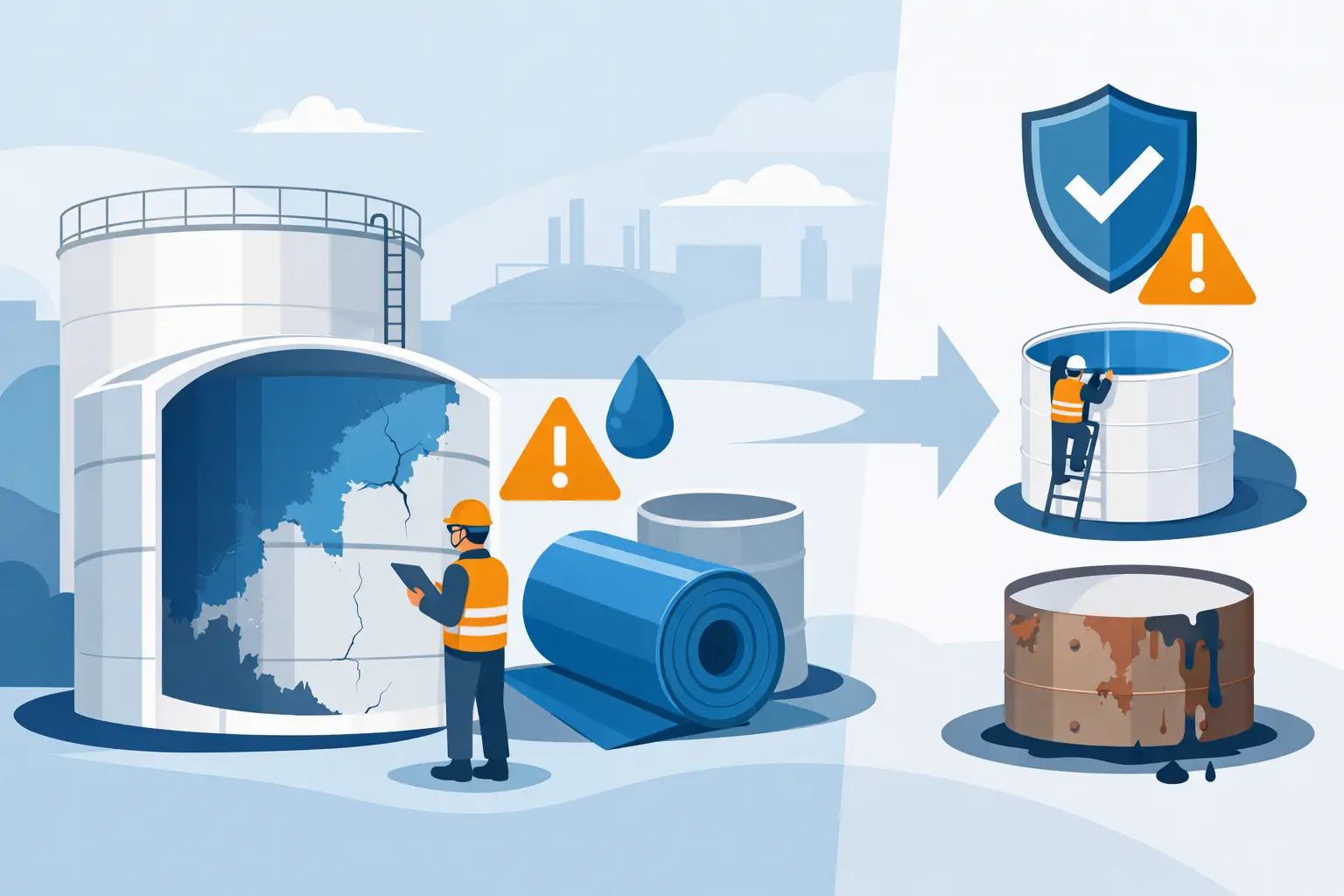
A leaking concrete, steel or older lined tank can turn reliable stored water into an ongoing maintenance problem. Tank liner replacement is often the most practical way to restore a tank’s service life without the cost and disruption of removing and rebuilding the entire structure. For homes, farms and commercial sites relying on harvested rainwater or stored supply, the right liner can protect water quality, reduce loss and put an ageing tank back to work.
The key is not simply ordering a liner that matches the tank diameter. A replacement liner needs to suit the tank’s shape, wall condition, roof arrangement, water use and fittings. Careful measuring and preparation make the difference between a liner that performs for years and one that develops avoidable stress points.
When Does a Tank Liner Need Replacing?
A small drop in water level is not always a liner failure. Check overflow pipes, outlets, valves, pumps and visible joints first. Evaporation can also affect open or poorly covered tanks. However, if water loss continues after these checks, the liner deserves closer attention.
Common signs include visible splits, pinholes, brittle sections, staining behind the liner, or water appearing around the base of the tank. In some tanks, folds that were once soft and flexible become hard, cracked or thin with age. This is particularly common where an older liner has been exposed to heat, ultraviolet light or repeated emptying and filling cycles.
Water quality changes can also point to a problem. If sediment is collecting where it should not, water has an unusual taste or odour, or debris is entering through a damaged liner or roof system, it is worth arranging an inspection. A liner does not replace good tank hygiene, filtration or a properly sealed roof, but it is an essential barrier between stored water and a deteriorating tank shell.
For concrete tanks, a new liner is often chosen when cracks, porous surfaces or old repairs make direct waterproofing uncertain. For galvanised or steel tanks, internal corrosion and sharp edges can damage a liner and must be addressed before replacement. The tank structure still needs to be sound enough to hold the water load safely.
Why Replacing the Liner Can Be Better Than Replacing the Tank
Tank replacement may be the right call if the shell is unstable, badly corroded, out of round or has major structural damage. But where the walls, base and support structure remain serviceable, relining can be a cost-effective alternative. It preserves the existing tank footprint and can reduce excavation, plumbing alterations and downtime.
A quality replacement liner also provides a clean internal surface that is easier to manage than rough concrete or corroded metal. For rainwater intended for household use, select a liner made from certified food-grade material suitable for potable water applications. The liner should be appropriate for Australian conditions and installed with compatible fittings and protection materials.
There are trade-offs. A liner will not correct a failed tank base, collapsing wall or poor site drainage. Nor will it solve contamination caused by dirty gutters, uncovered access points or unsuitable pipework. Treat liner replacement as part of the water storage system, not a stand-alone fix.
Preparing for Tank Liner Replacement
Good preparation protects the new liner from the first day of service. The tank needs to be drained, isolated from pumps where required, and cleaned thoroughly enough to expose the internal condition. Sediment, leaves, sharp objects and residue left on the floor can create wear points under a new liner.
Inspect the floor and walls closely. Remove protruding bolts, sharp corrosion, old screws and rough edges. Repair cracks, holes and damaged areas in concrete or steel before installation. On many tanks, a protective geotextile underlay or wall lining is used to cushion the liner from abrasive surfaces and minor imperfections. The correct protection depends on the tank material and condition.
Measure more than the diameter. Record the internal wall height, floor shape, roof clearance, inlet and outlet positions, overflow locations, access openings and any internal posts or braces. A tank that appears round from outside may have an uneven floor or varying internal dimensions. Accurate measurements help ensure the liner has adequate material at the floor-to-wall transition and around fittings.
Access is another practical consideration. Larger liners are heavy and need to be handled cleanly to avoid damage before they enter the tank. Plan where the liner can be unpacked, how it will be lowered into place and whether there is sufficient safe access for installers. On rural properties, this can mean allowing for a ute, trailer or equipment access across wet ground or narrow gates.
Choosing the Right Replacement Liner
The best liner is one designed for the tank and the water being stored. Material quality, thickness, welding quality and fitting design all matter. A cheaper liner may appear similar at first glance but can offer less resistance to puncture, heat and long-term movement.
For potable water storage, ask whether the material is certified food grade and suitable for drinking water contact. For agricultural, irrigation or fire-fighting storage, water quality requirements may differ, but durability and fit remain critical. A liner that will sit beneath a roof has different exposure demands from one used in an open tank, although every installation should minimise ultraviolet exposure wherever possible.
Fittings need equal attention. Outlets, overflows and inlets should be sealed using purpose-made flange fittings suitable for the liner and tank configuration. Avoid makeshift penetrations or overtightening, which can place stress on the liner material. If a bottom outlet is being replaced, check its condition while the tank is empty. This is the easiest time to upgrade ageing valves, screens or pipe connections.
A liner should also be sized to allow for normal settlement and water pressure without being stretched tight. Excessive tension can lead to premature failure around penetrations and wall transitions. Too much loose material, however, can create folds that trap sediment. This is why a tailored liner and experienced installation advice are worthwhile, especially for older concrete tanks with non-standard dimensions.
Installation Details That Affect Long-Term Performance
Once the protective layer is in place, the liner must be positioned carefully so it sits evenly across the floor and rises smoothly up the walls. The installer works folds into manageable locations and avoids sharp creases near outlets or structural features. The tank should be filled gradually, allowing the liner to settle under water pressure while checking fittings for leaks.
Do not rush straight to full capacity if anything looks wrong. Check the liner around the wall base, inspect flange fittings and confirm the overflow works as intended. A slow fill also gives time to identify plumbing issues before the tank is carrying its full load.
After installation, keep the roof, lid and inlet screening in good order. Preventing leaves, insects and light from entering the tank supports water quality and reduces cleaning requirements. Where water supplies a home, use suitable filtration and, where needed, UV treatment based on the water source and household requirements. The liner protects the tank, while the broader system protects the water at the tap.
Maintaining a New Tank Liner
A replacement liner requires little day-to-day attention, but routine checks are sensible. Inspect accessible areas after severe weather, major tank cleaning work or plumbing repairs. Keep roof sheets, ladders and tools from falling into the tank, and never drag equipment across the liner surface.
Monitor water use and pump cycling. An unexplained increase in pump activity or a water level that drops faster than expected may indicate a leak, although plumbing faults are often the first cause. Address small concerns early rather than waiting for a visible failure.
For property owners who want a practical assessment of an ageing tank, North Coast Water Tanks can help match liner, tank repair, pumping and filtration requirements as part of one water storage solution. Local support is valuable when the tank has unusual dimensions, difficult access or a mix of older fittings.
A well-planned liner replacement gives an existing tank a useful second life. Start with an honest assessment of the tank shell, prepare the surface properly and choose materials that suit how the water will be used. That approach keeps your stored water dependable when you need it most.