


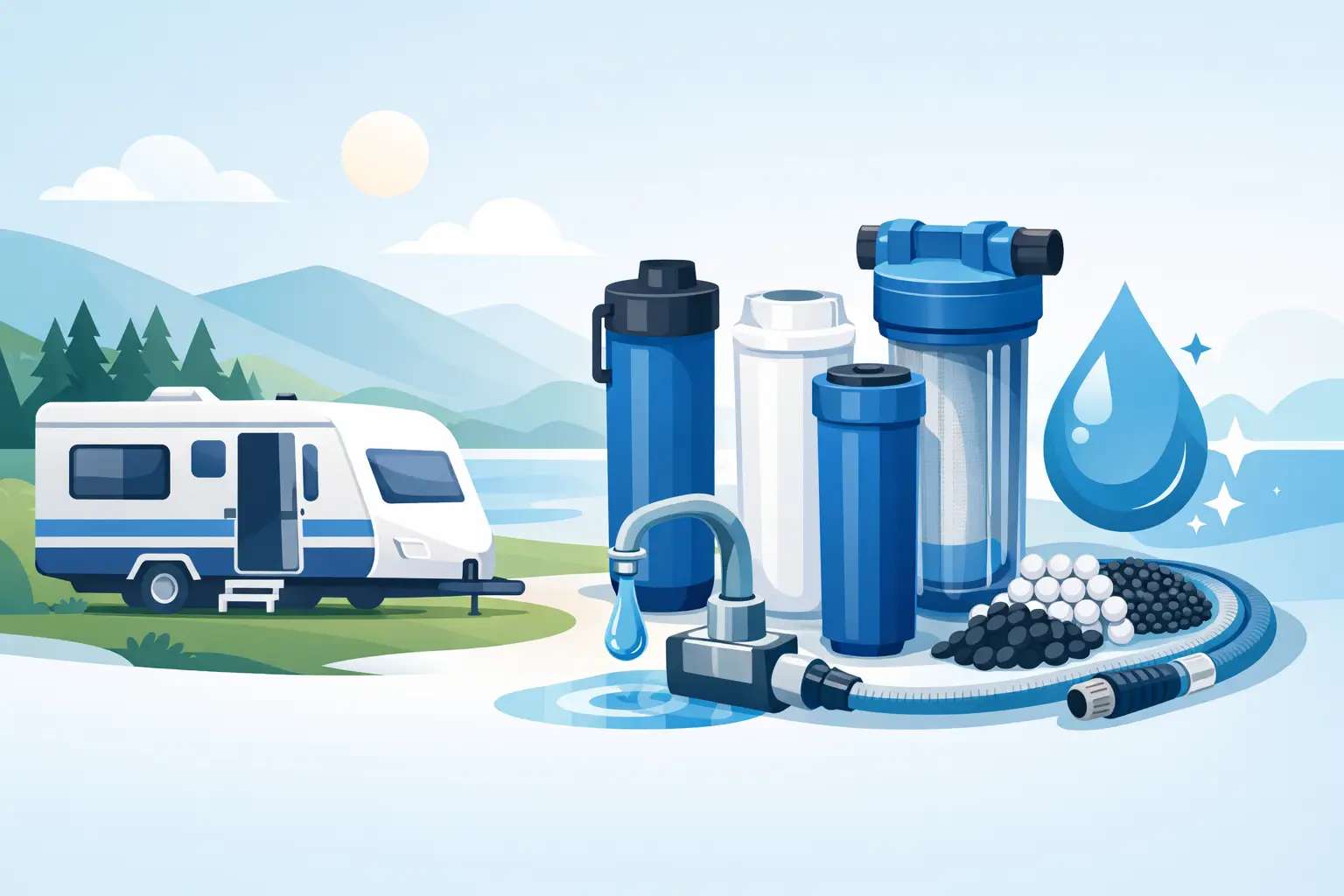
A roadside tap can look perfectly clean and still leave your caravan water tasting of chlorine, carrying fine sediment or putting extra strain on your pump and hot water service. A properly selected caravan water filter system gives you more control over the water entering your van, whether you are topping up at a caravan park, drawing from a tank or travelling through regional Australia.
The right setup is not always the biggest or most expensive one. It needs to suit the water source, the number of people travelling, available cupboard or external mounting space, and whether you want filtered water at every tap or only at the drinking outlet. Getting those details right from the start makes maintenance easier and helps protect the equipment you rely on while away from home.
Why fit a caravan water filter system?
Caravan water can come from many different sources over the course of a trip. Town supply at one stop may be treated and chlorinated, while the next site may have bore water, rainwater or water that has travelled through ageing pipes and hoses. Sediment, rust particles, unpleasant tastes and odours are common problems, even where water is considered suitable for general use.
A caravan water filter system is designed to improve water quality at the point it enters or is used within the caravan. A sediment filter can catch grit and particles that would otherwise settle in tanks or wear pump components. Carbon filtration can reduce chlorine taste and odour. Finer filtration may also improve the clarity and taste of water used for drinking and cooking.
There is also an equipment benefit. Clean water is easier on pump valves, taps, shower mixers and hot water systems. For travellers using tank water, a pre-filter at the filling point can reduce the debris that enters the onboard tank in the first place. That means less sediment buildup and a more manageable tank-cleaning routine.
A filter is not a guarantee that any untreated source is safe to drink. If water quality is uncertain, or you collect rainwater for potable use, filtration should be considered alongside sound tank hygiene and, where appropriate, UV sterilisation or another suitable disinfection method. The level of treatment depends on the source and how the water will be used.
Choose filtration for the water you actually use
The most useful question is not which filter has the finest rating. It is what is likely to be in your water, and what you need the system to do.
Sediment filters for tanks, bores and dusty sites
Sediment cartridges are often the first stage in a caravan setup. They remove physical particles such as sand, dirt, rust and scale. They are particularly worthwhile when filling from rainwater tanks, bore supplies or taps that may have debris in the line.
Micron rating matters. A larger rating, such as 10 or 20 micron, catches coarser material and tends to offer better flow with less frequent cartridge changes. A finer 1 or 5 micron cartridge captures smaller particles but can block sooner when the source water is dirty. For many caravans, a staged arrangement works well: a coarser sediment filter first, followed by a finer cartridge or carbon filter.
If you regularly fill from variable regional supplies, use a clear filter housing where practical. It lets you inspect sediment buildup before a restricted flow catches you out at a campsite.
Carbon filters for taste and odour
Activated carbon is commonly used where the main concern is chlorine, chemical taste or unpleasant odour. It can make town water noticeably more pleasant for drinking, tea and cooking. Carbon cartridges are often fitted after sediment filtration, as cleaner water allows the carbon media to work more effectively.
Carbon filters have limits. They are not a substitute for disinfection where water may contain microbiological contamination, and they need replacement on schedule. Leaving an old carbon cartridge in service for too long can reduce performance, particularly in a caravan that sits unused in warm weather.
Fine filtration and drinking-water filters
Some travellers prefer a dedicated drinking-water filter at the kitchen tap. This approach keeps the main plumbing simple while treating the water used for drinking and food preparation. It can be a sensible option in compact vans where there is limited space or where high flow is needed for the shower and washing up.
Whole-of-caravan filtration provides filtered water to all outlets, which can help protect appliances and improve shower water quality. The trade-off is a greater need to match filter size and flow rate to the pump. An undersized filter can cause poor flow, pump cycling or reduced pressure at the tap.
UV sterilisation for higher-risk water supplies
UV equipment uses ultraviolet light to treat microorganisms as water passes through the unit. It can be a valuable addition for caravans using maintained rainwater systems or water sources where microbiological quality is a concern. UV works best with clear water, so sediment filtration before the UV chamber is essential.
A UV system requires power, correct installation and periodic lamp or sleeve servicing. It is not always necessary for short trips using reliable treated town water. For extended off-grid travel or a van supplied by collected rainwater, it may be a practical investment when paired with a clean tank and suitable pre-filtration.
Where should the filter be installed?
External hose-mounted filters are convenient for travellers who want to filter water before it enters the tank or caravan inlet. They are easy to connect at a tap and can be stored when not in use. Their limitation is exposure to weather and the need to avoid leaving fittings in direct sun or at risk of damage during travel.
A fixed system is usually installed inside a protected service compartment, under a seat or near the pump. This provides a tidier long-term arrangement and makes it easier to run multiple filtration stages. It must still be accessible. If changing a cartridge means removing half the contents of a storage locker, maintenance is likely to be delayed.
Install filters in the direction specified by the manufacturer and use food-grade fittings, hose and sealants rated for potable water. Support the housing properly, particularly if travelling on corrugated roads. Water-filled filter housings carry weight, and loose plumbing connections can create leaks when the van is moving.
Match flow rate to your pump and daily use
Every filter creates some pressure loss. The finer the media and the dirtier the cartridge becomes, the greater the restriction. A system that works well for a single kitchen tap may not deliver enough flow for a shower, washing machine and another tap being used at the same time.
Check the filter housing and cartridge flow rating against your caravan pump output. Also allow for the pressure supplied by caravan park mains water if the filter will be used on direct connection. A larger housing often offers a better service interval and less pressure drop than a small inline filter, but it needs more room.
For couples on occasional weekend trips, a simple sediment and carbon setup may be enough. Families, long-term travellers and off-grid users generally benefit from larger housings, staged filtration and easier access for servicing. Water use habits matter just as much as the length of the trip.
Maintenance keeps the system dependable
A filter only works properly when it is maintained. Replace cartridges according to the manufacturer’s recommended interval, but do not rely on time alone. A drop in flow, visible sediment, changed taste or an odour from the water are clear signs that inspection is due.
Before storing the caravan for an extended period, consider removing used cartridges and draining housings where appropriate. Flush the system when recommissioning the van, and sanitise the water tank and plumbing if the water has been sitting for months. Check O-rings for flattening or cracking, lubricate them with an approved food-grade lubricant where required, and keep a spare cartridge on hand for longer trips.
Tank hygiene remains part of the job. Keep filler points capped, inspect roof catchment and first-flush arrangements on rainwater-equipped vans, and avoid filling from questionable sources just because a filter is fitted. Good water management starts before the water reaches the cartridge.
Selecting a system with local support
The best caravan filtration setup is one you can service confidently on the road. Choose standard cartridge sizes where possible, make sure replacement parts are readily available, and ask for advice if you are combining a tank, pump, filter and UV treatment system. North Coast Water Tanks can help match compatible water storage, pumping and filtration components for a practical caravan or mobile setup.
Before your next long run, fill the tank, run every tap and check the filter system under normal pressure. A small amount of preparation at home is far easier than diagnosing restricted flow at a remote campsite, and it helps keep your caravan water ready for the places you plan to enjoy.