


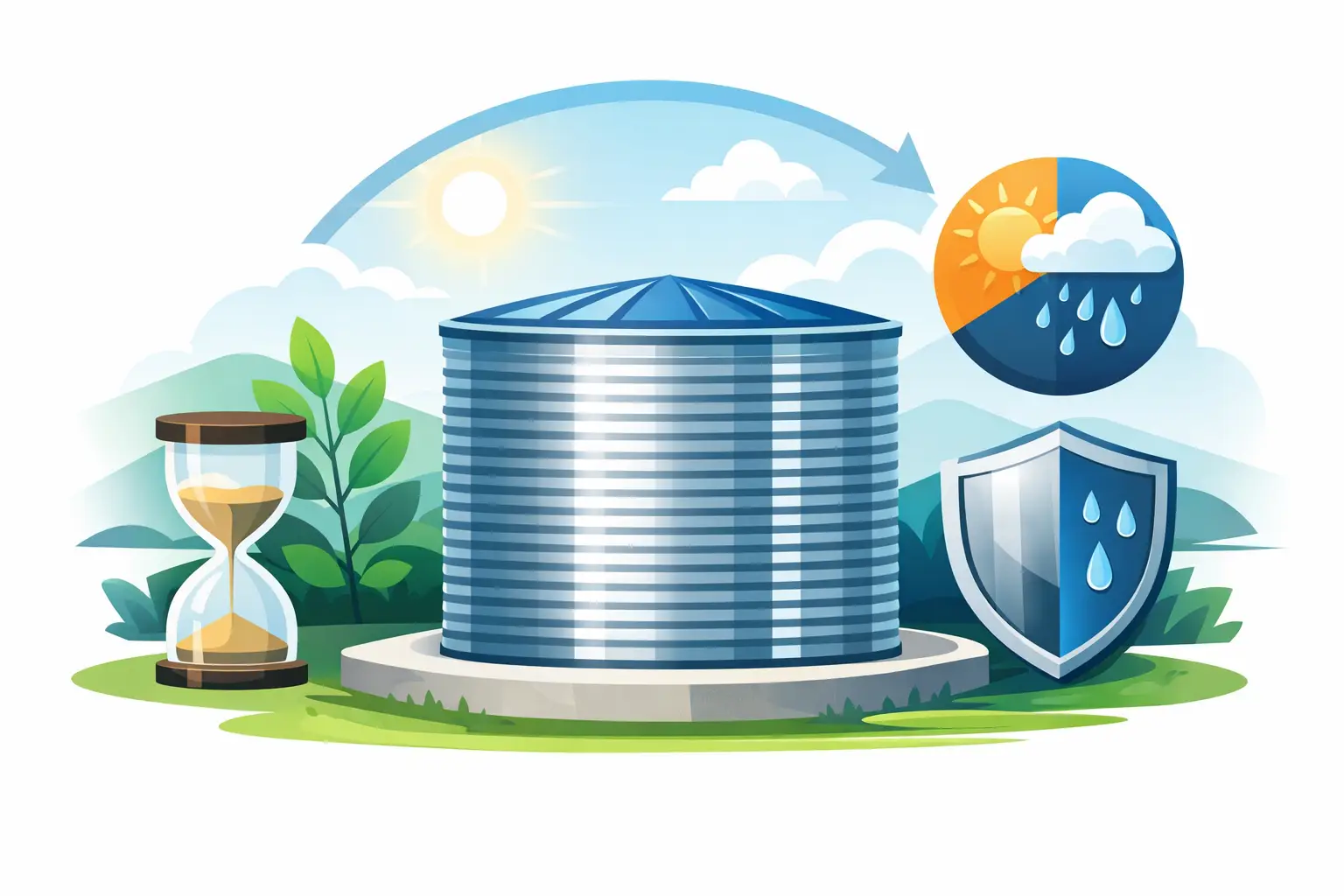
A tank that looks fine from the outside can still be heading for trouble if the coating, base or fittings have been neglected. When customers ask about aquaplate water tank lifespan, they usually want a straight answer – how many years will it last, and what makes that number go up or down?
The honest answer is that Aquaplate tanks are built for long service life, but lifespan is never just about the steel itself. It comes down to the quality of the tank, the conditions on site, how well it was installed, and whether basic maintenance is done over time. If those parts are right, an Aquaplate water tank can provide reliable storage for decades.
What affects aquaplate water tank lifespan?
Aquaplate is a coated steel product designed specifically for potable water storage, so it is made to handle Australian conditions and keep stored water suitable for household and property use. That said, no tank material is immune to poor siting, bad water management or skipped maintenance.
The biggest factor is often the environment around the tank. Coastal areas, high rainfall zones, exposed rural sites and properties with heavy leaf load can all place different demands on the tank. Salt in the air, constant moisture around the base, or organic build-up in gutters can shorten service life if they are not managed properly.
Installation is just as important. A quality tank placed on an uneven, poorly prepared base can develop stress points over time. If the slab or crusher dust pad is not built correctly, the shell may carry loads unevenly. That can affect fittings, joints and structural performance long before the tank material itself should be failing.
Water management also matters. Overflow that pools around the tank, damaged inlet strainers, or missing mosquito screens can create hygiene and corrosion issues. In practical terms, a tank lasts longer when the whole system is doing its job, not just the tank wall.
Typical service life in real conditions
For most property owners, the useful life of an Aquaplate tank is measured in decades rather than years. A well-made tank installed to specification and maintained properly can deliver long-term performance for household, farm or commercial use.
That does not mean every tank will age at the same rate. A tank on a sheltered inland property with clean catchment, good drainage and regular inspection may outlast the same model installed close to the coast with poor runoff control. This is where generic lifespan claims can be misleading. The material may be rated for durability, but the real-world result depends on the site.
If you are comparing tank types, this is one of the main trade-offs to understand. Steel Aquaplate tanks are valued for strength, food-grade water storage suitability and a clean, compact footprint. They are a strong option for many Australian properties, but like any steel-based product, they benefit from sensible corrosion prevention and routine checks. Poly tanks can be lower maintenance in some settings, while steel tanks may suit customers who want specific sizes, aesthetics or installation outcomes. The right choice depends on the application, not just the headline lifespan.
The role of coating quality and tank manufacture
Not all tanks are equal, even when they appear similar at first glance. The lifespan of an Aquaplate tank starts with product quality, certification and whether the tank has been manufactured to Australian standards.
The protective coating is central to performance. Aquaplate is engineered for contact with drinking water, but the coating only does its job properly when the tank is fabricated correctly and not damaged during transport, installation or later modifications. Poor handling, rough site work or unsealed penetrations can create weak points that reduce long-term durability.
This is why product selection matters. A compliant, properly manufactured tank gives you a much better starting point than a cheaper option with unclear specifications. For customers storing water for household use, quality assurance is not just a sales term – it directly affects lifespan, water quality and confidence in the system.
Installation mistakes that shorten tank life
A surprising number of tank issues begin at install stage. In many cases, the tank material gets blamed when the real cause is underneath or around it.
An uneven or unstable base is one of the biggest problems. Tanks need full support, proper compaction and a level surface suited to the manufacturer’s requirements. If the base settles unevenly, it can stress the tank shell and fittings. Once that happens, repairs can become more complicated and expensive than they needed to be.
Drainage is another common issue. Water should move away from the tank, not sit around the perimeter. Constant damp conditions around the base can encourage corrosion and make routine access harder. If overflow outlets discharge too close to the tank, that problem only gets worse during heavy rain.
Incorrect plumbing can also affect lifespan. Over-tightened fittings, unsupported pipework or badly aligned connections can place ongoing strain on outlets. It may not show immediately, but over time movement and pressure can cause leaks or damage around penetrations.
Maintenance and aquaplate water tank lifespan
If you want to extend aquaplate water tank lifespan, regular maintenance is the simplest and most cost-effective step. You do not need to overcomplicate it, but you do need to stay ahead of small issues.
Start with visual inspections a few times a year, especially after storms or dry periods followed by heavy rain. Check the roof, overflow, inlet strainer, leaf guard and surrounding base area. Look for pooling water, rust spots, blocked screens, loose fittings or debris build-up.
Keep gutters and catchment surfaces clean. Dirty roof water carries sediment and organic matter into the tank, which can affect both water quality and internal conditions. If you use the water in the home, maintenance of filtration and first flush devices matters as much as the tank itself.
Tank cleaning also has a place in long-term care. How often it is needed depends on the catchment, surrounding trees and water use. Some properties may go years with minimal sediment build-up, while others need more regular attention. The point is not to clean on a fixed schedule for the sake of it, but to inspect and act when conditions call for it.
Signs your tank may be ageing prematurely
A tank nearing the end of its service life does not always fail suddenly. There are usually warning signs first.
Surface corrosion, coating damage, persistent leaks around fittings, unexplained drops in water level and movement at the base all deserve attention. Water quality changes can also point to a problem elsewhere in the system, including tank condition, blocked screens or contaminated inflow.
If the tank has been on site for many years, it is worth having the whole setup assessed rather than focusing on one visible issue. Pumps, pipework, liners where fitted, filtration components and tank supports all age differently. Sometimes the tank still has plenty of life left, but associated components need upgrading. In other cases, replacing an older tank is the safer and more economical choice.
When repair makes sense and when replacement is better
Not every issue means the tank is finished. Minor plumbing faults, screen replacement, overflow upgrades, base drainage improvements and some maintenance works can add useful life and improve reliability.
But there is a point where repeated repairs stop being cost-effective. If corrosion is advanced, the structure is compromised, or installation faults cannot be corrected easily, replacement may be the smarter long-term investment. This is especially true where the tank supplies household water and reliability matters every day.
For rural and acreage properties, downtime has a cost of its own. Waiting until a failing tank becomes an emergency can leave you short on supply and scrambling for a solution during the worst possible weather window. Planning ahead usually saves money and disruption.
Getting the longest life from your tank
The practical approach is straightforward. Choose a certified, food-grade tank suited to your site. Make sure the base and drainage are done properly from the start. Protect water quality with good catchment management, strainers and filtration where needed. Inspect the system regularly and deal with minor problems before they turn into structural ones.
For many customers, expert advice at the selection and installation stage is what makes the difference between average performance and long service life. North Coast Water Tanks works with property owners who want that kind of dependable setup – one that suits the site, meets Australian standards and keeps delivering over the long term.
A good tank should not be a set-and-forget gamble. If you treat it as part of a complete water system and give it the attention it needs, an Aquaplate tank can be one of the more reliable assets on your property for many years to come.