


A pump that cannot deliver water when stock need it, a tank needs filling or irrigation is scheduled soon becomes an expensive problem. When comparing diesel versus solar water pumps, the right choice comes down to more than the purchase price. Your water source, required flow and head, access to fuel, daily operating hours and site conditions all matter.
For many Australian acreage and rural properties, solar pumping provides low running costs and dependable daytime water transfer. Diesel remains a practical option where high flow is needed quickly, sunshine is inconsistent or the pump must operate at any hour. The best system is the one sized properly for the job and supported with adequate water storage.
Diesel versus solar water pumps: the practical difference
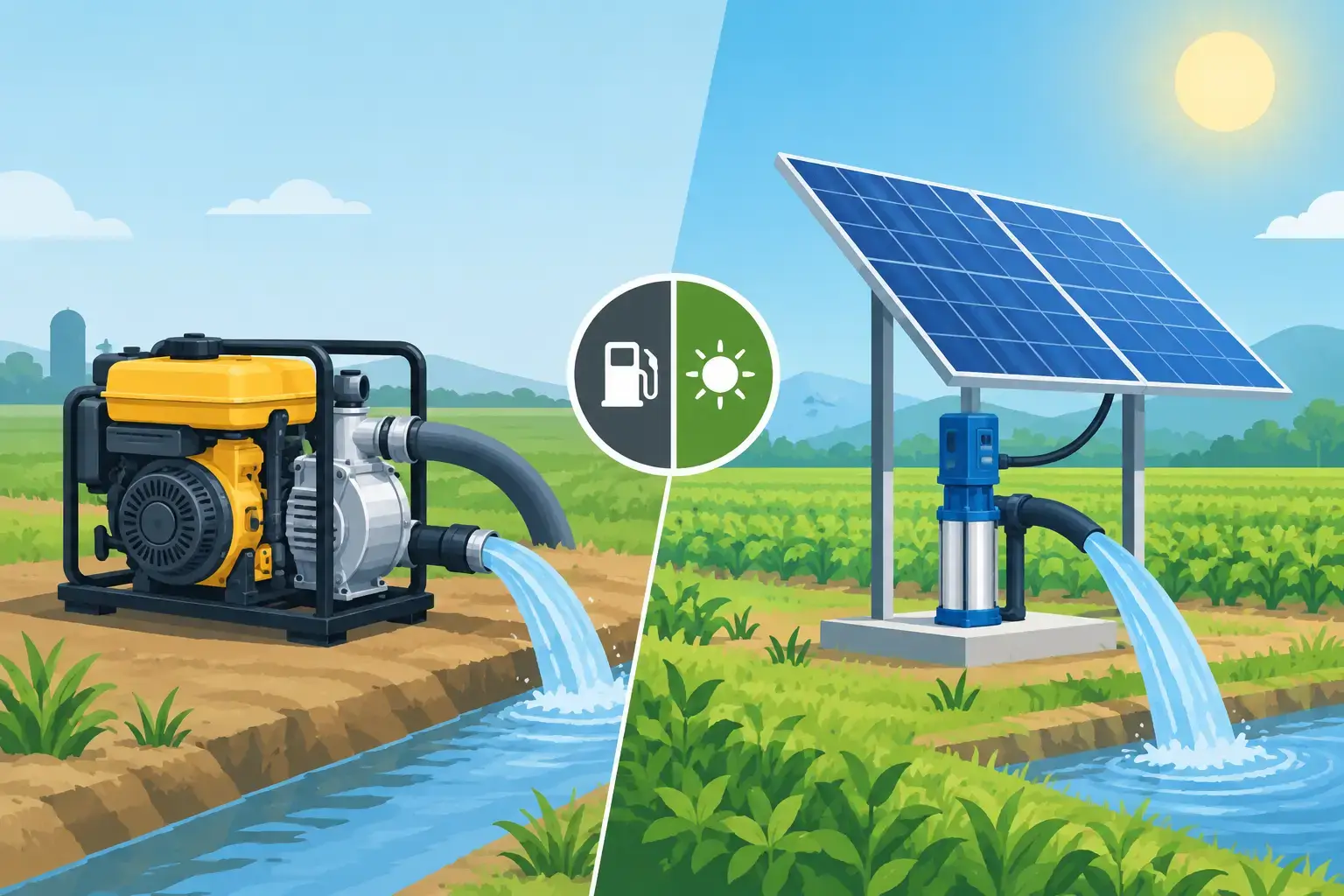
A diesel water pump uses an engine to drive the pump. It can be portable or fixed in place and is commonly selected for dam transfers, irrigation, construction work, emergency dewatering and remote sites with no mains power. Provided there is fuel in the tank and the engine is maintained, it can run day or night.
A solar water pump uses photovoltaic panels to produce electricity for a DC or AC pump. It is usually installed as a fixed system, moving water from a bore, dam, creek or storage tank into a header tank or larger holding tank. Rather than storing electricity in batteries, most solar pumping systems make better economic sense by storing water. The pump works during available sunlight, and the tank supplies water when it is needed.
This difference shapes the whole design. Diesel gives immediate, controllable pumping power but requires regular attention and ongoing fuel. Solar trades instant on-demand output for lower operating costs and a quieter, largely automated water supply.
| Factor | Diesel pump | Solar pump | |—|—|—| | Upfront cost | Often lower for a portable unit | Usually higher due to panels, controller and installation | | Running cost | Fuel, oil, servicing and transport | Very low once installed | | Operating hours | Day or night while fuel is available | Primarily daylight hours | | Best suited to | Short-term, mobile or high-flow work | Regular, long-term water transfer | | Maintenance | Engine servicing and fuel system care | Panel cleaning and periodic pump checks | | Noise and emissions | Higher | Minimal at the point of use |
Start with the water duty, not the pump type
The first question is not whether solar or diesel is better. It is how much water must be moved, how far it must travel and how high it must be lifted.
A system that needs to move 20,000 litres a day to a trough network has a very different duty from one filling a 22,500-litre rainwater tank a few times each month. Likewise, a pump lifting from a shallow dam to a tank near the bank needs far less energy than one lifting bore water 60 metres and pushing it through long pipework across a property.
Pump selection should account for the source water level, vertical lift, pipe diameter and length, fittings, filters, pressure requirements and the desired flow rate. These factors create total dynamic head. A pump may look capable on paper, yet deliver disappointing flow if it has not been matched to the real head and pipe losses.
For solar systems, daily solar hours and seasonal conditions are equally important. A pump that meets demand on long summer days may not provide the same output during a run of wet winter weather. This does not rule solar out. It means the storage tank must carry enough reserve to cover lower-output periods.
When a diesel pump is the better fit
Diesel pumps remain valuable on working properties because they are flexible. A portable unit can be moved between dams, tanks and paddocks, making it useful for irregular transfer jobs or temporary irrigation. They are also well suited where a large volume needs to be shifted in a short window, such as filling a storage tank after rainfall or supplying water during repairs to another system.
They can be the sensible choice where the site is heavily shaded, panels are at risk of damage or theft, or the water requirement is genuinely occasional. Spending heavily on a permanent solar array for a pump used only a handful of times a year may not deliver the best return.
The trade-off is operating discipline. Diesel needs secure fuel storage, clean fuel, routine oil changes, filters, cooling checks and occasional engine servicing. A diesel engine that sits unused for months can develop fuel, battery or starting issues just when it is required. Fuel prices and travel to refuel remote equipment also add to lifetime cost.
Noise and exhaust are worth considering near homes, sheds, livestock areas and campsites. For an urgent transfer, these drawbacks may be acceptable. For daily stock water pumping, they can become tiresome.
When solar pumping makes more sense
Solar water pumps are particularly effective for regular stock water supply, bore pumping, dam-to-tank transfer and remote water infrastructure where power is unavailable or costly to extend. Once correctly installed, the system starts pumping when sufficient sunlight is available, with no daily refuelling and very little noise.
The major financial benefit is over the long term. The upfront investment can be higher than a diesel pump, particularly where a bore requires a submersible pump, solar array, controller, mounting structure and tank upgrades. However, sunlight does not need to be delivered by ute, and a well-designed system avoids repeated engine servicing and fuel purchases.
Solar performs best when water can be pumped progressively into storage. A header tank, turkey nest dam or elevated poly tank provides a buffer between when the pump runs and when water is consumed. For stock, this arrangement is often more reliable than relying on a small pump to start on demand at every trough.
Panel placement needs careful planning. Panels should have clear access to sunlight, secure mounting and practical access for cleaning. Dust, salt spray in coastal areas, bird droppings and leaf build-up can reduce output. A quick visual inspection and occasional clean help maintain performance.
Storage is what makes solar reliable
A common mistake is to judge a solar pump only by litres per minute. For most rural water systems, litres per day and days of water reserve are more useful measures.
If livestock consume 8,000 litres a day and the solar pump produces 12,000 litres on a typical day, the apparent surplus is only helpful if there is tank capacity to retain it. A tank sized for several days of demand provides protection during cloudy conditions, pump maintenance or unexpected higher use. It also allows the solar system to be sized for average conditions instead of paying for excessive panel and pump capacity.
Tank hygiene remains part of system reliability. Screens, first-flush devices for rainwater systems, secure lids and suitable filtration help protect stored water and reduce sediment entering pumps, valves and troughs. Bore and surface-water systems may require additional filtration depending on water quality and end use.
Consider a hybrid approach for critical supply
Some sites do not need an either-or decision. A solar pump can handle routine daily transfer into storage, while a diesel pump remains available as a portable backup for breakdowns, extended cloudy weather, emergency transfer or high-demand work.
This approach can be practical for farms with several water points or properties where water supply is business-critical. The solar system does the economical day-to-day work, while diesel capacity is retained for flexibility. A generator-backed electric pump may also suit some installations, but it should be assessed against the available power supply and starting load.
For fire preparedness, do not assume any domestic or stock-water pump arrangement will meet firefighting requirements. Pump performance, fittings, water reserve, access and local requirements all need separate consideration. Keep any dedicated emergency equipment maintained, accessible and appropriate for the property plan.
Make the decision on whole-of-life value
Choose diesel when mobility, high short-term output and after-dark operation are central to the job. Choose solar when water demand is regular, the site has good sun exposure and storage can buffer supply. If a system must support livestock or household water year-round, allow for seasonal demand, maintenance access and a realistic contingency plan rather than sizing only for ideal conditions.
North Coast Water Tanks can help property owners match tanks, pumps, filtration and accessories into a practical system rather than purchasing components in isolation. Good water infrastructure is built around the real conditions on your block – the source, the terrain, the daily demand and the reserve you need when conditions are less than ideal.