


A rainwater tank is only one part of a dependable household water supply. Effective water treatment starts before water reaches the tank, continues through filtration and pumping, and finishes at the point where water is used. For homes, farms, acreage properties and small commercial sites, the right setup protects stored water quality while delivering the pressure and flow needed every day.
The best system is not necessarily the one with the most components. It is the one matched to your roof catchment, tank condition, intended water use, household demand and local conditions. A simple system for garden use has different requirements from a whole-house supply for drinking, showers, laundry and food preparation.
What water treatment means for a rainwater system
Water treatment is the process of reducing sediment, organic matter, unwanted taste or odour, and microbiological risks from collected water. With rainwater harvesting, it should be viewed as a treatment train rather than one product fitted to a pipe.
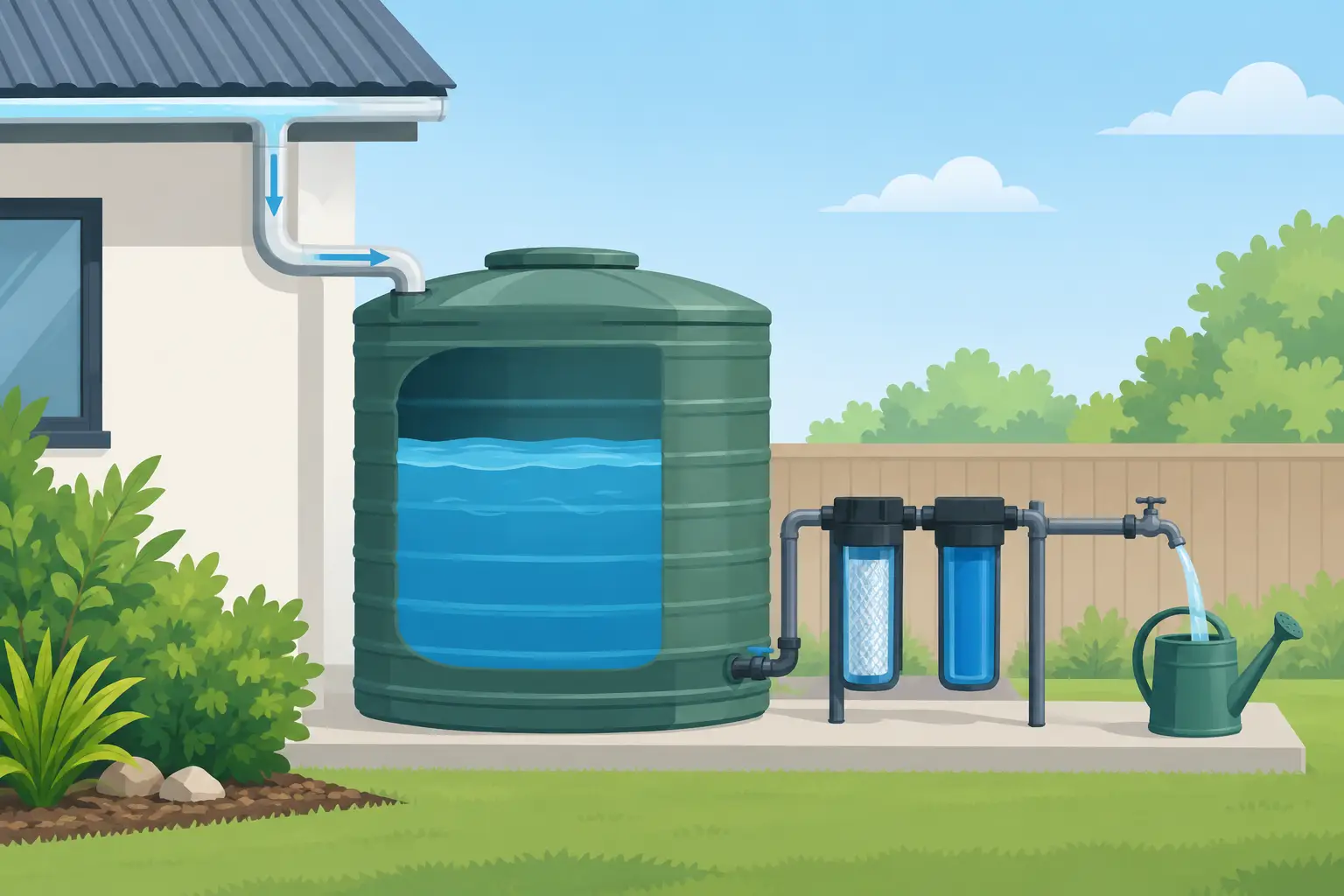
A typical system begins with a clean roof and gutters, leaf protection and a first-flush device. Water then enters a covered tank through an inlet screen. From there, a pump sends water through suitable filters, with UV sterilisation often fitted as a final barrier where rainwater is used inside the home.
Every stage has a job to do. If leaves, grit and roof debris are allowed into the tank, a fine cartridge filter will block quickly. If water is cloudy, a UV unit may not perform as intended because suspended particles can shield microorganisms from the UV light. Good results come from managing the whole system, not relying on a single piece of equipment.
Start with clean catchment and storage
The most cost-effective treatment happens before water reaches the tank. Keep gutters clear of leaves, bird droppings, branches and built-up sediment. Check roof valleys and gutter guards after storms, particularly where trees overhang the house or shed.
A first-flush diverter helps prevent the initial dirty runoff from entering the tank. This first flow often carries dust, pollen, animal droppings and debris that have settled on the roof between rainfall events. The correct diverter size depends on roof area, local conditions and how the catchment is used, so it is worth getting advice rather than choosing by size alone.
At the tank, a fine inlet screen helps stop insects and larger debris entering. The tank should be securely covered, with sealed access points where practical, mosquito-proof mesh on openings and an overflow arrangement that does not allow pests to enter. Light entering a tank can encourage algae growth, while an unsecured lid can create both contamination and safety issues.
Tank maintenance matters as much as the original installation. Sediment naturally collects at the bottom over time. A tank cleaning service may be appropriate if there is heavy sludge, visible contamination, persistent odour, reduced water quality or an older tank that has not been inspected for years. Concrete tanks may also need condition assessment or repairs before new treatment equipment is added.
Choose filtration for the job at hand
Filtration should suit the quality of the incoming water and the way it will be used. For irrigation, toilet flushing or stock and general washdown applications, basic screening and sediment management may be enough. For household rainwater supply, staged filtration is commonly a better approach.
A sediment filter captures fine particles such as silt, rust, grit and suspended matter. Cartridge ratings are measured in microns, but finer is not always better. A very fine filter can improve clarity, yet it may reduce flow and need more frequent replacement where water carries a higher sediment load. The aim is a practical balance between water quality, pressure and ongoing maintenance.
Carbon filtration can improve taste and odour and may reduce certain organic compounds. It is often used after sediment filtration, because sediment shortens the working life of carbon media. Carbon is useful where water has an earthy taste, but it does not replace proper tank hygiene or disinfection.
For larger homes, farms or commercial applications, a higher-flow housing, washable filter or backwashing media filter may be more suitable than small cartridge units. The correct choice depends on peak flow demand, pump capacity and the number of outlets operating at once. A filter that is too small can become a pressure bottleneck, even when the pump itself is correctly sized.
When UV sterilisation makes sense
UV sterilisation is commonly used as a final treatment stage for rainwater supplying kitchen taps, bathrooms and other household outlets. It uses ultraviolet light to treat microorganisms as water passes through the chamber, without adding chemicals or changing the taste of the water.
UV equipment works best with clear, pre-filtered water. A sediment filter should be installed before the UV unit, and the lamp and quartz sleeve need scheduled maintenance. A lamp can still appear to be operating after its effective service life has passed, so replacement should follow the manufacturer’s recommended interval rather than waiting for it to fail.
UV is not a substitute for cleaning a neglected tank or repairing a contaminated catchment. It is a useful final barrier in a well-managed system. Where water quality is uncertain, particularly after flooding, tank contamination or prolonged system downtime, seek appropriate local health advice and consider water testing before relying on the supply for drinking.
Match the pump to the treatment system
Pumps and filters must be selected together. A pump needs enough pressure and flow to supply the property after water has passed through filters, pipework, valves and any elevation changes. A pump that performs well at an open outlet may struggle once restrictive cartridges, a UV unit and several household fixtures are added.
Pressure controllers, pressure vessels and pump protection devices also affect day-to-day performance. Dry-run protection can help prevent pump damage if a tank runs low. A correctly set pressure system can reduce frequent cycling, which is particularly valuable for households with variable water use.
For rural properties, consider the distance from tank to house, shed or troughs, pipe diameter and whether irrigation will run at the same time as domestic supply. It may be better to separate high-demand irrigation from household water treatment rather than forcing one system to do both jobs. This can protect filtered drinking water and make maintenance more straightforward.
Maintain the system before problems appear
Water treatment equipment is not fit-and-forget. A regular inspection routine helps prevent poor pressure, dirty water and unexpected pump issues. The frequency will vary with rainfall, roof condition, tank size, household demand and local dust levels.
A practical maintenance plan should include checking gutters and inlet screens, inspecting tank lids and mosquito mesh, flushing first-flush devices, monitoring pump performance and replacing filter cartridges when pressure drops or at the recommended interval. UV lamps and sleeves should be serviced to schedule. Keep a record of service dates, cartridge types and any changes in taste, smell, colour or water pressure.
After a major storm, bushfire smoke event, long dry spell or suspected contamination, inspect the whole collection and storage system rather than only the filters. Sometimes the right response is a simple gutter clean. In other cases, the tank may need cleaning, the pump line may need flushing, or the water should be tested before household use resumes.
Build a system that can be serviced locally
When choosing tanks, pumps and filtration, consider future servicing as well as purchase price. Filter housings should be accessible, isolating valves should be fitted where needed, and replacement cartridges or lamps should be readily available. A quality system is easier to own when its maintenance parts are standard, its components are correctly sized and the installation is laid out for safe access.
North Coast Water Tanks can help property owners bring storage, pumping, filtration and treatment components together as one practical system. Whether you are fitting out a new rainwater tank or improving an older setup, the right advice at the planning stage can avoid undersized filters, poor pump performance and unnecessary replacement costs later.
Reliable rainwater starts with a clean catchment and ends with a system you can maintain confidently. Set it up for the water you need now, leave room for sensible upgrades, and give each component the regular attention it needs to keep working properly.