


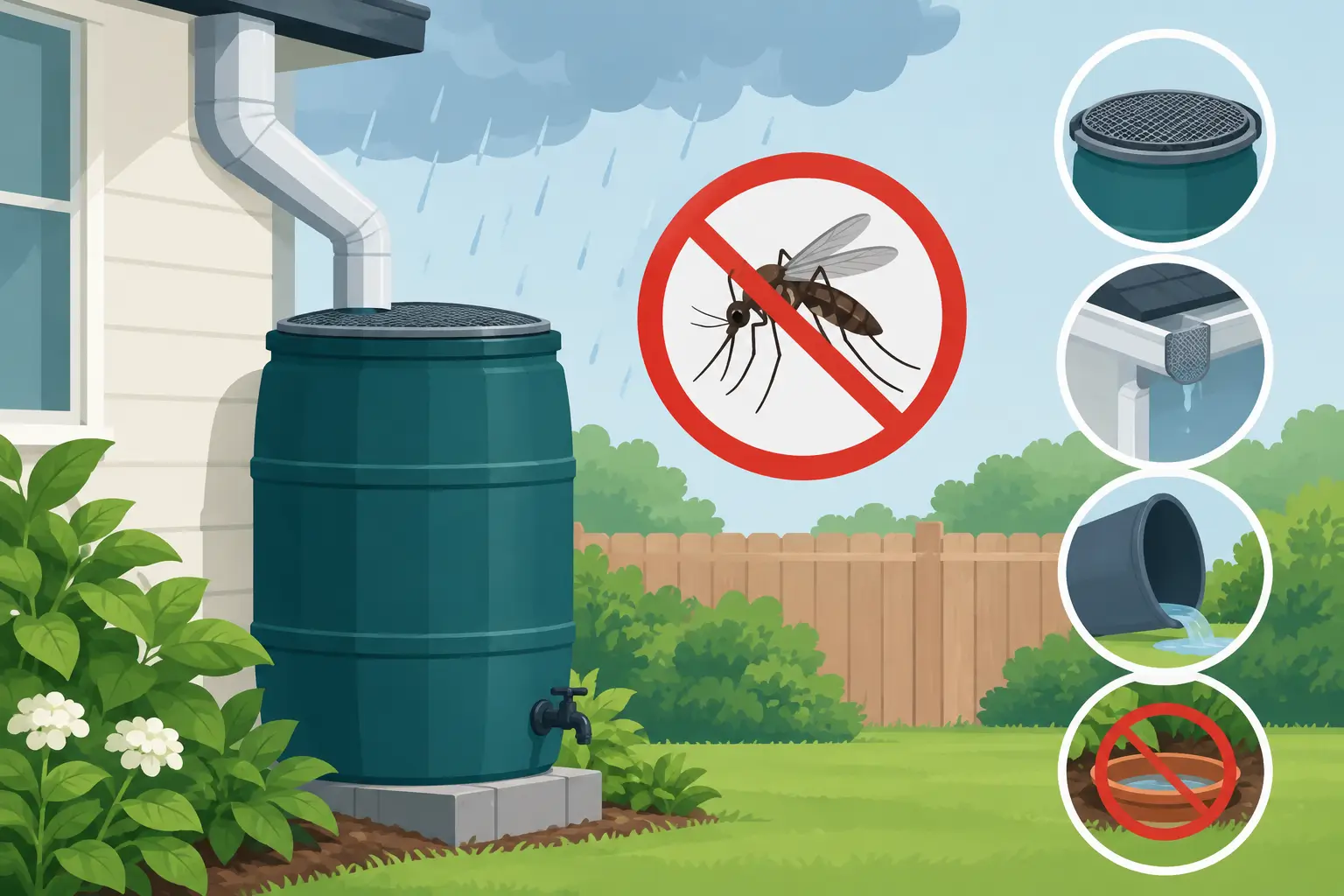
A rainwater tank should be a reliable water asset, not a mosquito breeding site. Effective rainwater mosquito prevention methods come down to one principle: mosquitoes need access to still water. Stop them entering the system, remove water that sits outside the tank, and inspect every opening that could become a weak point.
For homeowners, rural properties and farms, this is not just a summer maintenance job. A tank system includes gutters, downpipes, inlets, overflows, strainers and pumps. Mosquito control works best when each of those components is considered as part of the same water collection system.
Start with a properly sealed rainwater tank
A sound, closed tank is the first line of defence. Tank lids and inspection openings should fit securely, with no lifting corners, cracks or gaps around pipe penetrations. Poly tanks can move slightly with temperature changes and settling, so check lids and seals rather than assuming they are still tight after installation.
Every opening needs protection. That includes the inlet where water enters from the downpipe, the overflow outlet, ventilation points and any access hatch. A tank can look sealed from the ground but still allow mosquitoes through an unprotected overflow or a loose insect screen.
Use mosquito-proof mesh with an aperture of around 1 mm or finer where practical. The mesh needs to be corrosion-resistant and securely fixed so it cannot blow out, sag into the pipe or leave gaps around the edges. Stainless steel, brass and durable purpose-made plastic mesh are commonly used, depending on the fitting and local conditions.
Avoid relying on ordinary flyscreen. Its openings can be too large, and it may degrade quickly in strong sun or coastal environments. For properties near the coast, select materials that suit salt exposure and make screen checks part of routine tank maintenance.
Check the inlet, overflow and vent screens
Most mosquito problems in rainwater tanks start at a fitting that is out of sight. The inlet screen is often damaged by leaf build-up, while an overflow screen may be missing after plumbing work or cleaning. These areas deserve a close inspection after heavy rain and before mosquito season.
The inlet should direct water into the tank while preventing insects from entering through the downpipe. A rainhead or inlet strainer can help keep leaves and larger debris out of the system, but it is not a substitute for correctly fitted mosquito mesh.
Overflow pipes need particular attention. When the tank is full, the overflow must discharge freely. Do not block it with a dense material or an improvised cap that restricts flow. Instead, fit a purpose-designed screened overflow or secure fine mesh over the outlet in a way that maintains drainage. If water backs up during a major downpour, it can damage gutters, downpipes or the tank connection.
Vents are less common on basic tank installations, but where they are fitted, they need screening as well. Any opening large enough for air movement can be large enough for mosquitoes.
Keep screens clean enough to work
A screen clogged with leaves, pollen, roof grit or insect debris can create its own problems. Water may bypass the fitting, overflow where it should not, or pond in gutters and fittings. Brush or rinse screens carefully, then check that they remain firmly attached.
On acreage properties with heavy leaf fall, more frequent checks may be needed. The right interval depends on surrounding trees, roof area, local rainfall and whether the property is occupied full time. A quick inspection after storms is usually more useful than waiting for a fixed annual service date.
Stop water pooling before it reaches the tank
Mosquitoes do not need a full tank to breed. A small amount of stagnant water in a blocked gutter, old bucket, tray beneath a dripping tap or unused stock trough can be enough. This is why practical rainwater mosquito prevention methods extend beyond the tank itself.
Keep gutters clear so they drain fully towards the downpipes. Leaves and sediment can form small dams that leave shallow pools after rain. Check gutter corners, low spots, rainheads and the top of downpipes, particularly where trees overhang the roof.
First-flush diverters also need maintenance. These devices discard the first flow of water from a roof after dry weather, helping reduce dust, droppings and debris entering the tank. However, if a diverter does not drain or reset correctly, it can hold water. Follow the manufacturer’s maintenance instructions, ensure the drain point is operating as intended, and keep any openings screened.
Around the property, tip out or cover items that collect rainwater. Pay attention to wheelbarrows, tarps, tyres, plant saucers, unused bins, machinery covers, boat covers and spare troughs. On farms and commercial sites, include equipment wash-down areas and drainage pits in regular checks.
If you find larvae in a rainwater tank
Mosquito larvae often appear as small wrigglers near the water surface. Finding them means adult mosquitoes have gained access to the tank or another connected part of the system. Treat the cause first. Inspect and repair screening, lids, inlet connections and overflow outlets before considering any treatment.
Do not add oils, kerosene, detergents, bleach or household chemicals to a rainwater tank. These products can contaminate stored water, affect pumps and filters, and create avoidable risks where rainwater is used for household supply, livestock or irrigation.
For a tank used for drinking water, seek advice before adding any mosquito control product. Some biological larvicide products may be approved or labelled for particular water-storage applications, but suitability depends on the product label, tank use and local guidance. A licensed pest professional, local council environmental health team or water storage specialist can help confirm the right approach.
In many cases, exclusion and time are the practical answer once access has been fixed. Existing larvae cannot continue the cycle if adult mosquitoes cannot enter to lay more eggs. If contamination, heavy sediment or broader hygiene concerns are present, professional tank cleaning may be worthwhile. Cleaning is not only about mosquito control. It can also improve stored-water quality and provide an opportunity to inspect internal fittings.
Maintain water quality without creating breeding points
A well-designed rainwater system manages both water quality and mosquito risk. Leaf strainers, first-flush devices, sealed tank lids, screened overflows and appropriate filtration each have a role, but they must be selected and maintained as a working system.
If rainwater supplies the home, filtration and UV treatment may be appropriate depending on how the water is used, the roof catchment, household needs and local health advice. These measures help manage water quality at the point of use. They do not replace mosquito-proofing at the tank, because mosquitoes must be excluded before they can breed.
Pump covers and tank bases should also be kept tidy. Remove leaf litter and stored materials that make it difficult to see leaks, damaged pipes or standing water. Good access makes maintenance faster and reduces the chance that a small fault becomes a recurring problem.
A practical inspection routine
A short inspection after significant rain can prevent most issues. Walk from the roofline to the tank and look for standing water, loose fittings and debris. Then check the tank lid, inlet, overflow and any vents. Finally, look around the yard, shed and paddocks for containers or equipment holding water.
For larger systems, keep a simple maintenance record. Note when screens were cleaned, when gutters were cleared, whether fittings were replaced and any changes in tank water appearance or pump performance. This is especially useful for rental properties, farms and businesses where several people may be responsible for site upkeep.
North Coast Water Tanks can assist property owners who need practical advice on tank accessories, filtration, maintenance and system upgrades. The best solution is usually not the most complicated one. It is a properly fitted, well-maintained system that keeps water flowing freely while giving mosquitoes nowhere to get in.