


A drinking water pump system has one job that becomes very noticeable when it fails: deliver clean water at usable pressure whenever you turn on a tap. For homes, farms, acreage blocks and small commercial sites relying on rainwater tanks, the pump is not an optional extra. It is the working link between stored water and the kitchen sink, shower, stock wash-down point or amenities block.
Choosing on price alone can lead to poor pressure, frequent cycling, unnecessary power use and a shorter pump life. The right system is matched to the property’s water demand, tank location, pipework, water treatment equipment and the level of reliability required.
What makes up a drinking water pump system?
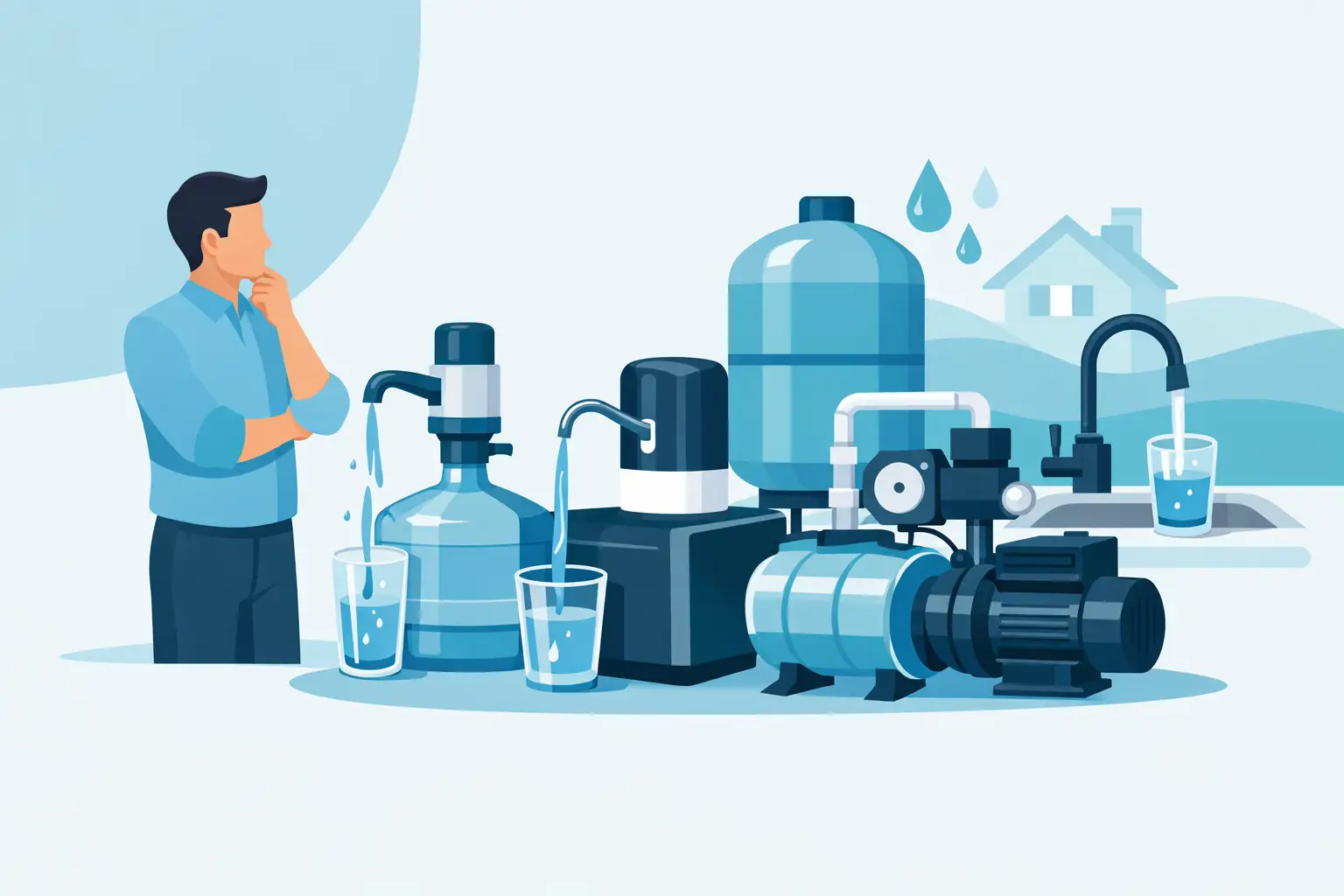
A complete system is more than a pump sitting beside a tank. It usually includes a suitable tank outlet, isolation valve, suction line or flooded inlet connection, pump, pressure controller or pressure tank, delivery pipework and filtration equipment. Where rainwater is used for drinking, additional treatment may include sediment filtration, carbon filtration and UV sterilisation.
Each component affects the next. A pump that is appropriately sized can still perform poorly if it is fed through undersized pipework, a blocked pre-filter or a restrictive tank outlet. Likewise, a quality filtration system needs sufficient, steady flow to work as intended.
For this reason, it pays to consider the full water path from roof catchment and tank through to the final tap. A one-stop approach also makes future servicing simpler, as the tank, pump, filters and fittings can be selected to work together.
Start with water demand, not pump size
The best pump capacity depends on how much water you need at one time, rather than simply how many litres your tank holds. A small household may need a pump that comfortably supplies a shower and a kitchen tap at the same time. A larger family home may have several bathrooms, an irrigation point and appliances operating together. A farm or small business may need separate domestic and operational water demands assessed.
Flow is commonly measured in litres per minute, while pressure is measured in kilopascals or bar. Higher flow is useful where multiple outlets run at once. Higher pressure helps water travel uphill, through long pipe runs and to fixtures that need dependable operating pressure.
Consider the practical peak-use moments on your property. Morning routines can mean showers, toilets and kitchen taps operating together. On rural properties, domestic demand may overlap with garden watering, a trough top-up or equipment cleaning. It is usually better to design for realistic peak demand than average daily use.
Oversizing is not always the answer. An unnecessarily large pump can cost more to buy and run, create excessive pressure, and cycle poorly where demand is low. An undersized unit, however, can struggle at distant taps and wear prematurely as it works beyond its intended duty.
Account for height and distance
Every metre of vertical lift and every long run of pipe adds resistance. A tank located below the house, a dwelling on a slope or a shed some distance from the tank will require more pump head than a simple level installation.
Pipe diameter matters too. Narrow pipework restricts flow, particularly over longer distances. A pump may appear to have strong performance on its specification sheet, but the delivered result at the tap depends on the combined resistance of pipework, bends, valves, filters and fittings.
A pump performance curve is useful here. It shows how the available flow changes as head pressure increases. Selecting from this curve, rather than relying on a maximum-flow figure alone, gives a much more accurate indication of real-site performance.
Choose a pump suited to the installation
Most tank-fed domestic systems use a pressure pump designed to start automatically when a tap opens and stop when demand ends. The choice between pump styles depends on the layout, duty and water source.
A surface-mounted pressure pump is a practical option where the tank outlet can gravity-feed the pump. It is accessible for inspection and servicing, and commonly used for homes and small buildings. The pump should be installed on a firm, level base, protected from weather where possible and positioned to minimise vibration and noise.
Submersible pumps are installed inside the tank and can be useful where quiet operation is a priority or a surface pump location is impractical. They can also avoid suction limitations, but access for servicing needs to be considered at the outset.
For larger agricultural or commercial applications, a higher-duty multistage pump, booster arrangement or dedicated pressure system may be required. These systems should be selected around the expected flow, delivery pressure, operating hours and number of outlets, not simply the tank capacity.
Protect water quality at every connection
If water is intended for drinking, all wetted components should be suitable for potable water use. This includes tanks, liners, pipework, fittings, pump components and filter housings. Food-grade materials and products compliant with relevant Australian requirements help reduce risk in a system that supplies household water.
Rainwater quality also starts before water reaches the tank. Keep roof catchments clean, maintain gutter guards and first-flush diversion where fitted, and ensure tank lids and screens prevent insects, vermin, leaf litter and other contaminants entering the supply.
Filtration should be based on the water source and intended use. A sediment filter can protect pumps, taps and finer treatment stages from grit and particles. Carbon filtration can improve taste and reduce certain odours. UV sterilisation is often used as a final treatment barrier for clear, filtered rainwater, but it relies on correct pre-filtration and regular lamp maintenance.
A filter that is overdue for replacement can reduce pressure and water flow. It can also compromise treatment performance. Include filter access and cartridge replacement costs in the system plan rather than treating filtration as an afterthought.
Avoid cross-connections
Where rainwater, mains water, bore water or recycled water are present on the same property, pipework needs clear separation and suitable backflow protection. Incorrect connections can create a health risk and may breach local plumbing requirements.
Work involving potable plumbing, mains connections and electrical supply should be completed by appropriately licensed trades. This is especially relevant where an automatic mains changeover, pressure vessel, UV unit or hardwired pump is being installed.
Pressure controllers and pressure tanks: what is the difference?
Many domestic pumps use an electronic pressure controller. It senses water demand, starts the pump when pressure drops and stops it after the tap closes. These controllers are compact and convenient, and dry-run protection is available on some models to help prevent damage if the tank runs empty or the water supply is interrupted.
A pressure tank stores a small volume of pressurised water and works with a pressure switch or pump controller. It can reduce short cycling by allowing minor water draws without immediately starting the pump. This can be particularly valuable where there are small leaks, slow-filling cisterns or frequent low-volume demand.
Neither option is automatically better. An electronic controller can suit a straightforward household setup, while a pressure tank arrangement may provide more stable operation for larger systems or properties with frequent short draws. The correct choice depends on the pump, pipework and usage pattern.
Installation details that affect reliability
Good installation protects the investment. The pump should have isolation valves so it can be serviced without draining the tank or disconnecting the whole system. A union fitting or flexible connector can make removal easier and help reduce vibration transfer into rigid pipework.
A pre-pump strainer may be appropriate where debris could reach the pump, although it must be accessible for cleaning. Ensure all tank screens, strainers and filter housings can be checked without difficult access. A neat installation is not just cosmetic – it makes routine maintenance more likely to happen.
Provide weather protection without enclosing the pump so tightly that heat and moisture build up. Keep electrical connections dry and protected, and make sure drainage around the pump base prevents standing water. If the property is exposed to coastal conditions, choose durable materials and inspect fittings regularly for corrosion.
Noise is another practical consideration. Pump vibration can travel through pipework and walls, particularly where a pump is mounted close to bedrooms or living areas. A solid base, correct pipe support and vibration-damping connections can make a noticeable difference.
Maintain the system before performance drops
A dependable water supply comes from regular checks, not emergency repairs. Inspect the tank inlet screen, overflow mesh and roof water collection system after heavy leaf fall or storms. Check for leaks around the pump, pipework and fittings, and pay attention to changes in pump noise or cycling behaviour.
Replace filter cartridges on schedule or sooner if water flow drops. Service UV equipment according to the manufacturer’s requirements, including lamp replacement and sleeve cleaning. If a pressure tank is fitted, its air charge should be checked as part of periodic maintenance.
Tank cleaning may be needed if sediment has built up, water quality has changed or a tank has been contaminated. Addressing these issues early helps protect the pump and filtration system as well as the water supplied to the home.
For more than 30 years, North Coast Water Tanks has helped property owners bring together tanks, pumps, filtration and the practical accessories that make a water system work properly. The most reliable setup is rarely the biggest or most expensive one. It is the system selected for your site, installed carefully and maintained well enough that clean water is ready when your property needs it.