


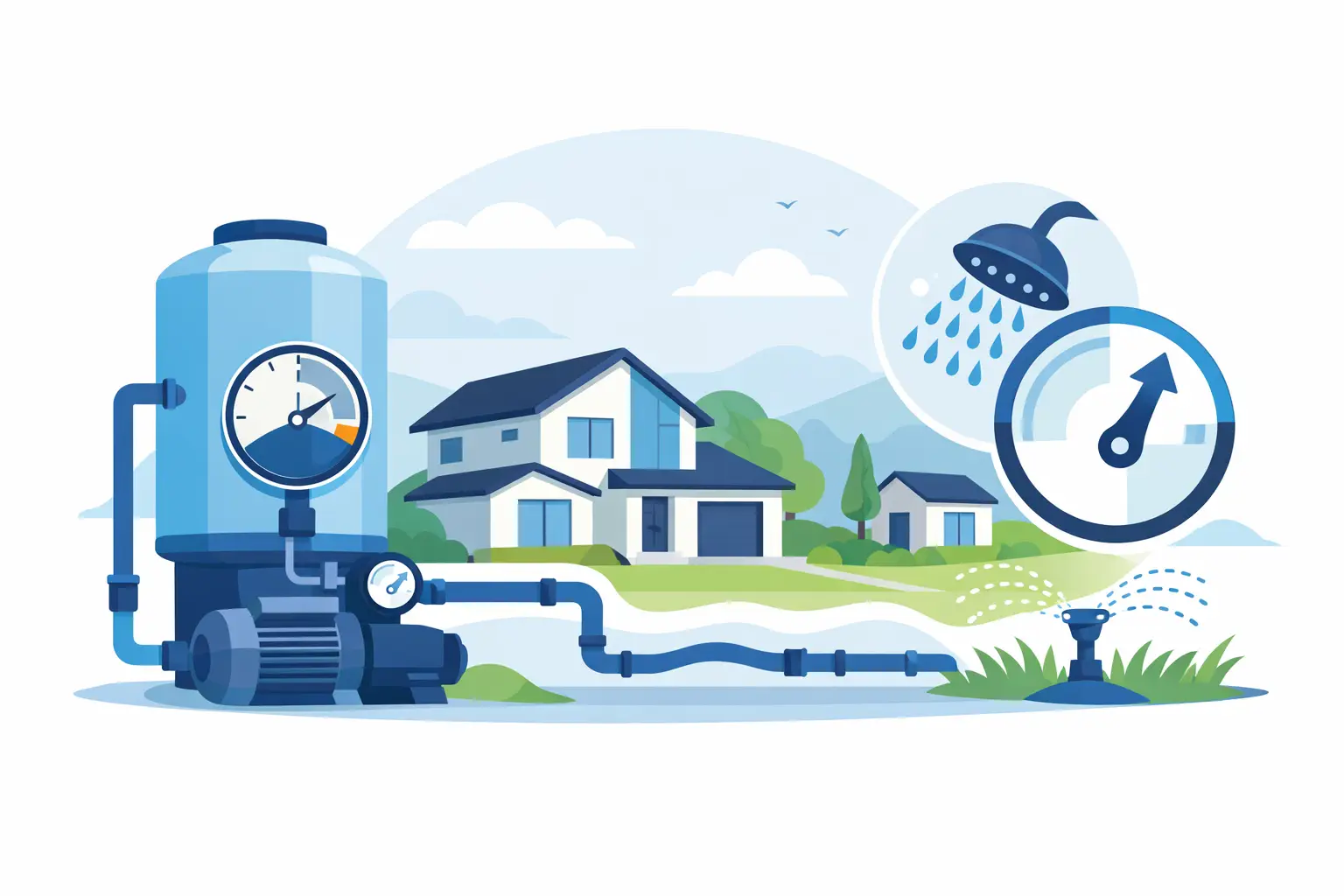
A shower that drops to a trickle when someone opens a tap, a sprinkler that barely reaches the garden bed, or a pump that starts every few seconds all point to the same issue: the water system is not delivering pressure as it should. Knowing how to improve tank pressure starts with identifying where the restriction sits. In most rainwater systems, the tank stores water, but the pump, pipework and controls determine what comes out at the tap.
Raising pressure is not always the answer. A pump that is too powerful for the plumbing can cause leaks, noisy pipework and premature wear on fittings. The practical goal is consistent pressure and flow that suits the property, whether it is a home, farm, shed, tiny home or commercial site.
How to improve tank pressure: start with the cause
Before replacing equipment, check whether the problem affects every outlet or only one. Low pressure at a single shower, tap or irrigation zone often comes from a blocked aerator, showerhead, filter or valve. Low pressure throughout the property usually points to the pump, tank outlet, suction line, pressure controller or undersized pipework.
It also helps to separate pressure from flow. Pressure is the force pushing water through the system, usually measured in kilopascals or bar. Flow is the volume of water delivered over time. A system may show reasonable pressure with one tap running, then struggle when a toilet fills and the washing machine starts. That is generally a pump capacity or pipe sizing issue rather than a simple pressure-setting problem.
Check the tank water level first. A low tank can allow air into the suction line or leave the outlet partly obstructed by sediment. Make sure isolation valves are fully open and inspect any visible pipework for leaks. Even a small leak on the suction side can prevent a pump from priming properly, often without leaving an obvious puddle.
Check filters, strainers and tank outlets
Filtration protects pumps, appliances and household water quality, but neglected filters are one of the most common causes of reduced flow. Sediment cartridges gradually collect fine material, while pump strainers can fill with leaves, grit or organic debris. If the pressure was previously good and has steadily declined, inspect these components early.
Replace filter cartridges according to their condition and water quality, not only the date written on the housing. A property with roof-harvested rainwater after heavy weather may need more frequent cartridge changes than a lightly used system with effective leaf screening and first-flush diversion.
The tank outlet should also be clear. On older tanks, sediment can settle near the base and restrict the outlet. A tank clean may be appropriate where there is a substantial build-up of sludge, visible discolouration or recurring blockages. Cleaning should be planned carefully so there is adequate water available for the property afterwards.
Match the pump to the job
A pressure pump needs to meet the demand of the property, not just lift water from the tank. Pump selection depends on the number of outlets, expected simultaneous use, elevation changes, distance from the tank and the length and diameter of the pipework.
For a small cabin or tank supplying one or two low-demand outlets, a compact automatic pressure pump may be sufficient. A family home with multiple bathrooms, outdoor taps and a washing machine needs greater flow capacity and stable pressure control. Agricultural systems are different again: stock troughs may have modest demand, while irrigation can require much higher flow through dedicated lines.
Pump performance is shown on a pump curve. As required flow increases, available pressure generally falls. Choosing a pump based only on its maximum pressure rating can lead to disappointment because that rating may be measured at little or no flow. The useful question is whether the pump can provide the required flow at the pressure your fixtures, appliances or irrigation system need.
A correctly sized multistage pressure pump can improve household performance significantly, particularly where the existing pump is undersized or ageing. However, a larger pump is not automatically better. If it exceeds the pressure rating of old pipework, hot-water services, filters or fittings, it can create a more expensive problem. Check component ratings and use a pressure-limiting valve where required.
Consider a pressure tank or controller
Many modern pump systems use an automatic pressure controller that starts the pump when a tap opens and stops it when flow ceases. These are effective for many domestic rainwater applications, but frequent cycling can occur when there is a small leak, a faulty non-return valve or a dripping tap.
A pressure vessel, also called a pressure tank, stores a small volume of pressurised water. It can reduce pump starts, smooth minor fluctuations and extend pump life where water is drawn in short bursts. The vessel must be correctly sized and its air charge maintained to work properly. It will not compensate for a badly undersized pump, blocked filter or restricted pipe.
If a pump runs continuously while taps are closed, or starts and stops rapidly, arrange a proper inspection. Repeated cycling is hard on motors, controllers and seals.
Upgrade restrictive pipework where needed
Long, narrow pipes create friction losses. This is especially noticeable on rural and acreage properties where the tank may be some distance from the house, workshop or irrigation area. A pump can be correctly specified yet still feel weak at the far end of the line because too much pressure is being lost in transit.
Increasing pipe diameter on the main run can make a meaningful difference. As a general principle, water moves more freely through a larger pipe, particularly at higher flow rates. Avoid unnecessary elbows, sharp reductions and complicated joins where possible. These all add resistance.
Suction pipework deserves particular attention. It must be airtight, appropriately sized and kept as short and direct as practical. The pump should generally sit close to the tank and below the water level where site conditions allow, as this reduces suction lift. Where a pump must draw uphill or over a long distance, installation details become more critical and professional advice is worthwhile.
Use gravity wisely, but do not rely on it for high demand
An elevated tank produces pressure through gravity. The higher the water level above the outlet, the greater the available pressure. This can be a simple and reliable approach for low-demand uses such as garden taps, troughs or emergency supply.
Gravity systems have limits. Raising a tank only a few metres usually will not provide the pressure expected for a modern household shower or multiple appliances operating together. Elevated tanks also require suitable structural support, safe access and careful consideration of the additional loaded weight. For dependable domestic supply, a correctly matched pump is usually the more practical option.
Set pressure controls carefully
Some pumps and controllers allow pressure adjustments, but settings should remain within the equipment and plumbing limits. Increasing the cut-out pressure may improve the feel at a tap, yet it can also increase stress on hoses, fittings and appliances. It may make little difference if the real restriction is a clogged filter or undersized pipe.
Where a mechanical pressure switch and pressure vessel are fitted, the cut-in and cut-out settings need to work with the vessel pre-charge. Incorrect adjustment can cause short cycling or failure to start. Isolate power before inspecting electrical equipment and use a licensed electrician or qualified pump technician for electrical faults, wiring changes or controller replacement.
For homes connected to both tank water and mains water, make sure the changeover arrangement, backflow protection and any pump controls are correctly configured. Water sources must remain properly separated to protect drinking water quality and meet local requirements.
Maintain the system for reliable pressure
Pressure problems are often preventable. Keep gutters, screens and leaf strainers clear so debris does not reach the tank. Inspect filters regularly, look for leaks around pumps and fittings, and listen for changes in pump noise. A pump that becomes louder, takes longer to prime or runs more often than usual is asking for attention.
It is also wise to check pressure after major changes to the property. Adding a bathroom, installing a larger irrigation zone, building a granny flat or extending water lines can push an existing pump beyond its intended duty. Planning the tank, pump, filtration and pipework as one system is usually more cost-effective than upgrading individual parts after performance drops.
North Coast Water Tanks can help property owners assess the full setup, from tank outlets and filtration through to pump selection and accessories. The right solution is the one that delivers steady water where it is needed without placing unnecessary strain on the system.
If pressure has become unreliable, start with the simple checks, then size any upgrade around real water demand rather than the biggest number on a pump box. A well-matched system gives you dependable water at the tap and fewer surprises when the property is busy.