


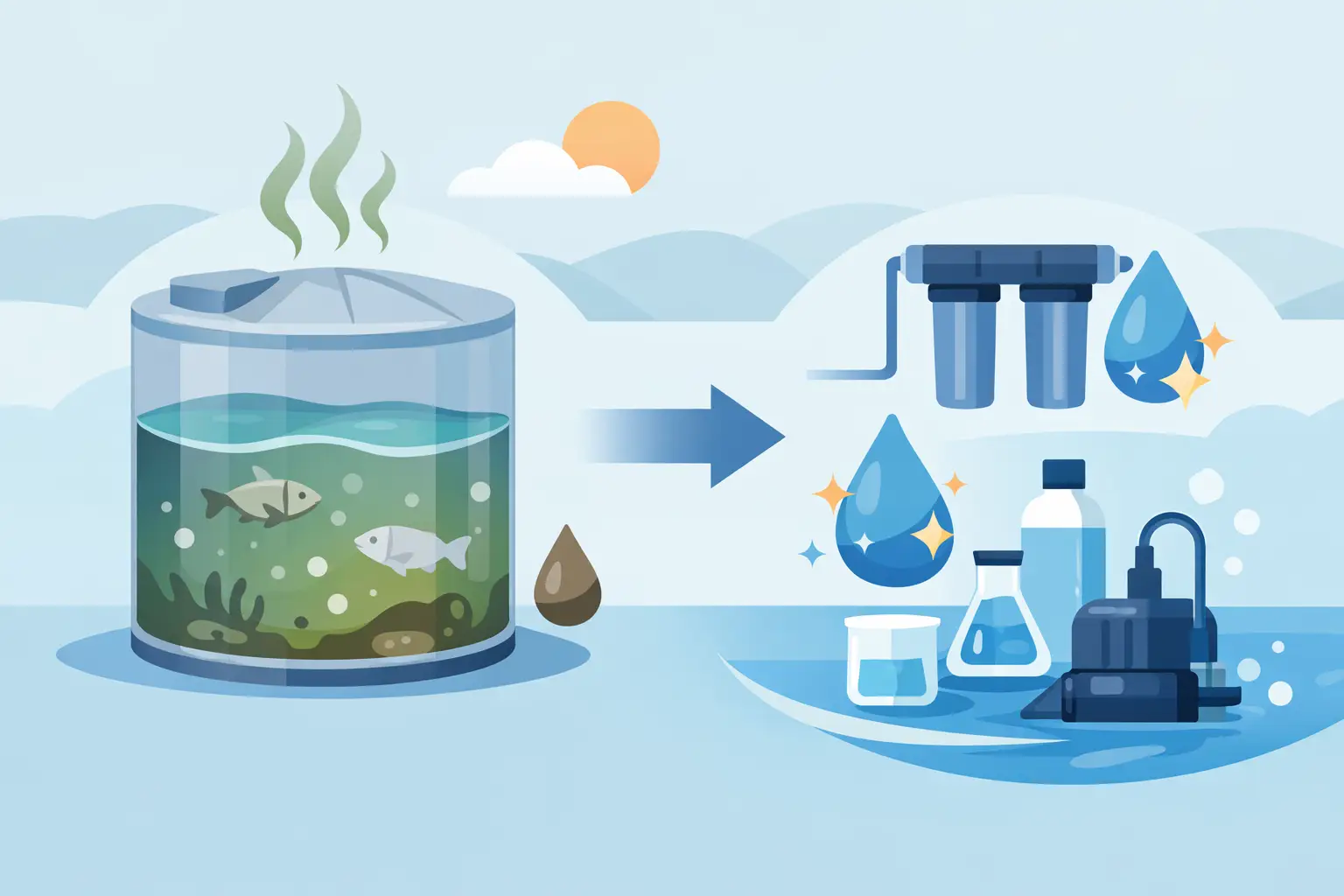
A tank that has supplied clean, fresh rainwater for years can suddenly develop an earthy, musty, sulphur-like or rotten odour. If you are asking, why does tank water smell, the answer is usually found in the water’s journey: the roof, gutters, inlet, stored water, plumbing or pump system can all contribute. The smell may be harmless, but it can also be an early warning that cleaning, filtration or further investigation is needed.
For water used for drinking, cooking or washing, do not simply cover up an odour with a fragrance or assume it will disappear. Start by identifying when and where the smell occurs. That helps narrow down the cause and prevents unnecessary work on the wrong part of the system.
Why does tank water smell after rain?
Rain often washes accumulated material from the roof and gutters into the tank. Leaf litter, pollen, bird droppings, dust, insects and small animal matter can break down in the water and create an earthy or organic smell. This is particularly common after a long dry period, when the first decent rainfall carries a heavier load of debris into the system.
A first-flush diverter helps reduce this problem by sending the dirtiest initial roof runoff away from the tank. It needs to be correctly sized and regularly emptied or cleaned to do its job. A well-fitted gutter guard, clean gutters and a screened tank inlet provide another layer of protection.
If the smell is strongest just after rain and gradually improves, roof contamination is a likely cause. If it persists between rainfall events, the source may be inside the tank or within the plumbing.
Common tank water odours and what they can mean
Musty, earthy or pond-like smells
Musty water commonly points to decaying organic matter, algae growth or microbial activity in the tank. Light entering through an unsealed inspection opening, damaged lid or translucent section of pipe can encourage algae. Algae itself is not always the direct source of the odour, but it creates conditions where other organisms can grow.
Check that the tank lid is secure, inlet and overflow screens are intact, and inspection points are properly sealed. Poly tanks should be opaque and suitable for potable water storage where drinking water is required. A tank that receives direct sunlight through gaps or clear fittings deserves attention.
Rotten egg or sulphur smells
A rotten egg smell is often linked to hydrogen sulphide gas. In rainwater tanks, this can develop when organic material settles at the bottom and breaks down in low-oxygen conditions. It can also be associated with particular groundwater sources, although that is less relevant for a rainwater-only system.
The smell may be more noticeable from a tap after water has sat in pipes overnight. If it occurs only on hot water, the issue may be in the hot-water system rather than the tank. If it occurs from every cold-water tap, inspect the stored water and tank condition first.
Stagnant, sour or sewage-like smells
Stagnant odours can occur when a tank has low turnover, has been unused for an extended period, or contains a build-up of sediment and organic sludge. Water sitting in dead-end pipework, unused pumps or poorly designed plumbing can also become stale.
A sewage-like smell needs prompt investigation. Check for dead animals in gutters or the tank, damaged screens, overflow entry points and any potential cross-connections with wastewater plumbing. Do not use water for drinking until the source has been identified and the system has been cleaned and treated as required.
Chlorine, plastic or chemical smells
A chlorine odour may follow disinfection and should fade once the system has been properly flushed. A plastic or chemical smell can occur in newly installed components, but it should not persist. Only use tanks, liners, pipes, fittings and sealants rated for potable water where water may be consumed.
Chemical smells also warrant a careful check of the catchment area. Roof cleaning products, pesticides, paints, smoke residue and nearby industrial contaminants can enter the system in runoff. If contamination is suspected, isolate the tank from household drinking supply and seek professional advice.
Check whether the smell is in the tank or the plumbing
Before arranging a full tank clean, take a sample directly from the tank outlet or a drain point, then compare it with water from an indoor tap. Use a clean container and smell the samples away from drains and waste outlets.
If the sample at the tank smells normal but the tap water smells unpleasant, investigate the pipework, pump, pressure vessel, filters and hot-water unit. Old filters are a frequent culprit. Carbon filters can trap organic material and develop a musty smell when they are left beyond their service interval. Sediment filters may also restrict flow and hold debris.
If the smell is present at the tank itself, inspect the inlet, roof catchment, screens, lid and internal water condition. Look for visible sediment, insects, leaf matter, discolouration, floating debris or evidence of light entering the tank. Never enter a water tank to inspect or clean it. Confined spaces are dangerous and require trained personnel and proper safety procedures.
How to remove odour from tank water
The right fix depends on the cause. A mild post-rain earthy smell may improve after gutter cleaning and a first-flush service. Persistent odour, visible contamination or water intended for household use usually calls for a more thorough approach.
Start by removing the cause of contamination. Clean gutters and roof valleys, clear the first-flush diverter, repair damaged screens and ensure the lid and overflow are vermin-proof. Remove overhanging branches where practical, as they increase leaf load and give birds and animals easier access to the roof.
Where sediment or decomposing material has accumulated, professional tank cleaning may be the sensible option. The process can include removing sludge, washing internal surfaces where appropriate, safely cleaning the inlet area and managing the remaining water. The best method depends on tank type, access, water level and whether the supply is used for drinking.
Disinfection can be useful after cleaning or contamination, but it should be done carefully. The dose, contact time and flushing process matter. Too little treatment may not solve the problem, while too much can leave an unpleasant taste or odour and affect plumbing components. For potable supplies, use products suitable for drinking-water systems and follow professional guidance.
Filtration improves water quality after the source has been addressed. A sediment filter protects pumps, taps and finer treatment equipment by capturing particles. Activated carbon can improve taste and odour, but it is not a substitute for removing contamination from the tank. For drinking water, a properly selected filtration system and UV sterilisation can provide added protection, particularly for properties relying on rainwater as their primary supply.
Prevent tank water smells from returning
Good tank hygiene is less about one major clean and more about regular, practical checks. Seasonal maintenance is usually enough for many properties, while heavily treed blocks, farms, coastal sites and high-use systems may need more frequent attention.
Keep these four areas in working order:
- Roof and gutters: Remove leaf litter, nests and built-up debris before major rain periods.
- Inlets and screens: Check mesh for holes, blockage and poor fitting that could allow insects, vermin or leaves into the tank.
- First flush and overflow: Empty and clean the diverter, and make sure overflow water drains away without creating erosion or pooling near the tank base.
- Filters and plumbing: Replace cartridges to schedule, flush low-use lines and inspect fittings for signs of stagnant water or contamination.
Tank placement also matters. A stable, level base, suitable clearance around the tank and protected pipework make maintenance easier and reduce the risk of damage. For larger rural or commercial systems, consider how water turnover, multiple tanks, pump sizing and filtration capacity work together. Water that is regularly drawn down and replenished is generally less likely to become stagnant than water sitting untouched for long periods.
When to call for help
Seek experienced advice if the odour is strong, returns soon after cleaning, is accompanied by unusual colour or taste, or follows suspected animal or chemical contamination. It is also worth getting support where a tank supplies a home, rental property, food business, school, farm accommodation or workplace. In these situations, water quality has consequences beyond inconvenience.
North Coast Water Tanks can assist property owners with practical tank cleaning, maintenance, filtration and water-storage advice suited to the way their system is used. A clear diagnosis usually saves money compared with replacing parts at random.
Fresh tank water starts before it reaches the tank. Keep the catchment clean, exclude debris and vermin, maintain treatment equipment and act early when the water smells different. That approach protects both your stored water and the investment you have made in a dependable supply.