


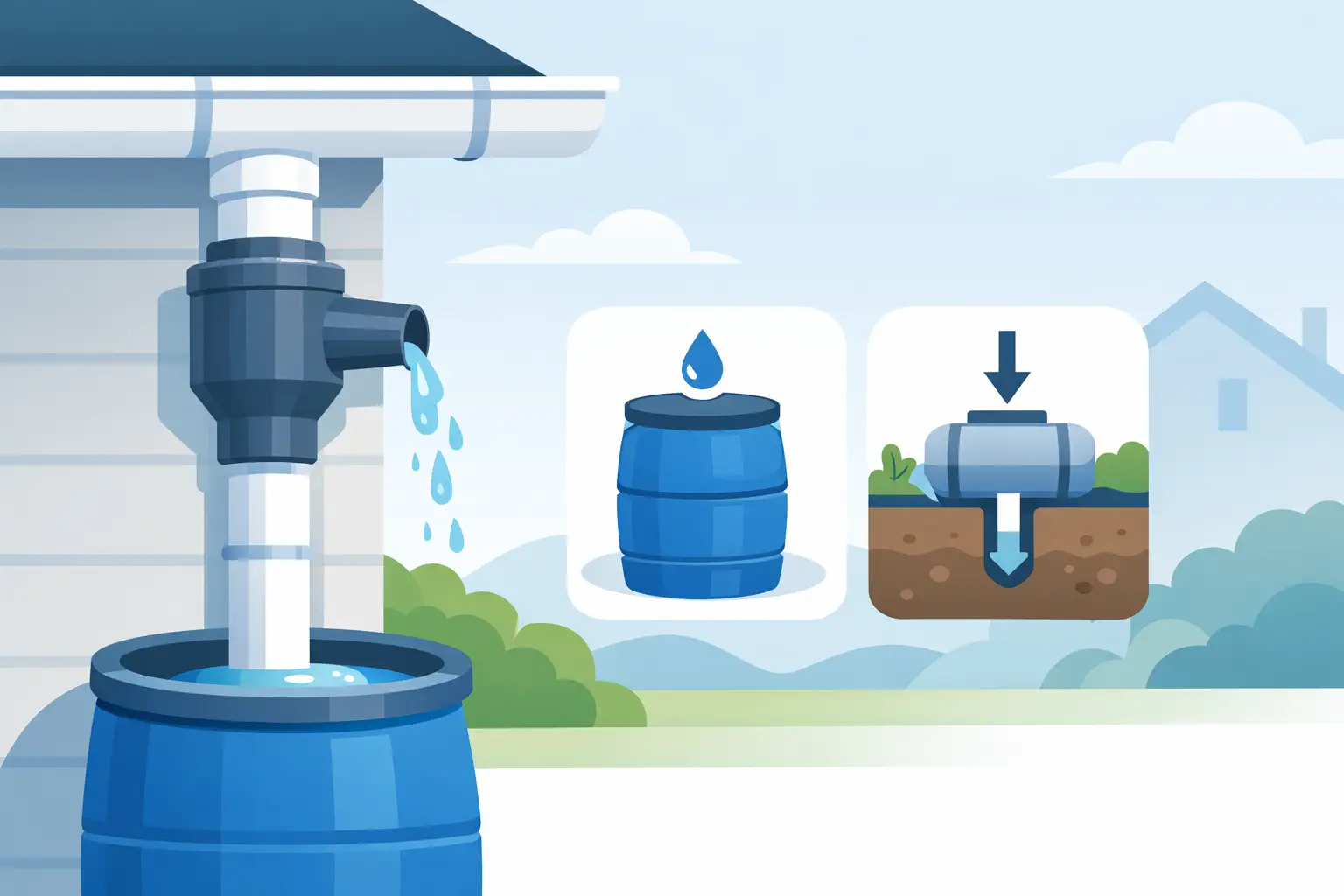
A downpipe rainwater diverter is the fitting that decides where roof runoff goes when it reaches your downpipe. Installed correctly, it directs water into a rainwater tank while allowing excess water to continue safely to the stormwater system or a suitable drainage point. It is a small component, but it has a major effect on how reliably your tank fills, how easily the system can be maintained and how well your property handles heavy rain.
For homes, farms, acreage blocks and small commercial sites, a diverter should be selected as part of the whole rainwater harvesting system. The roof catchment, gutter condition, tank inlet, overflow, pump and filtration all need to work together. A quality tank cannot perform as intended if the water reaching it is poorly managed at the downpipe.
What a downpipe rainwater diverter does
Most roof-water collection systems use gutters to collect rainfall and downpipes to carry it down from the roofline. A diverter intercepts that flow and creates a controlled path to the tank. Depending on the design, it may direct all incoming water to the tank, split the flow between the tank and stormwater line, or allow the tank connection to be isolated when required.
The main purpose is straightforward: capture usable roof runoff without creating a drainage problem when the tank is full or rainfall is intense. When the tank reaches capacity, the overflow system must be able to carry water away freely. The diverter and associated pipework should never restrict this path.
A well-planned arrangement also makes it easier to service the system. If a tank needs cleaning, a pump is being replaced, or the tank inlet requires inspection, an isolating or bypass arrangement can keep roof water moving through the normal drainage system rather than backing up in gutters.
Diverter, first flush device and leaf screening are different jobs
These components are often grouped together, but they serve different purposes. Knowing the difference helps avoid a setup that looks complete but does not adequately protect stored water quality.
A downpipe diverter directs water from the downpipe to the tank or away from it. It manages the route of the water.
A leaf diverter or gutter guard helps keep leaves, twigs and larger roof debris out of the downpipe. This reduces blockages and lowers the amount of organic material entering the system.
A first flush diverter is designed to separate the first portion of runoff after a dry period. That initial water can carry dust, bird droppings, pollen, ash and other contaminants washed from the roof. Rather than sending it straight into the tank, the device holds or discharges that first flush before cleaner runoff continues to storage.
For rainwater used in toilets, laundry, garden irrigation or stock water, the level of treatment needed will vary. For rainwater intended for drinking, food preparation or bathing, a properly designed treatment train is essential. This may include inlet screening, a first flush device, sediment filtration, carbon filtration and UV sterilisation where appropriate. A diverter is part of the collection system, not a substitute for filtration or water treatment.
Choosing the right size and configuration
The correct diverter is determined by more than the downpipe diameter. Your roof area, expected rainfall intensity, tank location and the purpose of the water all matter.
A small suburban roof feeding a slimline tank may only require a straightforward connection from one or two downpipes. A larger rural home, shed, dairy, workshop or machinery building may need several collection points connected to a larger tank or tank bank. In these cases, pipe sizing becomes particularly important. Undersized pipework can restrict flow during a downpour, causing water to spill over gutters or bypass the tank.
Match the diverter to the existing downpipe profile and size. Round and rectangular downpipes require compatible fittings, and adapting between materials can create weak points if poorly fitted. UV-stable, durable materials suited to Australian outdoor conditions are a sensible choice, particularly in coastal areas where salt air and strong sun can shorten the life of inferior fittings.
Think about where the tank sits in relation to the downpipe. Gravity-fed pipework needs a continuous fall towards the tank inlet. Long horizontal runs, sharp bends and poorly supported pipe can slow flow and collect debris. Where a direct gravity connection is not practical, a different collection layout may be required.
Plan for overflow before the tank fills
The tank overflow is just as important as the inlet. During sustained rain, a full tank must shed excess water without flooding the tank base, undermining nearby structures or sending water back towards the building.
The overflow pipe should be appropriately sized, screened to prevent mosquito entry and directed to a legal, stable discharge point. This may be stormwater drainage, a swale, an infiltration area or another approved site-specific solution. Requirements differ between councils and properties, so check local plumbing and drainage requirements before installation.
If multiple downpipes feed one tank, confirm that the tank inlet and overflow can handle the combined flow. A large roof can deliver a surprising volume of water in a short storm.
Installation details that prevent common problems
A diverter is generally simple to install, but the details matter. Incorrect falls, loose joins and poorly positioned screens can create ongoing maintenance issues that are difficult to see until the first major rain event.
Before cutting into a downpipe, establish the finished pipe route and allow room to remove screens or access the first flush device. Keep pipework supported and protected from physical damage, especially around driveways, livestock areas and mower access. If pipework is exposed near the ground, make sure it will not be knocked by a ute, trailer or garden equipment.
A reliable installation should account for these practical checks:
- The tank has a stable, level base capable of carrying its full weight.
- Inlet pipework falls consistently towards the tank and does not sag.
- All tank openings are insect-proofed while still allowing airflow where required.
- Overflow water has a clear path away from buildings and the tank foundation.
- The tank can be isolated or bypassed for cleaning and maintenance.
For properties using rainwater inside the home, plumbing connections require particular care. Rainwater and mains water must be kept separate unless an approved, compliant changeover arrangement is installed. Backflow prevention, pipe identification and installation requirements should be addressed by a licensed professional where applicable.
Maintaining your rainwater collection system
A downpipe rainwater diverter does not need constant attention, but it should not be installed and forgotten. Most problems begin with roof debris, neglected screens or an overflow that has become blocked.
Inspect gutters and leaf screens regularly, particularly after high winds, storms or long dry periods. Clear leaves and sediment before the next rainfall event. If you use a first flush device, empty and clean it according to the manufacturer’s instructions. The drain valve at the base can clog with fine debris, so check that it releases properly.
Look over diverter joints, pipe supports and tank inlet fittings for leaks or movement. Even a small leak can soften a tank pad or create a muddy area around the base over time. Check mosquito screens for tears and make sure the overflow remains clear.
If water is used for household supply, arrange regular tank and filtration maintenance. Filters have service intervals, UV lamps have replacement schedules and stored water quality can be affected by roof condition, nearby trees, animal activity and seasonal weather. A clean collection system reduces the load on filters and helps protect pumps, appliances and plumbing fixtures.
When a standard diverter may not be enough
A basic downpipe connection suits many installations, but some sites need a more considered design. Properties with large roof catchments, high rainfall, steep sites, bushfire planning requirements, complex stormwater layouts or multiple tanks can benefit from professional advice before parts are ordered.
The same applies when upgrading an older concrete or steel tank. Existing pipework may be undersized, damaged or configured for a different water use. Adding a new pump or filtration system is a good time to review the entire collection path from roof to tank outlet.
North Coast Water Tanks can help property owners match tanks, pumps, filtration and accessories to the way water is actually used on site. Getting the diverter, inlet and overflow right at the start protects the value of the whole system.
A rainwater tank works best when every storm has somewhere controlled to go. Choose a diverter that suits your roof and pipework, keep the collection path clean and give overflow water a safe route away. That practical groundwork makes stored rainwater more dependable when you need it.