


A layer of sediment at the base of a rainwater tank is not always an emergency, but it should not be ignored. Effective tank sludge removal methods protect water quality, reduce wear on pumps and filters, and help prevent unpleasant taste, odour and discolouration at the tap. The right approach depends on the tank material, access point, sludge depth, water use and whether the tank supplies drinking water.
For many rural and regional properties, a small amount of fine sediment is normal. Dust, roof grit, leaf particles and organic matter settle over time, particularly after dry spells, storms or bushfire smoke events. The concern begins when that material is disturbed, reaches the pump inlet or creates conditions where bacteria can grow.
What is tank sludge and why does it build up?
Tank sludge is the material that settles below the usable water level. It can include fine sand, soil, decomposed leaves, insects, roof debris, bird droppings and mineral sediment. Older tanks may also contain residue from damaged liners, corrosion or deteriorating internal coatings.
A good rainwater system keeps most debris out before it reaches the tank. Gutters, leaf guards, first-flush diverters, inlet strainers and screened overflows all have a role. Even so, fine particles will eventually make their way into storage, especially on acreage properties with large roof catchments or exposed locations.
Sludge becomes more troublesome when the tank runs low. As the water level drops, sediment can be drawn closer to the pump intake. A pump positioned too low may stir up debris, block filters and shorten the service life of pressure equipment. If household water becomes cloudy after rain or during high demand, sludge may be part of the problem.
Tank sludge removal methods for different situations
There is no single cleaning method that suits every water tank. Draining a 5,000-litre poly tank used for garden supply is very different from cleaning a large concrete tank supplying a home, livestock or business. Assess the job before committing water, time or money.
Controlled draining and flushing
For light sediment in a smaller tank, controlled draining can be a practical option. Water is drawn down to a low level, then the remaining sediment is flushed towards a suitable outlet while the tank is rinsed. This works best where the tank has a purpose-built scour valve or accessible low-point outlet.
The main advantage is simplicity. It can remove loose, mobile material without anyone entering the tank. The trade-off is water loss, and it may not remove compacted sludge from an uneven floor, around support posts or beneath a liner. Never direct dirty discharge towards waterways, neighbouring properties or areas where it can create erosion.
Manual cleaning through the access opening
Manual cleaning may suit a tank with a wide access opening and a modest amount of settled debris. Depending on the design, sludge can be removed using long-handled tools, a suitable suction hose or a wet vacuum operated from outside the tank.
This method avoids a full drain in some cases, which is useful during dry conditions. However, it has limits. Reaching the whole base of a large tank from the opening is difficult, and stirring sediment without removing it can make the water temporarily worse. Care is also needed around internal liners, fittings and pump pipework.
Wet vacuum or suction removal
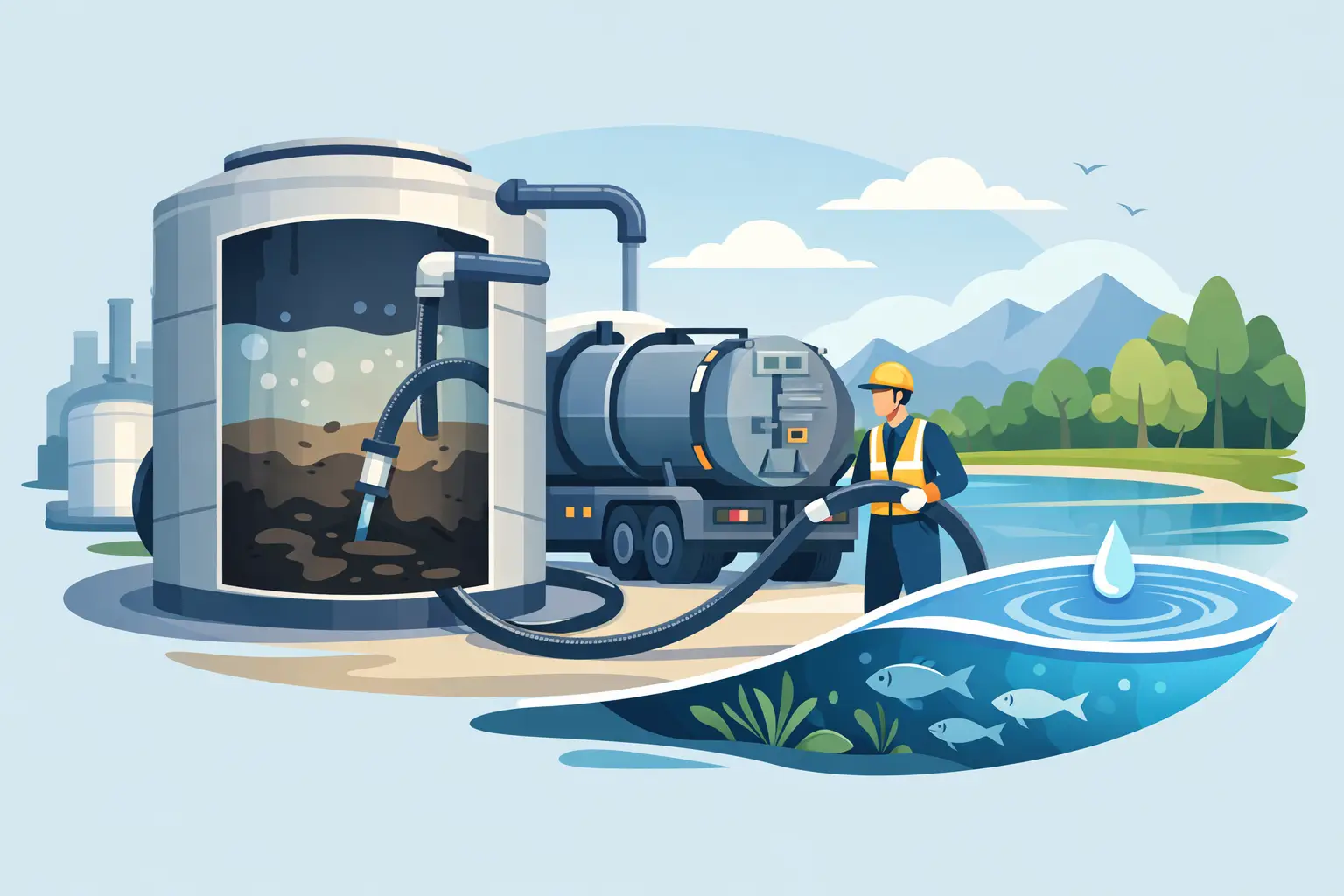
A wet vacuum or purpose-built sludge pump can remove concentrated sediment from the bottom of a partly drained tank. This is often a more water-efficient option than flushing because the operator targets the sludge rather than emptying the entire tank.
Suction removal is useful when the tank has service access and the sediment is localised. It is less effective where the sludge is thick, heavily compacted or spread across a large tank floor. Equipment must be clean and suitable for the intended use, particularly when the tank supplies potable water.
Professional vacuum cleaning
For large tanks, restricted access, heavy contamination or drinking-water systems, professional vacuum cleaning is generally the safest and most thorough choice. A specialist can assess the condition of the tank, remove sludge with appropriate equipment and identify issues such as damaged screens, poor inlet protection, failing liners or unsuitable pump placement.
Professional services are particularly worthwhile for concrete tanks, older steel tanks and tanks with difficult internal access. They can also reduce the risk of damaging a liner or contaminating stored water with unsuitable equipment. The upfront cost is higher than a do-it-yourself clean, but it can be far less costly than replacing a blocked pump, neglected liner or compromised water supply.
Do not enter a water tank to clean it
A water tank is a confined space. Entry can involve serious risks from limited ventilation, hazardous gases, slips, unstable ladders, contaminated water and difficulty getting out in an emergency. A tank may look harmless from above while presenting a life-threatening hazard inside.
Do not climb into a tank for a routine cleaning job. Confined-space entry requires trained personnel, risk assessment, suitable equipment, atmospheric testing and rescue arrangements. This applies to empty tanks as well as tanks containing water. In most cases, cleaning from outside the tank or engaging a qualified service provider is the sensible option.
Preparing a tank before sludge removal
Before cleaning begins, isolate electrical equipment such as pumps, pressure controllers and UV systems. Turn off the supply where necessary and make sure household users understand that stored water may be temporarily unavailable. If the tank is connected to a pump, check that it cannot run dry during the process.
It is also worth checking what caused the sludge build-up. Cleaning the tank without fixing the incoming debris problem simply resets the clock. Inspect gutters for leaf matter, confirm the inlet screen is intact, clean the first-flush device and check that the overflow has insect-proof mesh. If the tank is collecting water from an older roof, look for flaking paint, rust or deteriorated sealants.
Where water is used for drinking, cooking or food preparation, clean filters after the tank work is complete. Sediment filters may need replacement rather than rinsing, depending on their condition. A UV unit can treat microorganisms only when the water reaching it is sufficiently clear, so improved sediment control matters.
When should a rainwater tank be cleaned?
There is no fixed cleaning interval that applies to every property. A well-protected tank with clean gutters and effective pre-filtration may go several years without requiring sludge removal. A tank beneath trees, near unsealed roads or exposed to high dust loads may need attention more often.
Watch for practical signs rather than relying on a calendar alone. Cloudy water, sediment in toilet cisterns, repeated filter blockages, reduced pump flow, dirty water after storms or a noticeable smell all justify inspection. If the tank has supplied water after a major contamination event, such as floodwater entering the system, seek professional advice before returning it to household use.
A visual check through the access hatch can help, but do not lean into the opening or remove safety mesh unnecessarily. A torch, inspection camera or experienced technician can provide a clearer view without creating an entry risk.
Preventing sludge from returning
The most cost-effective tank cleaning is the one you do less often. Keep gutters clear, maintain leaf guards, empty first-flush diverters and ensure inlet strainers are correctly fitted. These components protect the stored water before debris has the chance to settle.
Pump placement also matters. A floating pickup draws cleaner water from below the surface rather than pulling from the bottom, where sediment collects. It is a useful option for household rainwater systems, though it still needs appropriate filtration and routine maintenance. For tanks with a fixed bottom outlet, make sure the pickup point is not positioned directly in the sediment zone.
If sludge keeps returning quickly, the issue may be upstream rather than inside the tank. A damaged gutter, missing screen, overflow opening or poorly designed inlet can introduce far more debris than the tank should reasonably receive.
A clean tank is only one part of a dependable water system. Matching the cleaning method to the tank, protecting the water at the roofline and maintaining pumps and filtration together will deliver better long-term results. For practical advice on tank cleaning, filtration or system upgrades, North Coast Water Tanks can help property owners identify the right next step for their setup.