


If your property relies on stored rainwater, the tank material matters just as much as the size. Aquaplate water tanks are a proven choice across Australia because they combine steel strength with a food-grade polymer coating designed for drinking water storage. For homeowners, farmers and small businesses, that means a tank built for local conditions and daily use rather than short-term convenience.
What are Aquaplate water tanks?
Aquaplate is a coated steel product developed for water storage applications. In practical terms, an Aquaplate tank uses a steel wall for structural strength and a specially engineered inner surface that is suitable for storing potable water. This combination has made it a long-standing option for domestic, rural and commercial rainwater systems where durability and water quality both matter.
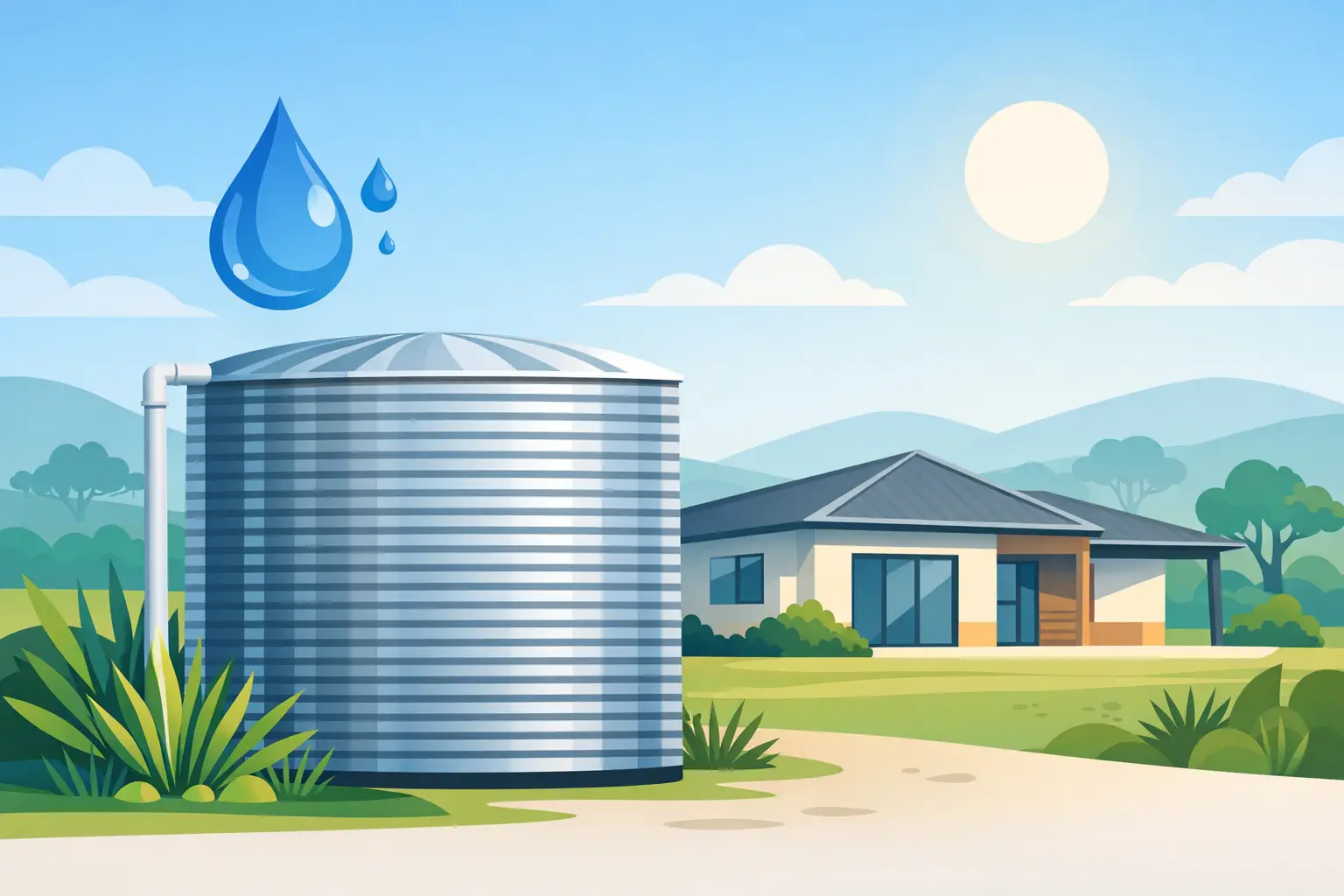
That construction is the main reason these tanks remain popular. Steel gives the tank shape, strength and impact resistance, while the internal coating is designed to protect the stored water from direct contact with the steel. On the outside, the tank also has a finish that stands up well in Australian weather, which is a major consideration in coastal areas, inland heat and exposed rural sites.
Why Aquaplate suits Australian conditions
Not every property has the same water demands, but most Australian tank owners want the same thing – a storage system that handles heat, changing weather and regular use without creating extra maintenance problems. Aquaplate water tanks suit that requirement well because they are designed for long service life in harsh environments.
For larger properties, steel tanks are often attractive because they can provide substantial storage capacity without taking up the same footprint as some alternative options. They also work well when a customer needs a tank that feels solid and permanent, whether it is servicing a house, stock water, sheds, workshops or a small commercial site.
Appearance matters too. Many property owners want a tank that fits the look of the home or farm infrastructure rather than standing out for the wrong reasons. Aquaplate tanks are available in a range of colours, which helps when matching roofing, sheds and surrounding buildings.
That said, the best tank always depends on the site. In very tight access areas, for example, a poly tank may sometimes be easier to position. On sites with specific bushfire, corrosion or access considerations, product selection should be based on the full setup rather than tank material alone.
The main benefits of Aquaplate water tanks
The biggest benefit is durability. A well-made Aquaplate tank is built for long-term water storage and can handle the sort of conditions many regional and coastal properties deal with year after year. When installed correctly on a suitable base and paired with the right accessories, it becomes a dependable part of the property infrastructure rather than a short-cycle replacement item.
Water quality is another major advantage. Because the internal surface is designed for potable water storage, Aquaplate tanks are widely used for rainwater harvesting systems supplying homes and other occupied buildings. If you are collecting water from a roof and planning to use it for household purposes, that food-grade lining is an important part of the system.
They also offer good capacity options. For many customers, especially on acreage or farms, the decision is not just about having a tank. It is about having enough stored water to get through dry periods, support household demand or provide backup supply when mains water is unreliable or unavailable. Steel tank ranges generally provide flexibility for larger capacities, which can make planning easier.
There is also the practical issue of lifespan value. A cheaper tank is not always the lower-cost option over time. Material quality, compliance, installation standards and suitability for the site all affect how the system performs over the years.
Where Aquaplate tanks work best
Aquaplate tanks are commonly used on residential homes, lifestyle blocks, agricultural properties and commercial sites. They suit households that rely heavily on rainwater, especially where water security is a day-to-day concern rather than an occasional backup measure.
On farms and larger blocks, they are often used for general water storage, shed supply, livestock support and workshop or washdown applications. For small businesses, they can support operational water needs while also helping manage rainwater capture more effectively.
They are also a practical option for customers upgrading an older tank system. If an existing setup is no longer holding capacity, the water quality is inconsistent or the tank has simply reached the end of its service life, replacing it with a modern compliant system can improve reliability straight away.
Choosing the right Aquaplate tank size
Tank size should be based on actual demand, not guesswork. A family home using rainwater for drinking, washing and toilets will have a very different requirement from a shed collecting roof runoff for garden use. The same applies to rural properties where stock water, irrigation or machinery washdown may be part of the equation.
Roof catchment area is a big factor. A larger roof can harvest more water, but storage still needs to be sized around rainfall patterns and intended use. There is little point collecting large volumes in a wet month if the tank cannot carry enough reserve into a dry spell.
Pump and filtration requirements should be considered at the same time. A tank is only one part of the system. If the water is feeding a household, pump performance, filtration stages, leaf management and first flush devices all influence how usable and hygienic that stored water will be.
This is where practical advice matters. Many customers start by comparing tank sizes and prices, but the better approach is to look at the full setup from the start so the tank, pump and filtration all work together.
Installation and maintenance considerations
Even a quality tank needs correct installation. The base must be stable, level and suitable for the tank size and weight when full. Poor bases are one of the fastest ways to shorten the life of any water tank, regardless of material.
Site position also matters. Access for delivery, proximity to downpipes, pump placement and future maintenance should all be considered before installation. It is common to focus on where the tank fits visually, but serviceability is just as important.
Maintenance is generally straightforward, but it should not be ignored. Gutters need to be kept clear, strainers checked, and any filtration system maintained according to its purpose. If the tank supplies drinking water, tank hygiene becomes even more important. Regular inspections help pick up small issues before they affect water quality or system performance.
For older systems, it is worth checking whether the problem is the tank alone or whether accessories also need attention. Worn valves, undersized pumps, poor inlet screening or outdated filtration can all reduce performance.
Aquaplate versus poly – which is better?
This is one of the most common questions, and the honest answer is that it depends on the application. Aquaplate and poly tanks are both widely used, and each has strengths.
Aquaplate is often preferred where customers want the strength and feel of a steel tank, larger storage options and a traditional round tank profile that suits homes, farms and commercial sites. It is also a strong option when appearance and long-term fixed infrastructure are priorities.
Poly can be the better choice where access is difficult, budgets are tighter or a lighter-weight tank is more practical. In some situations, poly is simply easier to transport and position.
The right decision comes down to capacity, location, budget, access, intended use and personal preference. There is no one-size-fits-all answer, which is why product advice should be based on the property rather than just the catalogue.
Getting a complete system, not just a tank
A good rainwater setup is more than storage. If you are investing in Aquaplate water tanks, it makes sense to look at the whole system at the same time – tank, pump, filtration, accessories and installation requirements. That approach usually saves time, avoids mismatched components and gives you a more reliable outcome.
For many property owners, the value is in getting the right guidance early. North Coast Water Tanks works with customers who need practical water solutions, whether that means a single replacement tank or a broader system for household, agricultural or commercial use. Quality Assurance, Competitive Pricing and Local Support only mean something when the product is matched properly to the job.
If you are weighing up tank options, start with how the water will be used, how much storage you genuinely need and what the site can support. A well-chosen tank should make life easier for years, not give you another problem to manage next summer.