


When the pressure is on in a dry spell, a rural property quickly shows whether its water setup was planned properly or pieced together over time. Rainwater harvesting for rural properties is not just about putting a tank beside a shed. It is about building a reliable water supply that suits your roof area, rainfall pattern, storage needs, pump requirements and water quality expectations.
For acreage owners, farmers and regional households, that planning matters. A system that is too small leaves you short when you need water most. A system that is oversized in the wrong areas can tie up budget without improving performance. The right setup gives you dependable supply for household use, livestock, gardens, washdown, irrigation support or general farm operations, while staying practical to maintain.
Why rainwater harvesting for rural properties matters
Town water is not available everywhere, and even where it is, relying on a single supply can be costly or limiting. On many rural blocks, harvested rainwater is the main source of water for the home, with additional demand coming from paddocks, machinery cleaning, livestock troughs and outbuildings.
That changes the conversation from convenience to infrastructure. Your tank, pump and filtration system are not optional extras. They are part of how the property runs day to day.
Rainwater also gives property owners more control. With adequate storage, you can reduce dependence on carted water, manage seasonal variability more effectively and make better use of rainfall when it arrives. In Australian conditions, where rainfall can swing from heavy downpours to long dry periods, capturing water when you can is simply good property management.
Start with demand, not just tank size
One of the most common mistakes is choosing a tank based only on available space or a rough guess. A better starting point is your actual water demand.
A household using rainwater for drinking, bathing, laundry and toilets will have a very different profile from a weekender block topping up a garden tank. Add livestock, a workshop or irrigation, and demand can rise quickly. The number of people on site, seasonal occupancy, stock numbers and intended use all affect the size of system you need.
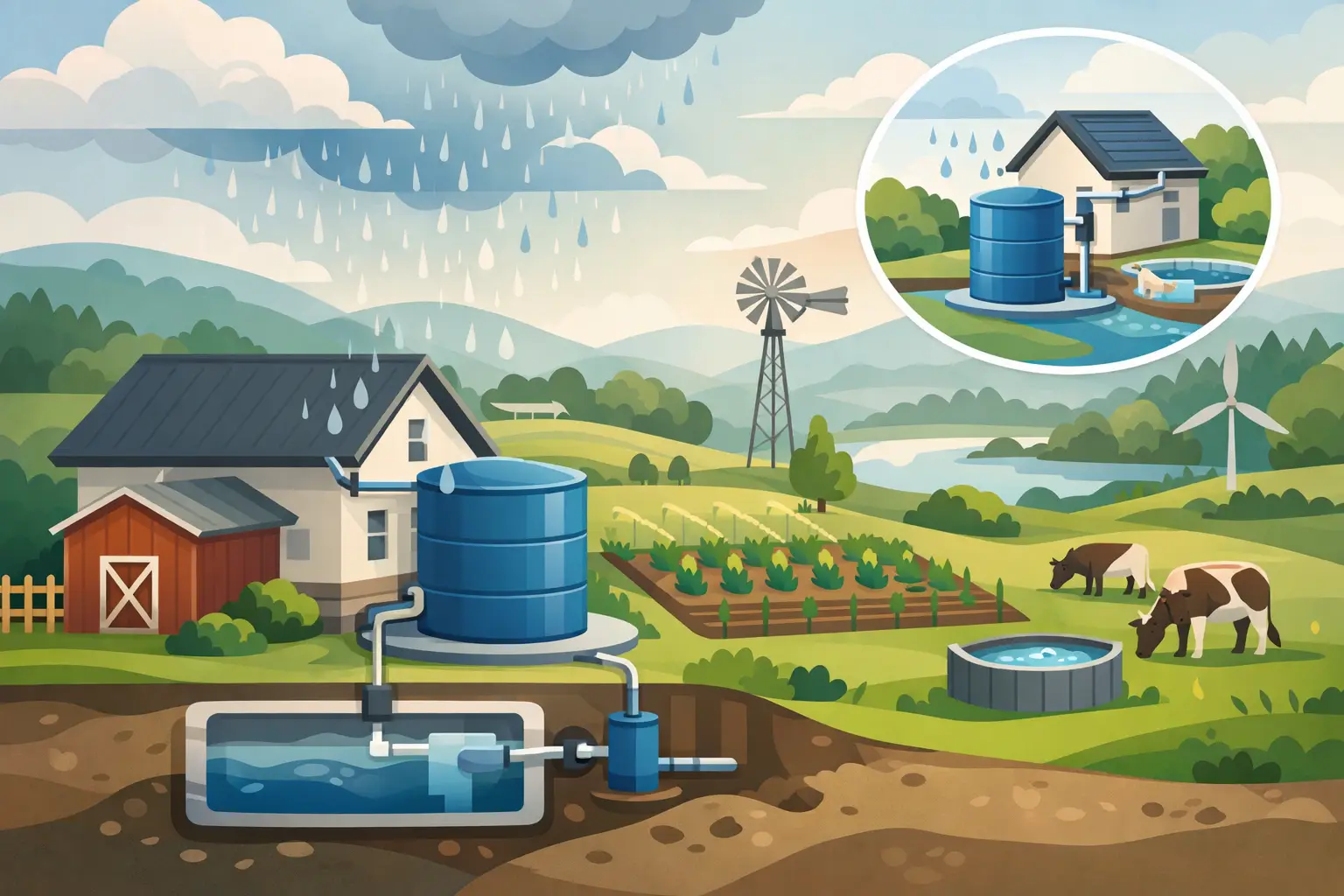
Roof catchment is the next part of the equation. Large shed roofs can collect a surprising volume of water, while smaller house roofs may not support heavy demand on their own. It often makes sense on rural properties to collect from multiple structures, such as the house, machinery shed, carport or barn, and direct them into shared storage.
That is why there is no single ideal tank capacity. It depends on local rainfall, catchment area and how long you need stored water to last between rain events. A practical design balances capture capacity with enough storage to carry you through the lean periods.
Tank material and placement make a difference
Tank selection is not only about litres. Material, site conditions and access all affect long-term performance.
Poly water tanks are a popular choice for many rural properties because they are durable, cost-effective and available in a wide range of sizes. They are often easier to transport and position than some alternatives, which can matter on sites with difficult access. Steel and Aquaplate-style tanks can also be a strong option, particularly where larger volumes or specific site preferences apply.
Placement matters just as much as the tank itself. A good site should have a suitable base, clear access for installation and maintenance, and practical alignment with downpipes, pumps and existing infrastructure. If a tank is awkwardly positioned, servicing becomes harder, pipe runs become longer and system losses can increase.
For larger properties, one central tank is not always the best answer. In some cases, multiple tanks placed near points of use can improve pressure management and reduce the complexity of distribution. It depends on the layout of the property and what the water needs to do.
Gutters, screens and first flush are not optional
A lot of water quality issues start before water ever reaches the tank. Leaves, dust, bird droppings and roof debris can all enter the system if the collection side is not properly managed.
Gutter maintenance is basic but essential. Clean gutters and sound downpipes improve yield and reduce contamination. Leaf screens and inlet strainers help keep larger debris out, while a first flush diverter can direct the dirtiest initial runoff away from the tank after dry periods.
On a rural property, this matters even more because roof surfaces can be exposed to windblown dust, nearby trees and agricultural activity. A tank full of water is valuable, but only if the water quality is fit for its intended use.
Pumps and pressure need to suit the job
A tank stores water. A pump makes it usable.
For a rural household, pump selection should match the number of outlets, expected pressure, pipe length and peak demand. If the system is feeding a house, a simple transfer pump may not be enough. You may need a pressure system that can handle multiple taps running at once, along with appliances and outdoor use.
For livestock supply, irrigation support or outbuilding use, the design brief changes again. Longer pipe runs, elevation changes and intermittent high demand all influence pump performance. Undersized pumps are a common source of frustration. Oversized pumps can cycle poorly and waste energy if they are not matched to the application.
This is where proper advice saves money. A tank, pump and filtration package should be considered as one working system rather than separate purchases.
Filtration depends on how the water will be used
Not all harvested rainwater needs the same treatment. Water for stock, washdown or garden use may need minimal filtration compared with water used inside the home.
If rainwater is being supplied for household use, filtration becomes far more important. Sediment filters help remove particles, carbon filters can improve taste and odour, and UV sterilisation may be appropriate where microbiological treatment is needed. The exact setup depends on water source conditions, intended use and whether the system supplies drinking water throughout the property.
There is no point fitting advanced filtration if tank hygiene is poor, and the reverse is also true. Good water quality comes from the full chain – clean collection, sound storage, appropriate filtration and regular maintenance.
Maintenance is what protects your investment
Even a well-designed system needs attention over time. Rural properties are hard on infrastructure, and water systems are no exception.
Tank inspections should be carried out periodically to check inlets, overflows, lids, strainers and structural condition. Gutters need clearing, screens need cleaning and pumps should be monitored for pressure issues, unusual cycling or signs of wear. If you are using filtration, cartridges and UV components need scheduled servicing.
Tank cleaning intervals vary. Some properties can go years with only routine checks, while others may need more frequent cleaning due to heavy debris loads, dust exposure or older infrastructure. The key is not to wait until water quality drops or equipment fails.
Planning for drought and growth
Many rural owners install a rainwater system based on current needs, then find the property changes. A shed is added. Stock numbers rise. A granny flat goes in. Irrigation expands. Suddenly the original setup is under pressure.
That is why future planning should be part of the initial design. It may be worth allowing for extra tank capacity, pump upgrades or connection points even if you do not install everything at once. A staged system is often more cost-effective than replacing undersized infrastructure later.
Drought resilience also deserves honest consideration. Rainwater harvesting can significantly improve self-sufficiency, but no system creates water in a long dry period. In low-rainfall areas or on high-demand properties, harvested rainwater may need to be backed by bore water, carted supply or alternative storage planning. Good advice should reflect that reality, not gloss over it.
Getting the system right from the start
Rainwater harvesting for rural properties works best when the system is matched to the site, the usage and the local conditions. That means looking at more than tank size. You need to consider catchment, storage, pressure, filtration, maintenance access and the standard of water required.
For many property owners, the value of working with an experienced supplier is not just the products. It is having access to guidance on tanks, pumps, filtration, accessories and ongoing support as one coordinated solution. That reduces guesswork and helps avoid the expensive habit of fixing one weak point at a time.
If your current setup is struggling, or you are planning a new build or rural upgrade, it is worth taking a hard look at how the whole system performs under real conditions. A dependable water supply is one of the most practical investments you can make on a rural property, and it pays off long after the next rain event has passed.