



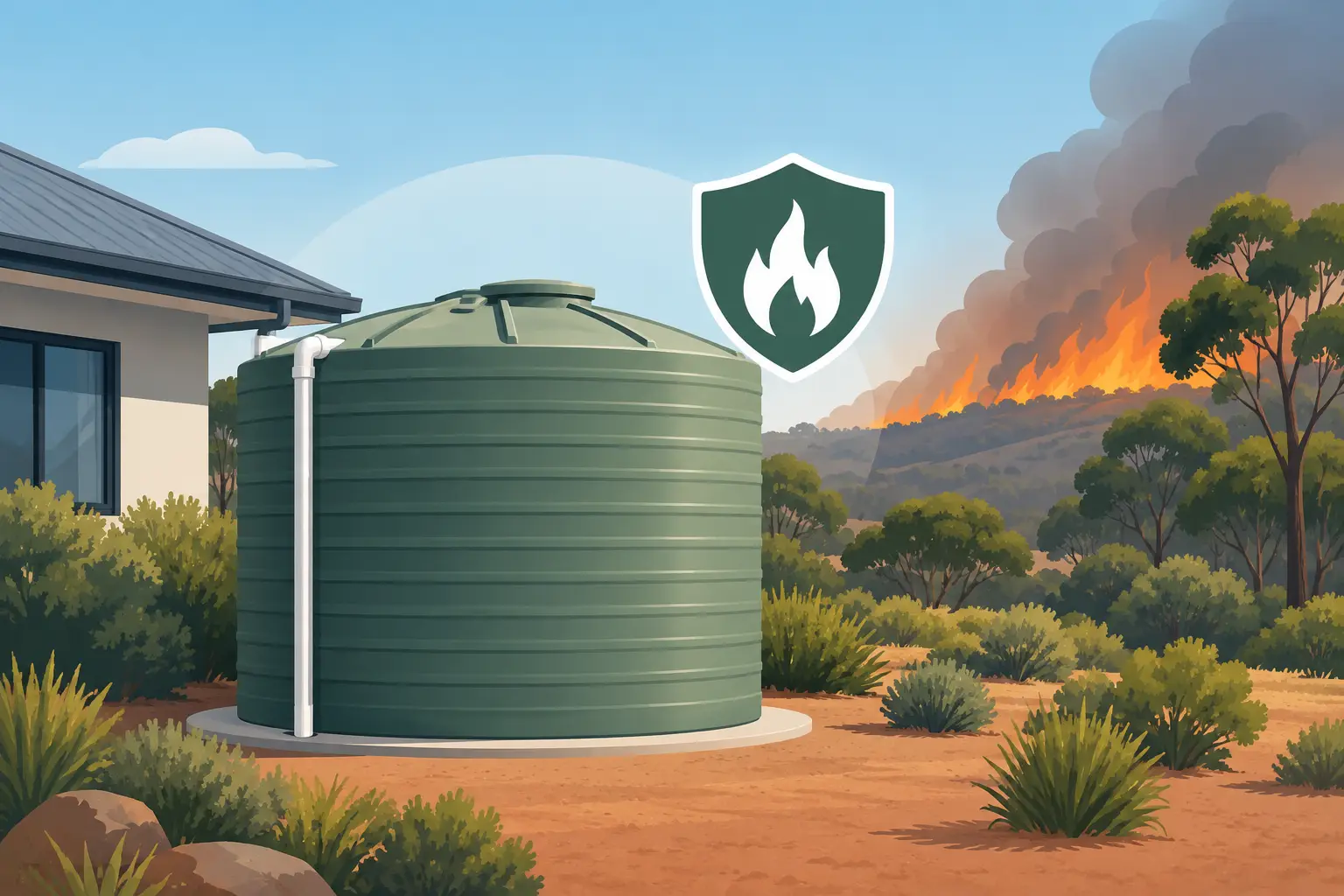
A water tank can be one of the most useful assets on a bushfire-prone property – but only if it remains accessible and functional when conditions turn severe. So, are poly tanks bushfire safe? The practical answer is: they can form part of a well-planned bushfire water supply, but a standard poly tank should not be treated as fireproof.
Polyethylene tanks are widely used across Australian homes, farms and acreage properties because they are affordable, durable, corrosion-resistant and available in a broad range of capacities. In a bushfire, however, heat, radiant exposure, embers and the location of the tank all matter. The tank material is only one part of the system. Pumps, pipework, valves, fittings, power supply and vehicle access can determine whether the stored water is actually usable.
Are Poly Tanks Bushfire Safe in Extreme Heat?
Poly water tanks are made from UV-stabilised polyethylene. They handle normal Australian weather exceptionally well, but they are still plastic. Intense radiant heat from a nearby bushfire can soften, deform or melt the tank wall. Direct flame contact is more likely to cause failure, particularly when the tank is empty or only partly full.
Water inside the tank provides some protection by absorbing heat. A full tank will generally perform better than an empty one because the stored water helps stabilise the structure and reduces the speed at which heat transfers through the wall. That does not mean a full poly tank is guaranteed to survive a fire front. Heat can still damage exposed areas, lids, outlets and fittings.
Embers are another concern. Wind-blown embers can land around the base of the tank, lodge in dry vegetation, ignite stored materials or enter an unprotected opening. In many bushfire events, small fires started by embers cause more damage to property infrastructure than direct flame contact.
The key point is that a poly tank can be suitable for bushfire water storage when it is correctly sited and supported by appropriate fire-ready infrastructure. It is not the same thing as a dedicated fire-resistant tank system.
Tank Location Makes a Major Difference
A tank placed beside a house, shed, timber retaining wall or dense vegetation faces greater risk than one positioned in a managed, clear area. The surrounding fuel load can expose the tank to flame, while nearby buildings can add radiant heat and falling debris.
Where possible, position the tank away from combustible structures and maintain a clear, low-fuel area around it. Keep grass short, remove leaf litter, avoid storing firewood or machinery against the tank, and manage shrubs and overhanging branches nearby. This also helps preserve access for a fire truck, pump operator or property owner during an emergency.
The tank should sit on a level, properly prepared base. If heat damages the tank or fittings, an unstable base increases the chance of movement, cracking or a sudden loss of stored water. For larger tanks, the base and installation details should always suit the tank’s full operating weight.
Protect the Fittings, Not Just the Tank
A bushfire water supply is a complete system. A tank may remain full after the fire front passes, but that water is of limited use if the outlet has melted, the pump has failed or the pipework cannot deliver water where it is needed.
Plastic taps, exposed flexible hoses and lightweight fittings are often the first components to fail in high heat. Bushfire-prone properties are generally better served by metal outlets and fittings where practical, protected pipework and clearly accessible valves. Any exposed components should be considered part of the fire-risk assessment.
Pumps also need careful thought. An electric pump depends on power, and power can fail during a fire event. A petrol or diesel pump may provide backup, but it must be safely stored, maintained and ready to operate. Some property owners use a pump arrangement that allows access to tank water even when mains power is unavailable.
If the tank is intended to support firefighting, check that the outlet, pump capacity and hose connection are appropriate for that purpose. A small domestic garden pump and narrow hose may be useful for spot fires or property preparation, but it is not automatically suitable for sustained firefighting use.
Bushfire Planning Requirements Vary by Location
Bushfire water supply requirements are not the same for every property. They may be influenced by your state planning rules, local council conditions, property access, building approval requirements and Bushfire Attack Level, commonly referred to as BAL.
For new homes or major developments in bushfire-prone areas, a specific volume of dedicated water storage may be required. This water may need to be available for firefighting, with prescribed connections, signage, access and fittings. In some cases, the required water supply can be drawn from a water tank that is also used domestically, provided the designated volume is reliably maintained.
Do not assume that buying a large tank alone meets your requirements. A compliant setup may also involve a suitable hardstand or access route, a fire brigade connection, an identified suction point, metal pipework and a reliable means of drawing water. Requirements can differ significantly between regions and developments.
Before selecting a tank, confirm what applies to your property with the relevant authorities, building professional or bushfire planning specialist. This is particularly important if the tank is being installed as part of a new dwelling approval or a formal bushfire management plan.
Practical Ways to Improve a Poly Tank Setup
For many existing properties, replacing a sound poly tank is not necessary. Improving its protection and the reliability of the connected water system can make a meaningful difference.
Start by keeping the tank as full as practical through the fire season. If rainwater is your main supply, monitor levels carefully and avoid drawing the tank down below any dedicated firefighting reserve. A level indicator can make this easier, especially on larger rural properties.
Then consider the tank surroundings. Create and maintain a clear area around the tank, remove combustible materials, and make sure access is not blocked by parked vehicles, fencing or stored equipment. Mark the tank location clearly if it may be needed by others in an emergency.
Inspect outlets, valves, pipework and pumps before summer. Replace worn hoses, test the pump under load and confirm that fittings can be operated without tools. If your setup relies on a generator or backup pump, run it periodically rather than discovering an issue during an emergency.
For properties with higher bushfire exposure, a steel or Aquaplate tank may be worth considering. Steel tanks are not immune to bushfire damage, but their material behaviour under radiant heat differs from polyethylene. They can be a practical option where site conditions, compliance needs or owner preference call for a more fire-resilient tank structure. The best choice still depends on the tank location, required capacity, water quality needs and total system design.
Poly Tank Versus Steel Tank for Bushfire Areas
There is no single tank material that suits every bushfire-prone property. Poly tanks offer excellent corrosion resistance, straightforward installation and competitive pricing. They are often the right choice for rainwater harvesting, household supply, stock water and general rural storage.
Steel and Aquaplate tanks can offer advantages where higher heat exposure is a concern, particularly when paired with suitable metal fittings and protected infrastructure. However, steel tanks require their own maintenance considerations, including checking liners, roofs, seals and corrosion protection over time.
The more useful question is not simply whether a tank is poly or steel. It is whether the full water supply system has been planned for the risks at your site. A well-located poly tank with clear defensible space, dependable fittings and a tested pump may be more useful in an emergency than a poorly located tank of any material.
A Tank Is Part of Your Bushfire Preparation
Water storage should support, not replace, your wider bushfire plan. Maintain your property, monitor official warnings, prepare early and leave when advised. Never stay to defend a property unless you are properly prepared, equipped and operating within an appropriate bushfire survival plan.
For homeowners, farmers and acreage owners, the most reliable approach is to choose a tank capacity that meets everyday water needs while allowing for a protected emergency reserve. Pair it with suitable pumps, fittings and maintenance, then have the setup reviewed against your property’s local requirements. North Coast Water Tanks can help match practical water storage, pumping and filtration equipment to the way your property operates – before the fire season puts the system to the test.