


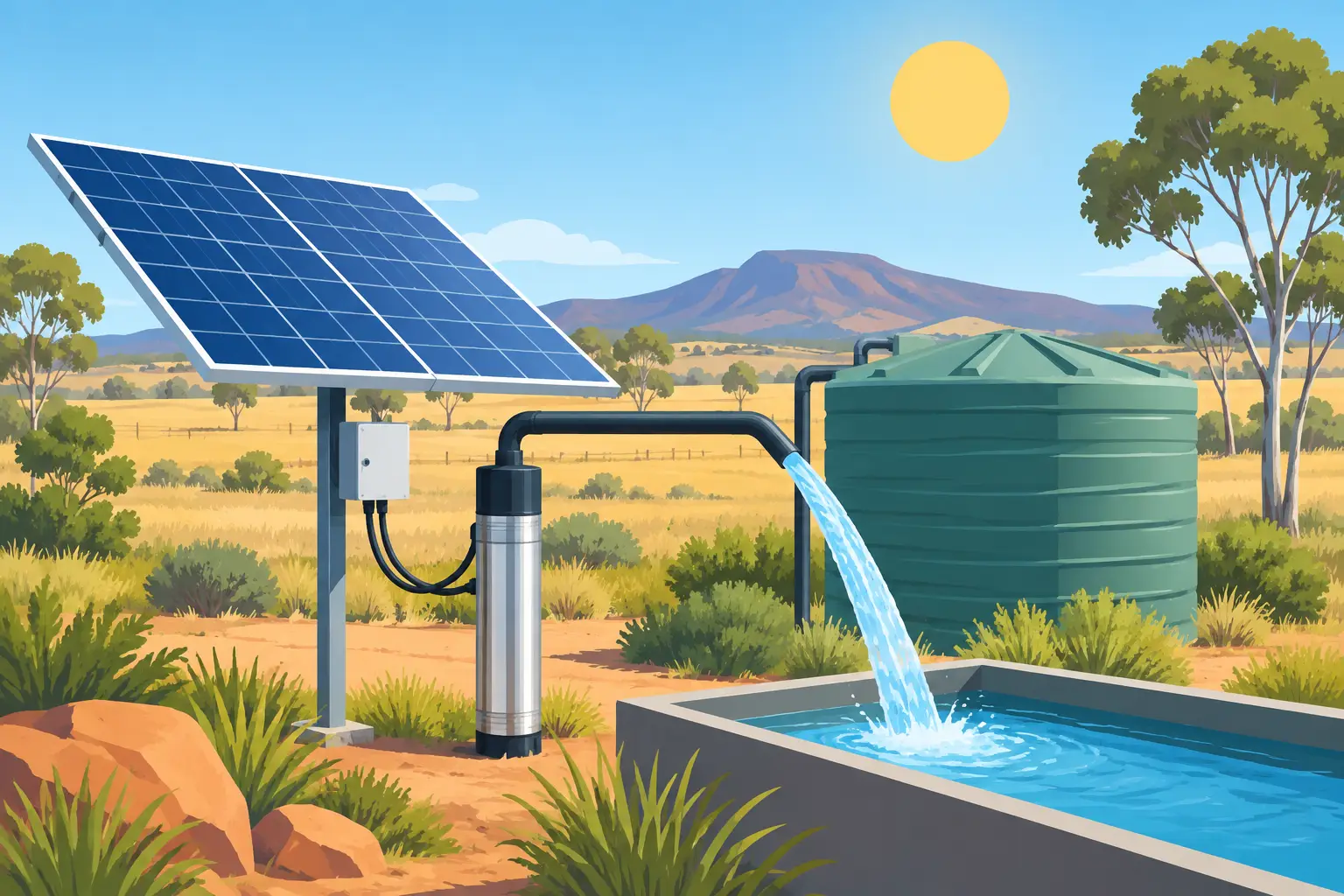
A solar pump can turn a dam, bore, creek or storage tank into a practical water source without running power cables across a paddock. But a good solar water pump review needs to look beyond the panel and the price tag. The right system is one that delivers the required water volume at the required pressure and height, through every season, with enough storage to cover cloudy periods.
For rural homes, acreage blocks, livestock operations and remote work sites, solar pumping can reduce generator use and simplify water distribution. It is not automatically the best answer for every application, though. A mains-powered or pressure pump may be more suitable where demand is high, water needs to be delivered at night, or consistent household pressure is the priority.
What a Solar Water Pump Does Well
Solar water pumps use photovoltaic panels to power a pump directly or through a controller. During daylight hours, the pump transfers water from the source to a tank, trough, header tank or irrigation storage point. In most well-designed systems, the tank is the battery. Water is pumped when sunlight is available, then stored for use later.
This approach suits sites where power is distant, unreliable or expensive to install. It is especially useful for moving stock water from a bore or dam to elevated tanks, filling rainwater storage from a remote source, or supplying a garden and small irrigation area where watering can occur during the day.
The operating costs are low once the system is installed. There is no fuel to handle, less routine attention than a generator setup, and no trenching required for long electrical runs. Quality equipment can also be a sound long-term investment when it is matched correctly to the job.
The trade-off is that output follows available sunlight. A panel array that performs well through summer may have lower output on short winter days or during extended overcast weather. This is why pump selection must start with water demand and storage capacity, not with the advertised wattage of a panel kit.
Solar Water Pump Review: The Numbers That Matter
Pump specifications can look technical, but four figures determine whether a system will perform properly: daily water demand, flow rate, total dynamic head and available solar hours.
Daily demand comes first
Calculate the amount of water required each day before considering the pump. Livestock demand changes with animal numbers, weather and feed. Household demand depends on the number of occupants and whether the supply also serves gardens, sheds or additional accommodation. Irrigation demand depends on the area, crop type and watering schedule.
Allow for peak use rather than average use alone. A tank and pump system that only just meets normal demand has little room for hot weather, a leak, increased stock numbers or a run of dull days. Storage provides the buffer, so it should be sized alongside the pump rather than treated as a separate purchase.
Flow rate is not the whole story
Flow rate is usually expressed in litres per minute or litres per hour. A high-flow pump looks appealing, but it may not deliver that number once it is lifting water uphill or pushing it through a long pipe run. For example, a pump that fills a trough quickly beside a dam may move considerably less water to a tank on a ridge.
A lower-flow solar pump can still be ideal when it runs for many daylight hours and fills a generously sized header tank. Conversely, a system needed to replenish large volumes in a short window may require more panel capacity, a larger pump, or a different power source.
Total dynamic head decides the real workload
Total dynamic head is the combined resistance the pump must overcome. It includes the vertical lift from the water source to the delivery point, friction losses in pipework, fittings and filters, and any pressure required at the outlet.
Vertical lift is easy to underestimate. Every metre of elevation adds work for the pump, and long runs of undersized pipe add friction that can dramatically reduce delivery. Pipe diameter, pipe length, bends, valves and filtration equipment all need to be considered. A pump curve is far more useful than a headline flow figure because it shows expected output at different heads.
Solar input changes throughout the year
Panels should be positioned to receive clear sunlight for as much of the day as possible. Shade from trees, buildings or nearby hills can reduce output well before the sun disappears behind them. Orientation, panel angle, dust and bird droppings also affect performance.
For a critical supply, design around the lower solar availability of winter rather than the best days of summer. A local assessment is valuable where the terrain is shaded or the water source sits well away from the proposed panel location.
Choosing the Right Pump Type
Surface pumps are generally used where the water level is relatively close to the pump. They can suit dams, creeks and shallow water sources, provided the suction lift remains within the pump’s operating limits. They should be installed in a protected location and fitted with appropriate intake screening to reduce debris entering the system.
Submersible pumps are installed down a bore, well or water source and push water upward. They are often the practical choice for deeper bores because pushing water is more effective than trying to pull it over a long vertical distance. The pump must suit the bore diameter, water depth, expected yield and water quality.
Diaphragm pumps are commonly selected for lower-flow, higher-head applications, including stock watering from bores. Centrifugal pumps can provide higher flows where head requirements are moderate. The best choice depends on the pump curve, not just the style of pump.
If the source contains sand, silt, algae or other debris, address that before choosing equipment. Abrasive material can shorten pump life, while organic matter can block strainers and filters. A suitable screened intake, floating pickup or bore protection arrangement is part of the system, not an optional extra.
Do You Need Batteries?
Often, no. For water transfer applications, adding more water storage is usually simpler and more economical than adding battery storage. A tank stores the pumped water without the replacement cycle, charging requirements and extra controls associated with batteries.
Batteries can be worthwhile where a pump must run after dark, where pressure needs to be maintained continuously, or where the same solar system supports other electrical loads. They also add cost and maintenance considerations. For many farm and acreage applications, pumping to a tank during daylight and using gravity or a separate pressure system later is the more dependable arrangement.
Installation Details That Affect Reliability
A solar pump system needs more than a pump, panels and pipe. Use correctly sized cable to minimise voltage drop, secure panels to a suitable mounting structure, and protect electrical components from weather, vermin and accidental damage. Controllers should be installed according to manufacturer requirements, with isolation and surge protection where appropriate.
On the water side, install valves so the system can be serviced without draining long pipe runs. Include a non-return valve where required, pressure relief where applicable, and float switches or tank level controls to prevent overfilling. Dry-run protection is particularly valuable for bores and tanks that can run low.
Plan access before installation. A bore pump will eventually need servicing or replacement, and panels need occasional cleaning and inspection. Equipment that is difficult to reach tends to receive less maintenance than it should.
When Solar Is Not the Best Fit
Solar pumping is less suitable when a property needs a large, immediate water flow at all hours, such as a high-demand household pressure system with limited tank storage. It may also be less practical in heavily shaded locations, narrow gullies or sites with frequent extended cloud cover unless the system is oversized or has an alternative power supply.
There are hybrid options. A solar transfer pump can fill a storage tank, while a conventional pressure pump supplies the house, amenities or washdown points. This separates the slow, efficient job of moving water from the immediate job of delivering pressure at a tap.
A Practical Buying Checklist
Before purchasing, confirm the daily litres required, source water level, vertical lift, pipe length and diameter, delivery point, required operating hours and available storage. Also check water quality, site shading, pump access and whether the system needs to meet household pressure demands or simply transfer water.
A properly sized solar pump is quiet, economical and highly useful on the right property. The most reliable result comes from treating the panels, pump, pipework, controls and tank capacity as one water system. If the figures are unclear, obtain advice before ordering equipment – a few accurate measurements at the start can prevent years of underperforming water supply.