


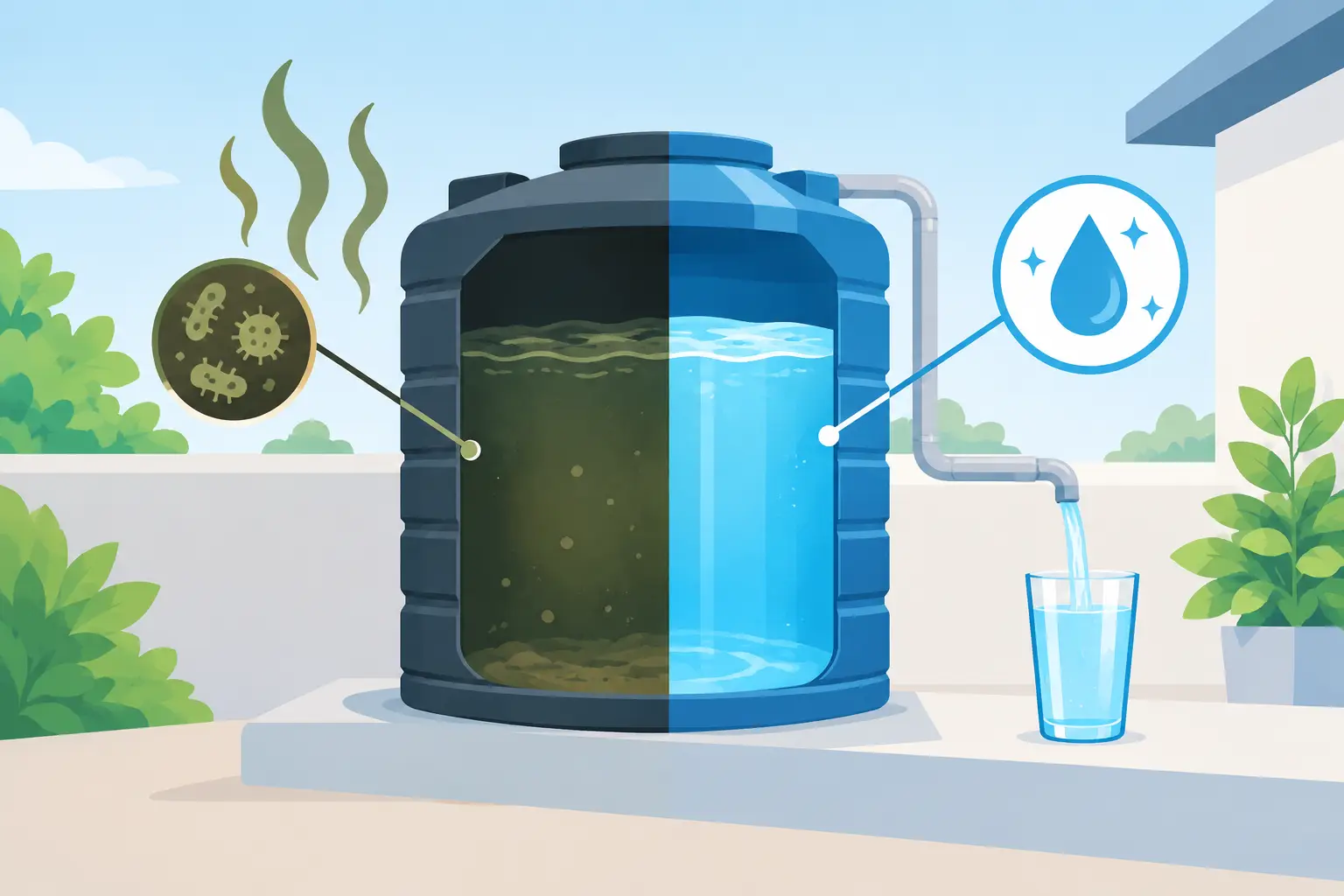
A rainwater tank should smell clean, neutral or faintly earthy after rain. If you notice a musty, rotten-egg, algae-like or chemical smell at the tap, treat it as a maintenance signal rather than something to mask. Knowing how to stop tank odours starts with identifying where the smell is entering the system – the roof, gutters, tank, pump line or treatment equipment.
For water used for drinking, cooking or food preparation, stop using the affected supply until you have found the cause and confirmed the water is suitable for use. An odour does not always mean the water is unsafe, but it can indicate organic contamination, stagnant water or a treatment problem that needs attention.
Find the source before treating the smell
Tank odours are usually caused by organic material breaking down. Leaves, pollen, bird droppings, insects and small animals can wash from a roof into the tank, particularly after a dry spell. Once inside, that material settles as sludge and creates a food source for bacteria. Warm weather and low water turnover can make the problem more noticeable.
A rotten-egg smell can occur when bacteria break down organic matter in low-oxygen areas near the tank bottom. A mouldy or swampy smell often points to decomposing leaf litter, algae growth or dirty gutters. If the smell is only present when a particular tap is used, the issue may be in the pipework, pump, pressure vessel or an old filter rather than the tank itself.
Start with a practical inspection of the whole rainwater harvesting system. Check the roof and gutter condition, leaf guards, inlet screen, first-flush diverter, tank lid, overflow mesh, pump pre-filter and cartridge filters. Look for built-up debris, damaged mesh, loose lids, standing water in gutters or evidence that vermin can enter the tank.
A strong plastic or chemical smell needs a different approach. New, certified food-grade tanks and fittings may have a temporary manufacturing smell, especially in hot weather, but it should not persist. Never add household cleaners, fragrances or unapproved chemicals to cover an odour. They can make the water unsuitable for household use and may damage tank components.
How to stop tank odours at the source
The most reliable fix is to remove the contamination and prevent it from returning. The right level of cleaning depends on the tank size, the amount of sediment and whether the water is used for garden supply only or household consumption.
Clean the collection area first
There is little value in cleaning a tank if dirty roof runoff will refill it at the next shower. Clear leaves, twigs and accumulated sediment from gutters. Trim branches that overhang the roof where practical, as they drop leaf litter and give birds and small animals easier access to the catchment area.
Inspect gutter protection as well. Mesh that is clogged, poorly fitted or too coarse can allow fine debris through while still making gutters difficult to clean. The best setup depends on the roof type, surrounding trees and local weather conditions. A property beneath heavy tree cover will usually need more frequent checks than an open rural block.
Service the first-flush diverter
A first-flush diverter directs the dirtiest initial roof runoff away from the tank. This is particularly useful after dry, dusty weather, when roofs hold pollen, droppings and fine dirt. If the diverter is too small, blocked or not draining properly, it cannot do its job.
Check that its drain valve operates correctly and that the unit empties between rainfall events. The required volume varies with roof area and site conditions, so a suitable diverter should be selected for the catchment rather than treated as a one-size-fits-all accessory.
Remove sediment and organic sludge
Sediment naturally collects at the bottom of most rainwater tanks over time. A small amount is normal, but heavy sludge can cause recurring odours, block filters and reduce available storage capacity. If the tank has a noticeable odour, visible discolouration or years of accumulated debris, it may need professional cleaning.
Do not enter a water tank to clean it. Tanks are confined spaces and may contain hazardous gases or low oxygen levels. Safe cleaning normally involves appropriate equipment, controlled removal of sludge and cleaning methods suited to the tank material and water use. For older concrete tanks, cleaning is also a good opportunity to check for cracks, deteriorating surfaces and liner issues.
After cleaning, allow the tank to refill with clean rainfall where possible. If disinfection is required, use a method and dose suitable for rainwater storage and the intended use of the water. For drinking-water systems, seek practical advice before disinfecting or returning the supply to service.
Protect the tank from new contamination
A well-maintained tank should be closed to light, insects, vermin and windblown rubbish. Sunlight encourages algae growth, while gaps around the lid or inlet can allow contamination to enter even when gutters appear clean.
Check that the tank lid fits securely and that every inlet, overflow and vent has intact insect-proof mesh. Replace cracked screens or damaged seals promptly. Overflow mesh is often forgotten, yet it can be an entry point for mosquitoes, frogs and small animals.
A calming inlet can also help. Rather than disturbing sediment whenever water enters the tank, it directs incoming water more gently and reduces turbulence at the bottom. Drawing water from below the surface with a floating outlet can further improve water quality because it avoids the sediment layer at the base and any floating material on top.
Tank location matters too. A tank exposed to full sun may run warmer than one with shade or suitable protection, which can speed up biological activity. Shade can be helpful, but avoid placing the tank where leaf litter will constantly build up on the roof and around the inlet. Good access for inspections and tank cleaning is just as important as the initial installation location.
Check filters, pumps and pipework
If the tank itself smells acceptable but water at the tap does not, work downstream through the system. Sediment and carbon filters have a service life. Once a cartridge is loaded with debris or has been left unchanged for too long, it can become a source of odour rather than a solution.
Replace cartridges according to their capacity, water quality and household demand, not just when the flow rate drops. A busy household on rainwater may need more frequent filter changes than a holiday cabin or shed supply. Clean reusable strainers and pump pre-filters at the same time.
Water sitting in unused pipework can also develop a stale smell. Flush rarely used lines, outdoor taps and long runs to sheds or accommodation. If an odour appears only after the pump has been off for an extended period, inspect the pressure system and make sure water is not stagnating in dead-end sections of pipe.
UV sterilisation can be valuable for a properly designed drinking-water system, but it does not remove sediment, odours or dissolved organic matter on its own. UV works best after effective pre-filtration, with a clean lamp sleeve and the correct flow rate. It is a treatment barrier, not a substitute for a clean roof and tank.
Set a maintenance routine that suits your property
Odour problems are easier and less expensive to prevent than to correct. On rural and coastal properties, conditions can change quickly with storms, bushfire smoke, long dry periods, nearby vegetation and wildlife activity. Inspect the system after major weather events and before the wetter season starts.
As a practical baseline, check gutters, screens and the first-flush diverter every few months, or more often where trees are close to the roof. Inspect filters on their scheduled service interval and clean pump strainers whenever flow drops. Arrange a tank assessment when water develops a persistent smell, sediment becomes visible, or the tank has not been cleaned for several years.
For households relying on rainwater as their main supply, keep records of filter changes, cleaning dates and any water quality concerns. It makes recurring faults easier to trace and helps ensure the system remains dependable through dry weather.
North Coast Water Tanks can assist with practical tank cleaning, filtration, pumps, accessories and advice for complete rainwater systems. The right solution may be as simple as a cleaned diverter and fresh filter cartridges, or it may involve tank cleaning and upgrades to the inlet and outlet arrangement.
A clean-smelling tank is the result of a system working properly from roof to tap. Address the first sign of an odour, keep contamination out at the collection point, and your stored water will be easier to manage and more reliable when you need it most.