

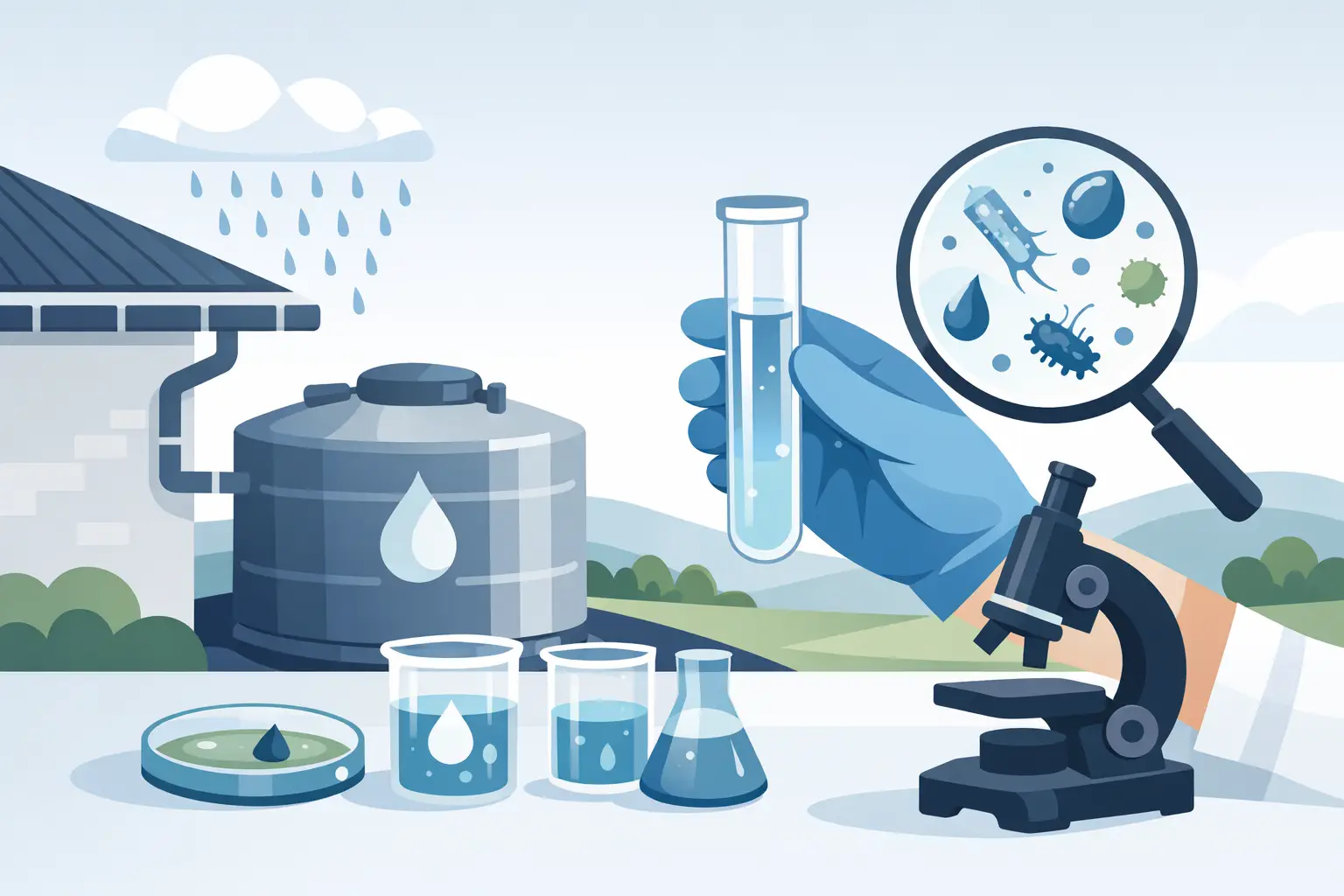
A clean-looking tank is not proof that the water is suitable for drinking. Rainwater quality testing gives homeowners, farmers and business operators a clear picture of what is happening between the roof, gutters, tank and tap. It replaces guesswork with results you can act on, whether the water supplies a family home, a workers’ shed, livestock facilities or a weekend property.
For many Australian properties, rainwater is a practical and valuable supply. Its quality, however, depends on the whole system. Bird droppings on the roof, leaf build-up in gutters, an uncovered inlet, sludge in the bottom of the tank or poorly maintained filters can all affect the water delivered to the household.
When should you arrange rainwater quality testing?
Testing is most useful before relying on tank water for drinking, food preparation or other household use. It is also sensible after purchasing a property with an existing tank, installing a new harvesting system, completing tank repairs, or changing the roof catchment and plumbing.
There are other times when testing should move up the priority list. A noticeable change in taste, odour, colour or clarity warrants investigation, particularly if it follows a long dry spell, heavy rainfall, flooding, bushfire smoke, pest activity or a period when the tank has not been maintained. Illness in the household may also be a reason to speak with a health professional and arrange testing, although a water result alone cannot diagnose the cause.
Properties using rainwater as their only drinking supply should consider a regular testing schedule based on risk and usage. A well-maintained household system with effective filtration and disinfection may need less frequent testing than an older tank with overhanging trees, frequent wildlife activity or a high-use commercial application. There is no single timetable that suits every property.
What a rainwater quality test can check
The right test depends on how the water will be used. Water for garden irrigation does not require the same level of assurance as water used for drinking, washing and cooking. Start by telling the laboratory exactly where the sample comes from and how the water is used.
For drinking water systems, microbiological testing is usually the first priority. This can test for indicator organisms such as E. coli and total coliforms, which may point to contamination from animal or human waste. A result can help identify whether contamination is entering from the roof catchment, tank access points or downstream plumbing.
Physical and chemical testing may assess pH, turbidity, conductivity, total dissolved solids and metals. Turbidity matters because suspended particles can reduce the effectiveness of UV disinfection and can indicate sediment, organic matter or poor filtration. Testing for metals can be relevant where there are older roof materials, flashings, pipework or fittings, or where the property has a particular local risk.
A standard package is not always the right package. For example, a rural property near intensive agriculture, industry or a former contaminated site may need a more targeted discussion with an accredited laboratory or water treatment specialist. Testing should reflect the system and the risks, rather than simply selecting the broadest available panel.
Testing the water at the right point
A sample taken directly from the tank can show the condition of stored water, but it may not show what comes out of the kitchen tap. For household drinking water, a sample from the tap after the treatment system is often the most useful result. If there is a concern about the tank itself, comparing a tank sample with a tap sample can help narrow down where the issue is occurring.
This distinction matters. A clean tank sample and a poor tap sample can indicate problems with filters, UV equipment, pipework or a stagnant section of plumbing. A poor tank sample may point to roof catchment hygiene, faulty screens, an open access point or built-up sediment.
How to take a reliable sample
A laboratory will provide the correct sterile bottle, instructions and delivery timeframe for microbiological samples. Follow these directions closely. Using a household jar, touching the inside of the lid or leaving the sample in a warm vehicle can make a result unreliable.
Where a tap sample is required, remove any attachment such as a filter jug connection or hose fitting, then follow the laboratory’s flushing instructions. Do not sample from a tap that has just been disinfected unless the laboratory instructs you to do so. Label the bottle clearly with the sample location, date and time, and keep it cool until it is delivered.
If you are testing because of a suspected problem, avoid carrying out a major clean, chlorine dose or filter change immediately beforehand. That may be the right maintenance work, but it can mask the condition you are trying to assess. Take the sample first where practical, unless there is an immediate health concern and the water should not be used for drinking.
Reading results without jumping to conclusions
A laboratory report is a useful starting point, not a complete maintenance plan. Results should be considered alongside the tank’s condition, recent weather, treatment equipment and intended use. Australian Drinking Water Guidelines provide a recognised reference point for drinking water quality, but the appropriate response can still vary from one system to another.
A failed microbiological result does not automatically mean the tank must be replaced. In many cases, the source can be addressed through practical work: cleaning gutters, improving leaf guards, fitting or repairing insect-proof screens, sealing tank openings, cleaning accumulated sludge, replacing filters or servicing a UV unit. Disinfection may be required, but it works best after the contamination pathway has been dealt with.
Likewise, low pH or elevated turbidity should not be ignored, but neither result tells the whole story by itself. Rainwater is naturally soft and may be slightly acidic. The concern is how that water interacts with roofing, plumbing, storage and treatment equipment over time. High turbidity may call for better pre-filtration, tank cleaning or a review of the first-flush system.
The maintenance steps that protect water quality
Testing identifies what is in the water on a particular day. Ongoing maintenance reduces the chance of poor results returning. A dependable rainwater system starts at the roofline and finishes at the point of use.
Keep gutters and roof valleys clear of leaves and organic debris. Check that inlet screens are intact and fine enough to exclude mosquitoes and insects, while allowing water to enter freely. Make sure the tank lid, inspection opening and overflow are properly screened and secured. These small details are often where contamination enters.
First-flush devices can reduce the initial load of dust, bird droppings and debris washed from the roof after dry weather. They need periodic emptying and inspection to work properly. If the property is surrounded by trees or exposed to high dust loads, a first-flush system may need more attention than one on an open suburban block.
Tank cleaning is not required on a fixed schedule for every system. It becomes more relevant when sediment is visible, water quality results indicate a problem, water flow is restricted, or there has been significant contamination. Cleaning should be paired with inspection of the tank, inlet, screens and plumbing so the same issue does not build up again.
For drinking supplies, filters and UV sterilisation equipment need servicing at the manufacturer’s recommended intervals. A UV unit with an overdue lamp, dirty sleeve or inadequate pre-filtration may still appear to be operating while providing reduced treatment. Cartridge filters also need timely replacement, as an overloaded filter can restrict flow and become a hygiene issue itself.
Building a system that is easier to test and maintain
The best rainwater systems make routine checks straightforward. An accessible inspection point, properly positioned isolation valves, a suitable sampling tap and clear labelling of filter stages all make maintenance less disruptive. It also helps to keep a simple record of tank cleaning, filter changes, UV lamp replacements, rainfall events and previous test results.
For larger rural, commercial or multi-building systems, consider the whole water path before selecting treatment. Storage volume, pump duty, peak demand, sediment load and whether water is supplied to accommodation or food areas will affect the equipment required. A treatment train that is suitable for a small home may not be suitable for a high-demand property.
North Coast Water Tanks can help property owners assess tank condition, filtration, pumps and treatment equipment as one connected system. That practical approach is useful when a test result shows a problem but the cause is not obvious.
Good rainwater quality is not achieved by testing once and forgetting about it. Use test results to guide sensible maintenance, keep the catchment and tank protected, and make sure your filtration or UV equipment is serviced when due. That is how stored rainwater remains a dependable supply when you need it most.