


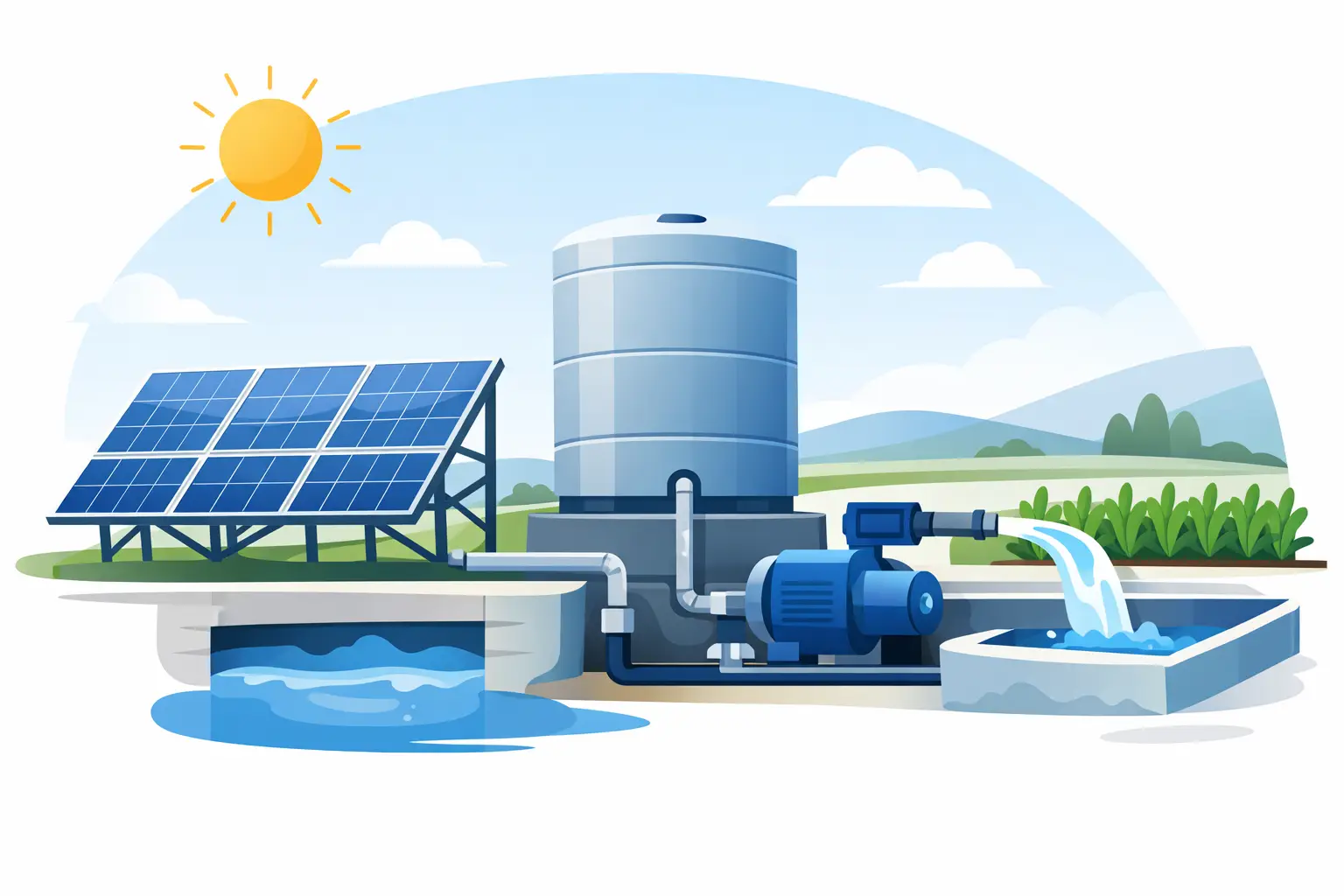
A tank can be full after good rain, yet still be of limited use if water cannot reach the house, troughs, garden or wash-down point when it is needed. A well-designed solar tank pump setup turns stored water into a practical supply without relying on long power runs, costly diesel operation or an unreliable grid connection. The key is sizing the whole system around water demand and pumping conditions, not simply matching a solar panel to a pump.
For rural properties, acreage blocks, stock water systems, sheds, tiny homes and remote sites, solar pumping can be a dependable long-term solution. It does, however, need to account for seasonal sunlight, vertical lift, pipe length, tank levels and the type of water use. Getting these details right at the start prevents weak pressure, pump cycling and premature equipment failure later.
Start with the water job, not the pump
The first decision is what the pump must actually do. Filling a header tank during daylight hours is very different from supplying steady household pressure at the kitchen tap. A trough system may need a modest daily volume over a long distance, while irrigation may require high flow for a shorter period. These uses call for different pump curves, pipe sizes and control arrangements.
Work out how many litres are required each day, the expected peak demand and when the water is needed. Household demand is usually concentrated in the morning and evening, while solar generation is strongest around the middle of the day. That mismatch matters. If water must be available on demand, a pressure tank, elevated header tank, battery-backed system or grid-connected backup may be appropriate.
Next, calculate total dynamic head. This is more than the height between the water level in the tank and the outlet. It also includes friction loss through pipework, bends, valves, filters and fittings, plus the pressure needed at the delivery point. A pump that appears large enough based on vertical lift alone can perform poorly once long pipe runs and filtration are included.
As a practical example, moving water from a ground-level rainwater tank to a trough uphill may require only moderate flow but substantial head. Moving water from a tank to a nearby garden can require low head but higher flow. The right selection is based on the pump performance curve at the required duty point, not its maximum flow figure on the box.
Choose the right solar tank pump setup type
Most solar pumping systems use either a dedicated DC solar pump or an AC pump supplied through an inverter. Both can work well when selected for the application.
A dedicated DC solar pump is often a sensible choice for remote tank filling, stock water and transfer duties. It can operate directly from solar panels through a purpose-designed controller, which manages changing sunlight levels and protects the motor. These systems are efficient and avoid some of the conversion losses associated with an inverter.
An AC pressure pump may suit a home or shed already using conventional 240V pumping equipment. It can be powered by a solar and battery system or used alongside mains power and a changeover arrangement. This approach can make sense where household pressure, existing appliances and after-dark water use are priorities, but it is generally more complex and may require a larger battery and inverter capacity.
Submersible pumps are commonly used where water must be lifted from a deep tank, dam or bore. Surface-mounted pumps are easier to inspect and service, but they have limits on suction lift and need sound priming arrangements. For water tanks, a surface pressure pump or submersible transfer pump may both be viable depending on access, water level and delivery requirements.
Size panels for winter, not a perfect summer day
A solar pump that runs strongly in January but barely moves water during a cloudy winter week is not a reliable system. Panel capacity should be matched to the pump’s power demand, the controller specifications and the lowest expected solar conditions at the site.
Panel orientation, shading and mounting quality have a direct effect on output. Even partial shade from a tree branch, roof vent or nearby structure can significantly reduce production. Position panels where they have clear access to the northern sky and can be safely cleaned and inspected. A fixed array is often practical, although tilt angle should be considered where winter pumping is critical.
Oversizing the solar array within the controller’s approved input limits can improve pumping hours in lower light. It does not make up for an undersized pump or restrictive pipework, but it provides useful operating margin during overcast periods. For properties that cannot afford missed pumping days, this margin is often worthwhile.
Keep the panel run and pump cable sizing in the design process. Long undersized cable runs create voltage drop, which reduces pump performance and can cause controller faults. Use appropriately rated cable, weatherproof conduit where required and properly sealed connections suitable for Australian outdoor conditions.
Include controls that protect the water supply
The most useful solar pumping systems are not simply switched on and left to run. They use controls that protect the pump, prevent overflow and maintain water where it is needed.
A dry-run sensor or low-water cut-out protects the pump if the source tank runs low. This is particularly important where one tank supplies another, or where a dam or bore level can vary. A high-level float switch in the destination tank stops pumping when storage is full. Together, these controls prevent wasted power, overflowing tanks and damage caused by running a pump without adequate water.
For household pressure applications, a pressure controller or pressure tank reduces frequent start-stop cycling. Repeated cycling is hard on motors, switches and seals. A correctly set pressure tank also gives a more stable flow at taps and can reduce nuisance pump starts from small leaks or minor water use.
A simple manual override can be useful, but it should not bypass essential protections. Controllers, isolators and switching equipment should be installed in accessible locations, protected from weather and clearly labelled. Electrical installation must be completed by a licensed electrician, with equipment selected and installed to applicable Australian requirements.
Give the plumbing the same attention as the pump
A high-quality pump cannot overcome poor plumbing design. Undersized pipe creates friction losses, especially over long distances, and can turn an otherwise suitable system into a disappointing one. Larger diameter pipe often costs more upfront but can improve flow, reduce energy use and allow a smaller pump to do the job.
Use a screened tank outlet and suitable pre-filtration to keep leaves, sediment and insects away from pump components. If rainwater is being supplied to a home, filtration should be designed around the intended use. Sediment filters protect fixtures and pumps, while finer filtration and UV sterilisation may be required where water quality treatment is part of the household supply plan.
Install isolation valves so filters, pumps and sections of pipework can be serviced without draining the entire system. Non-return valves may also be needed to maintain prime, stop backflow and protect equipment, particularly on transfer lines and systems with elevation changes. Every fitting adds restriction, so keep the layout direct and avoid unnecessary bends.
Plan for storage and backup
Solar pumping works best when the water tank itself is treated as the energy storage system. Rather than storing large amounts of electricity in batteries, use solar power during the day to move water into a header tank or a larger storage tank. The stored water is then available when sunlight is low or demand occurs after dark.
This arrangement is often more economical and easier to maintain than building a large battery bank purely for pumping. It depends on having enough water storage for several days of demand and enough available volume in the receiving tank before a sunny pumping period begins.
Where water supply is critical, include a backup plan. This could be a mains-powered pump, generator connection, battery support or a second pump arrangement. The best option depends on the location, budget and consequence of running out of water. A home relying solely on tank water has different backup needs from a stock trough system with alternative dams nearby.
Commission carefully and maintain routinely
Before relying on the system, test it under realistic conditions. Confirm the pump reaches the required flow and pressure at the outlet, check float switches stop and start correctly, inspect every joint for leaks and make sure the controller responds properly to low sunlight and low water levels. Record pressure settings, filter types and normal operating performance for future troubleshooting.
Routine maintenance is straightforward but should not be ignored. Clean panels when dust, salt spray, bird droppings or leaf debris reduce output. Check tank screens, clean or replace filters on schedule, inspect cables and fittings for weather damage, and listen for changes in pump noise or cycling behaviour. A sudden drop in flow may point to a blocked filter, air leak, worn pump component or low tank level rather than a solar fault.
North Coast Water Tanks can help property owners match tanks, pumps, filtration, accessories and practical installation advice as one coordinated water solution. The most dependable result comes from designing for the actual site conditions, then leaving room for dry weather, maintenance access and future water demand.