


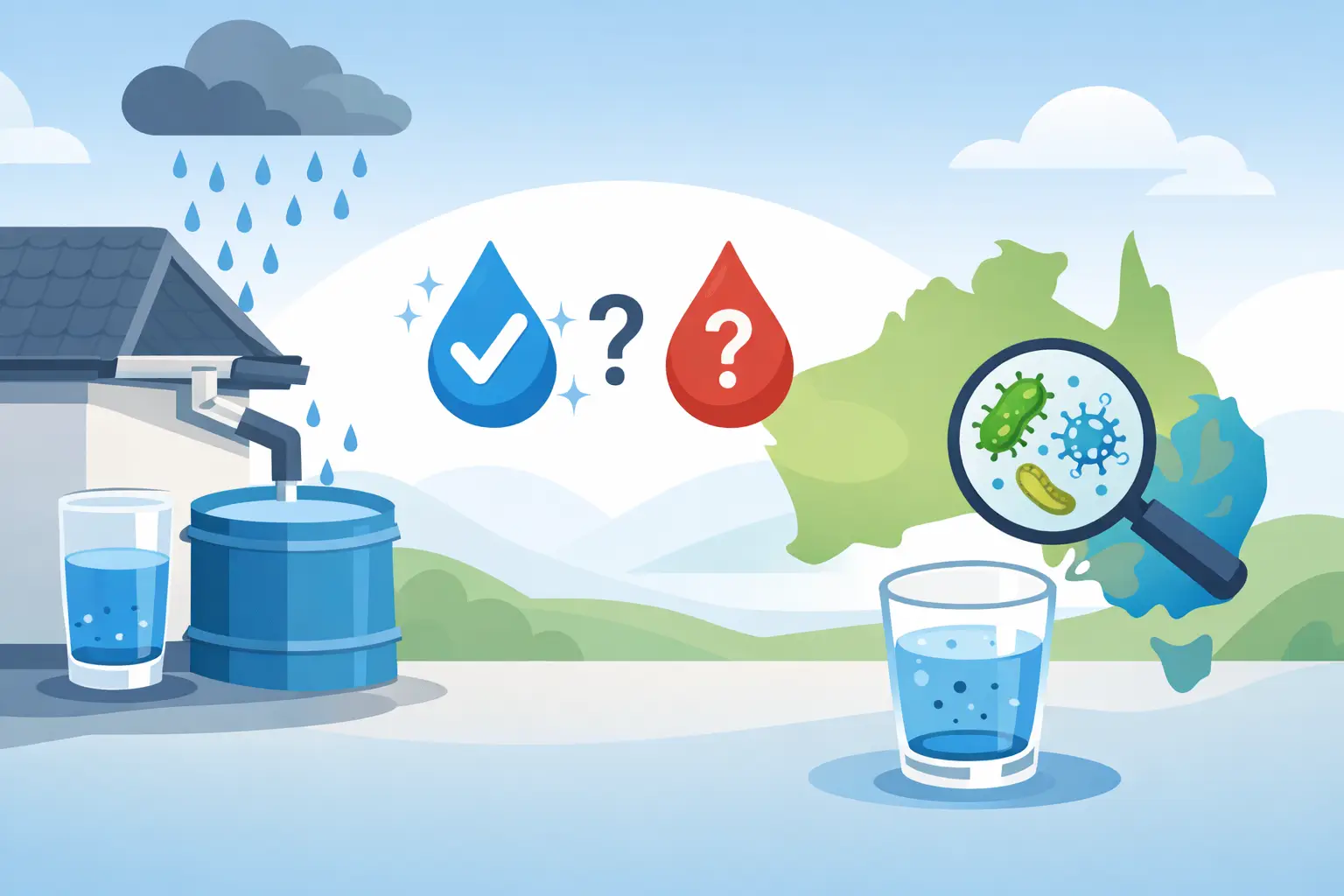
A lot of Australian households drink rainwater every day without a problem, but that does not mean every tank is automatically supplying drinking water. If you are asking is rainwater safe to drink, the honest answer is yes – if the system is designed well, maintained properly, and treated where needed.
That distinction matters. On a house, farm, shed, tiny home or commercial site, rainwater quality is shaped by what lands on the roof, how it moves through the gutters, what happens inside the tank, and whether the water is filtered or disinfected before it reaches the tap. Good storage and treatment make the difference between a dependable drinking supply and water that is only suitable for non-potable use.
Is rainwater safe to drink from a tank?
Rainwater itself starts relatively clean, but it can pick up contaminants before it ever reaches your tank. Dust, leaves, bird droppings, insects, possums, roof debris and airborne pollutants can all wash into the system during rainfall. If the roof or guttering is in poor condition, or the tank is not sealed properly, that risk increases.
For many regional and rural properties, tank water is the main household supply, so drinking rainwater is common. In practical terms, whether it is safe depends on the full setup rather than the rain alone. A food-grade tank, a clean catchment area, effective screening, first flush diversion, and suitable filtration or UV sterilisation all improve safety. If any of those pieces are missing, your drinking water quality can suffer.
This is why a well-built rainwater harvesting system should be treated as infrastructure, not just storage. The tank matters, but so do the pump, filtration, overflow design, inlet screens and ongoing maintenance.
What can make rainwater unsafe to drink?
The most common issues come from contamination entering the system and then being left unchecked. Organic matter such as leaves and animal droppings can introduce bacteria and affect taste and odour. Fine sediment can build up over time inside the tank. Mosquito entry, dead animals in gutters, or cracked lids can all create hygiene problems.
Roofing material also plays a part. Most modern roof catchments are suitable for harvesting rainwater, but some surfaces may be less appropriate for potable use if they leach harmful substances or collect heavy contamination. Old roofs with flaking coatings, lead flashing in poor condition, or nearby industrial fallout can raise concerns.
Bushfire conditions are another Australian reality. After smoke, ash or significant airborne debris events, tank water may need to be inspected, tested or treated before drinking. The same applies after long dry spells when roofs and gutters accumulate more debris and the first decent rain washes everything into the system.
Water can also become unsafe after it is stored. Warm conditions, poor turnover, sediment build-up and inadequate disinfection can allow microorganisms to persist. A tank that looks fine from the outside can still have internal water quality issues.
When rainwater is generally suitable for drinking
Rainwater is more likely to be suitable for drinking when the collection area is clean, the tank is built from certified materials, the system is sealed against vermin and insects, and treatment is matched to the intended use. Many households use a combination of sediment filtration and UV sterilisation to supply kitchen and whole-of-house drinking water with greater confidence.
If your property relies heavily on tank water, especially for full-time residential use, it makes sense to plan for potable quality from the start rather than adding bits later. That means choosing food-grade, Australian-standard-compliant components and ensuring the system is sized and configured properly for your household demand.
This is especially relevant for families with young children, older residents, or anyone with a compromised immune system. In those cases, a higher standard of treatment and maintenance is a practical safeguard, not an optional extra.
How to make rainwater safer to drink
The most reliable approach is to control contamination before it enters the tank, then treat the water before use where required. Start at the roof. Keep it clear of heavy leaf litter, bird nests and overhanging branches. Clean gutters regularly and make sure downpipes are in sound condition.
A first flush diverter helps by directing the dirtiest initial runoff away from the tank. This is one of the simplest ways to reduce sediment and organic contamination. Inlet strainers and mosquito-proof screens are also essential. They stop debris, insects and vermin from getting into stored water.
Inside the system, filtration should be chosen based on what you want the water to do. A basic sediment filter can remove larger particles, but that alone does not make water microbiologically safe. Carbon filters can improve taste and odour, while UV sterilisation is commonly used to reduce microbial risk for drinking water. In some applications, a multi-stage setup is the right fit.
Pump and plumbing design matter too. If the water is for household consumption, the delivery system should be installed to maintain consistent pressure and support the treatment equipment properly. Undersized or poorly matched components can affect performance.
Maintenance is what keeps drinking water safe
Even the best system will not stay effective without regular maintenance. This is where many water quality issues begin. Property owners often install a good tank and assume the job is done, but tank water is only as dependable as the upkeep behind it.
Gutters should be cleaned, especially before wetter months and after storms. Screens need checking for damage or blockages. First flush devices should be emptied and kept operational. Filters require replacement on schedule, not when someone gets around to it. UV systems need servicing and lamp replacement according to manufacturer requirements.
Tank inspections are also worthwhile. Look for signs of sludge build-up, internal contamination, damaged lids, light entry or access points for pests. If sediment has built up heavily over time, tank cleaning may be needed. That is particularly important for older systems or tanks that have been neglected.
If you notice unusual taste, smell, discolouration, or reduced flow through the filtration line, treat that as a warning sign. Water quality problems rarely improve on their own.
Is rainwater safe to drink without filtration?
In some situations, people do drink untreated rainwater from well-maintained systems, particularly in rural areas. But from a practical risk-management point of view, relying on untreated tank water for drinking is less certain. A clean roof and sealed tank help, but they do not eliminate microbial risk.
If the water is for toilets, laundry, garden use or stock washdown, treatment expectations are different. If it is for drinking, cooking and brushing teeth, the standard should be higher. Filtration and UV treatment provide a much stronger level of assurance, especially where tank water is your only source.
That is why many property owners choose to install treatment even when the water looks clear. Clear water is not the same as safe water.
Who should be more cautious?
Some households need to be more careful with rainwater as a drinking source. Babies, elderly residents, pregnant women and people with weakened immune systems are more vulnerable to contaminated water. If your household includes anyone in those groups, proper treatment becomes even more important.
Short-stay accommodation, farm worker housing, offices and commercial sites should also be managed carefully. If multiple people rely on the same water supply, there is more reason to ensure the system is maintained consistently and the treatment setup is fit for purpose.
For caravan, RV and off-grid setups, the same rule applies on a smaller scale. Water collection can be effective, but storage hygiene and treatment still need attention. Smaller systems can go off faster if they sit in heat or are not cleaned properly.
Getting the system right from the start
If you are building a new rainwater system or upgrading an old one, it pays to think beyond tank size alone. The right answer usually involves matching storage, pump pressure, household demand and water treatment into one workable setup. That is where experienced advice saves time and avoids expensive rework.
A reliable drinking water system should be designed around your actual use case. A home on tank water full-time needs a different approach from a shed collecting water for washdown, and both differ again from a farm or commercial installation. There is no one-size-fits-all answer, which is why practical guidance matters.
North Coast Water Tanks works with property owners who need that full-system approach – storage, pumping, filtration and local support – because safe water depends on how all the parts work together.
If you are asking whether your own rainwater is safe to drink, start by looking at the condition of the whole system, not just the tank. Clean collection, quality components and regular maintenance go a long way, and when drinking water is the goal, proper filtration and disinfection are a smart investment.