


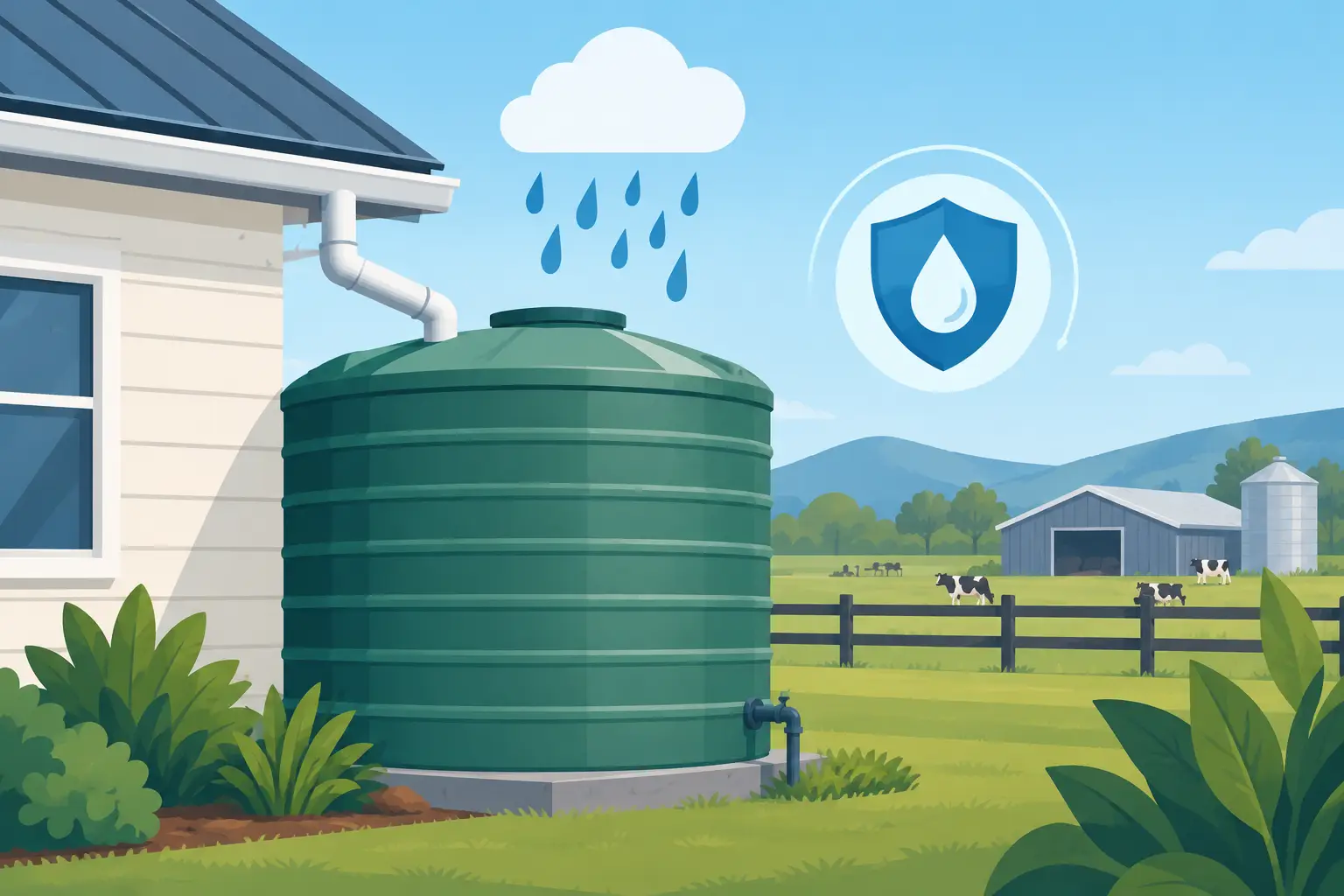
A rainwater tank is only as safe as the water entering it and the way the system is maintained. Rainwater tank safety is not limited to choosing a quality tank. It includes the roof catchment, gutters, screens, lids, overflow, pump, pipework and treatment equipment that work together to protect your water supply.
For households, farms and acreage properties that rely on stored water, a neglected detail can quickly become a bigger problem. Leaves and bird droppings can affect water quality, mosquitoes can breed in unprotected openings, and an unsecured lid creates a serious safety risk. A practical maintenance routine helps prevent these issues before they interrupt your water supply.
Start with a safe catchment area
Your roof is the first stage of your rainwater system. Dust, leaves, pollen, bird droppings and debris collect on the roof between rainfall events, then wash towards the tank when it rains. A clean roof and clear gutters reduce the load on your tank filters and improve the quality of stored water.
Trim overhanging branches where practical. This limits leaf build-up, makes gutter cleaning more manageable and reduces access for possums, rodents and birds. If trees provide valuable shade or wind protection, removing them may not be the right answer. In that case, more frequent gutter maintenance and effective gutter guards may be the better approach.
A first-flush diverter is worth considering, particularly where rainwater is used inside the home. It diverts the first portion of runoff, which often carries the highest concentration of dust and contaminants, away from the tank. It needs regular cleaning to work properly. A full first-flush device can become another source of stagnant water if it is ignored.
Avoid collecting water from roof areas that may be exposed to chemical overspray, industrial fallout or unsuitable materials. If you are uncertain about the condition of an older roof, ask for practical advice before connecting it to a drinking water system.
Keep every tank opening secure
A tank lid should fit securely and remain in place in strong wind. All inlets, overflows and vents need appropriately fitted insect-proof screens. This protects against mosquitoes, frogs, rodents, reptiles and rubbish entering the tank, while still allowing water and air to move as intended.
Screens deserve regular attention. Fine mesh can block with leaf litter and reduce overflow capacity during heavy rain. Damaged mesh can leave a gap large enough for mosquitoes or vermin to enter. Check screens after storms and when cleaning gutters, then replace any mesh that is torn, brittle or loose around the fitting.
A secure lid is also a child-safety measure. Never leave inspection openings uncovered, even while carrying out maintenance. Tank access points should not be used as a storage shelf or platform, and children should be kept away from ladders, valves and pump controls.
Never enter a rainwater tank
A water tank is a confined space. It can contain low oxygen levels, harmful gases, slippery surfaces and water deep enough to cause drowning. Cleaning a tank from the inside is not a DIY job.
Do not climb into a tank or send another person in without properly planned confined-space procedures, trained personnel and suitable equipment. Professional tank cleaning services can assess sediment levels, safely remove sludge and inspect internal components without putting household members, staff or contractors at unnecessary risk.
Protect water quality inside the tank
Stored rainwater can be suitable for a range of uses, but the treatment required depends on how the water will be used. Water for garden use, toilet flushing or stock may need a different level of treatment from water supplied to kitchen taps, showers and drinking outlets.
Sediment is normal in rainwater tanks. Fine particles settle to the base over time, which is why the outlet should generally draw water from above the bottom of the tank rather than directly from the sediment layer. If water appears dirty, develops an odour, changes colour or has visible particles, investigate the cause rather than relying on the pump to push through it.
For household drinking water, a correctly selected filtration system can remove sediment and improve taste and clarity. UV sterilisation may be appropriate where microbial control is required, but only when the water is adequately pre-filtered. Cloudy water can reduce UV performance because particles shield microorganisms from the light.
Filters are not fit-and-forget equipment. Replace cartridges on schedule, clean housings correctly and check for leaks after servicing. A blocked filter can reduce water pressure and place extra strain on a pump. An overdue filter can also become a hygiene concern rather than a solution.
If you have concerns about drinking water quality, arrange testing through an appropriate laboratory or speak with a qualified water treatment supplier. This is particularly sensible after floodwater contamination, a pest issue, extended periods of low use or work on the roof, gutters or tank.
Manage pumps, pipework and cross-connections safely
Your pump and plumbing arrangement has a direct effect on rainwater tank safety. Electrical connections should be protected from weather and installed or assessed by a licensed electrician where required. Keep the pump area dry, ventilated and accessible, with pipework supported so fittings are not under unnecessary stress.
Check for leaks at the pump, pressure controller, tank outlet and filters. A slow leak can waste a surprising amount of stored water, cause a pump to cycle repeatedly and leave wet ground around electrical equipment. If a pump is losing pressure, running when no tap is open or making unusual noise, address it early.
Properties with both mains water and tank water need particular care. The two supplies must be separated correctly to prevent backflow or accidental cross-connection. This is not an area for improvised plumbing. Use a licensed plumber and make sure the work complies with local requirements and the applicable Australian standards.
Clearly identify rainwater taps where needed, especially on commercial sites, farms or properties with multiple buildings. If tank water is not treated for drinking, make that clear to family members, guests, employees and contractors.
Inspect the tank structure and base
A safe tank starts with suitable installation. The base must be level, compacted and sized to support the full weight of the tank. Water is heavy: a 10,000-litre tank holds about 10 tonnes of water before allowing for the weight of the tank itself. Uneven support can stress a poly tank base, while poor site drainage can undermine foundations or create boggy access around fittings.
Inspect the outside of the tank several times a year. Look for movement around the base, pooling water, corrosion on steel components, cracks in concrete, damaged fittings and signs of UV wear. Check that overflow water is directed away from buildings, tank foundations and high-traffic areas.
For steel, Aquaplate or concrete tanks, watch for corrosion, coating damage and leaks around seams or penetrations. Tank liners require their own checks for tears, poor tension or debris that may damage the liner. Repairs are usually more manageable when found early, before water loss or structural deterioration becomes extensive.
A practical seasonal maintenance routine
A short inspection after major rainfall and at the change of season is usually easier than waiting for a problem. Focus on the parts of the system most likely to collect debris, wear out or be disturbed by weather.
- Clear leaves from gutters, valley sections, downpipes and gutter guards.
- Inspect inlet strainers, mosquito mesh, lids, overflows and first-flush devices.
- Check the pump, filters, pressure controller and visible pipework for leaks or changes in performance.
- Walk around the tank to check the base, drainage, fittings and access area.
During dry periods, use water carefully and avoid allowing a pump to run dry. During storm season, make sure overflows are clear and discharge safely. If your tank is used for fire-fighting water, keep the relevant outlet and access arrangements available, but remember that this water may not be suitable for household drinking without appropriate treatment.
When professional support is the safer option
Some jobs are suitable for a capable property owner, such as clearing accessible gutters, changing a filter cartridge or checking a screen. Others need trained support. Tank entry, major cleaning, electrical work, structural repairs, plumbing alterations and water treatment design should be handled by the right professionals.
North Coast Water Tanks can assist with tank, pump, filtration and maintenance decisions so the full system is matched to the way your property uses water. The right advice at the start can prevent costly alterations later, especially where rainwater supplies a whole home, rural dwelling, shed or business site.
A well-maintained tank should quietly do its job through dry spells, storms and daily household demand. Give the catchment, tank and treatment equipment regular attention, and you will be far better placed to protect both your stored water and the people who rely on it.