


A tank usually looks like a simple purchase until you have to live with it for the next 20 years. That is why the poly vs steel tanks question matters so much. The right choice depends on where the tank is going, what water it will store, how much space you have, and how much maintenance you are prepared to handle over time.
For many property owners, there is no single “best” tank material across every job. A household tank on a suburban block has different demands to a stock water setup, a commercial washdown system or a rainwater harvesting system servicing a full home. The smart approach is to weigh up durability, water quality, installation practicalities and long-term value rather than choosing on price alone.
Poly vs steel tanks at a glance
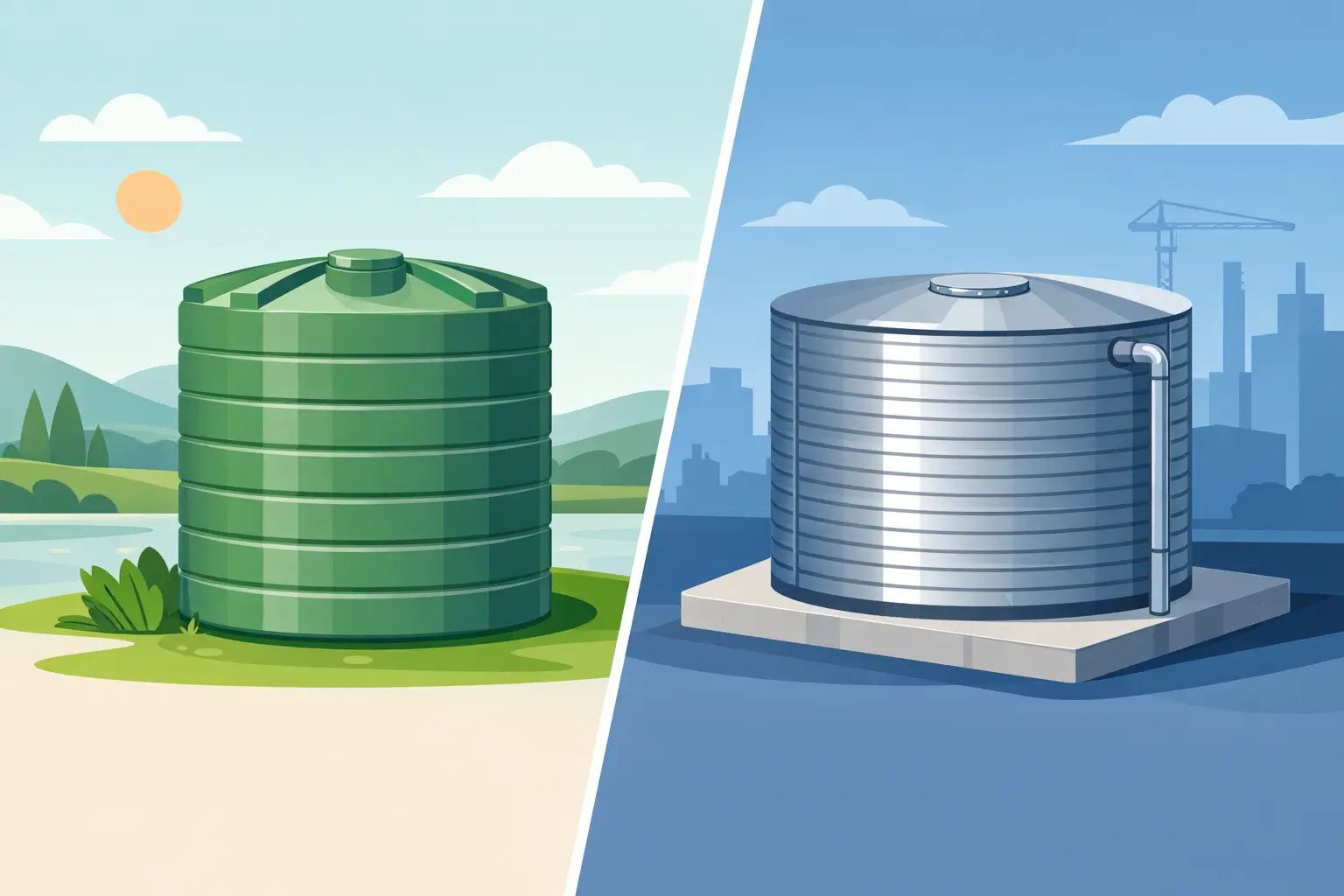
Poly tanks are popular because they are cost-effective, lightweight and straightforward to install. They are manufactured from food-grade polyethylene and are widely used for rainwater storage on homes, sheds, farms and small commercial sites. They are especially practical where access is tight or where installation needs to be quick and simple.
Steel tanks, including Aquaplate-style designs, are often chosen for their strength, larger storage capacities and traditional tank profile. They suit a wide range of domestic, agricultural and commercial applications and can be a strong option where appearance, footprint or large-volume storage is a priority. Many customers also like the rigidity and established track record of steel systems.
The difference is not just material. It is also about how each tank performs in Australian conditions over years of sun, heavy rain, changing temperatures and day-to-day use.
Cost and value over time
If upfront budget is the main concern, poly is often the easier entry point. Poly tanks are generally more affordable to buy, and because they are lighter, transport and installation costs can be lower as well. On many residential jobs, that makes poly a very practical option.
Steel tanks can cost more initially, particularly in larger sizes or where installation involves additional site preparation. That higher spend can still represent good value if the tank better suits the site, the required capacity or the visual finish of the property. A cheaper tank is not really cheaper if it creates compromises in access, storage volume or future maintenance.
This is where it helps to think beyond the ticket price. A tank should be assessed as part of a complete water system that may include pumps, filtration, first flush devices, liners, outlets and installation support. The best value usually comes from getting the right tank for the job the first time.
Durability in Australian conditions
Both tank types are designed for harsh local conditions, but they handle those conditions differently.
Poly tanks are made to resist corrosion, which is a major advantage in coastal areas or environments where salt air can be a factor. They do not rust, and quality food-grade poly tanks are UV-stabilised to cope with strong sun exposure. That said, quality matters. A well-manufactured tank that meets Australian standards is very different from a lower-grade product.
Steel tanks offer excellent structural strength and are well suited to large-capacity storage. Modern steel tanks built with quality materials and compliant liners or internal coatings can provide long service life. However, steel systems rely on the integrity of their protective materials. If damage, wear or poor maintenance allows corrosion to develop, that can become an issue over time.
So when customers ask which lasts longer, the honest answer is that it depends on the tank quality, the environment, and how well the system is installed and maintained.
Water quality and tank hygiene
For drinking water and household rainwater use, tank hygiene matters just as much as tank strength.
Poly tanks are commonly chosen for potable water storage because they are manufactured from food-grade material and do not require an internal liner. That simplicity appeals to many homeowners. With a proper sealed system, suitable inlet screening and good filtration, poly can be an excellent choice for clean rainwater storage.
Steel tanks often use a liner or specialised internal surface to keep stored water separate from the outer shell. When designed and installed properly, they can also provide very good water quality for household and agricultural use. The condition of the liner or internal protective surface is an important part of ongoing performance, particularly on older systems.
Neither tank material makes up for poor catchment conditions. Dirty gutters, missing screens, leaf build-up and neglected filtration will cause problems regardless of whether the tank is poly or steel. In practice, the cleanest water comes from a well-designed system, not just the tank shell alone.
Installation and access
This is one of the biggest practical differences in the poly vs steel tanks decision.
Poly tanks are easier to move into position because they are lighter. If access to the site is restricted, such as a narrow side passage, backyard installation or a location where heavy lifting is difficult, poly can be much easier to work with. This can reduce installation complexity and cost.
Steel tanks may require more planning, especially for larger capacities. Depending on the design and size, site access, slab preparation and delivery logistics can become more important. On some properties that is no issue. On others, especially existing homes with limited access, it can push the decision towards poly.
Base preparation matters for both. A poor foundation shortens tank life, creates stress on fittings and can affect warranty compliance. Whether the tank is poly or steel, the slab or compacted base needs to be level, stable and suitable for the load.
Capacity, footprint and appearance
Storage volume often decides the outcome.
For smaller to mid-sized domestic applications, poly offers plenty of flexibility in shape and capacity. Slimline and round configurations make it useful for suburban homes, sheds, garden use and compact sites. There is also a wide range of colours, which helps the tank blend with nearby buildings.
Steel tanks are often favoured where larger capacities are required without taking up unnecessary ground space. Their proportions can work well on farms, larger residences and commercial sites where serious water storage is needed. Some customers also prefer the traditional look of a steel tank, particularly on rural properties.
Appearance may sound secondary, but for many homes and lifestyle blocks it matters. A tank is often a highly visible part of the property, so the shape, profile and finish should suit the setting as well as the water demand.
Maintenance and repair considerations
No tank is maintenance-free. Some simply ask for less attention than others.
Poly tanks are generally low maintenance. Because they do not rust, owners are often dealing mainly with standard tank care such as checking screens, cleaning gutters, managing sludge build-up and inspecting fittings. If physical damage occurs, repair options depend on the extent and location of the issue.
Steel tanks may need more active inspection over time, particularly around the exterior, roof, fittings and any internal liner system. If corrosion starts or a liner is damaged, early attention is important. The upside is that some steel tank components and liner systems can be serviced or refurbished, which may extend useful life depending on the tank’s condition.
If your property is in a coastal area, or if maintenance tends to slip down the to-do list, that should be factored in honestly before choosing a tank.
Which tank suits which job?
For many homes, poly is the practical all-rounder. It is well suited to residential rainwater harvesting, easier access installations, modest budgets and owners who want a straightforward, food-grade storage option with low ongoing fuss.
Steel can be a better fit where larger storage volumes are needed, where the tank profile suits the site, or where a customer prefers the look and structure of a steel system. It is also a strong contender for rural and commercial settings where capacity and footprint carry more weight in the decision.
That is why the best recommendation usually comes after looking at the full setup – roof catchment area, intended water use, available space, local conditions, pump requirements and filtration needs. A tank should work with the whole water system, not sit apart from it.
At North Coast Water Tanks, that is often the point where a simple product question turns into a better long-term solution. Matching the tank with the right pump, filtration and installation advice can make a bigger difference than the material alone.
If you are weighing up poly or steel, start with how the tank will actually be used over the next decade, not just what looks good on the quote. The right tank is the one that suits your site, stores clean water reliably and keeps doing its job long after the install day is forgotten.